
Your Baby Was Born in Munich, Here's How Their Residence Permit Actually Works
If your baby was born in Munich and at least one parent is a non-EU national holding a residence permit, a settlement permit, or an EU long-term residence permit, your child needs their own residence title too, under Section 33 of the Residence Act. As a rule the immigration authority starts the procedure itself once the registration office reports the birth, and the deadline for acting is genuinely generous: if the permit has not been issued within six months of the birth, you must apply before those six months end. The process itself works differently from an adult's renewal. You are not hunting for a bookable calendar slot yourself. You submit the application online with the required documents (the child's birth certificate, the parents' passports and residence documents, and a biometric photo), and the Servicestelle für Zuwanderung und Einbürgerung reviews the file first and only then invites you to an appointment. The base fee is 50 euros. Fingerprints are only taken from the sixth birthday (Section 78 AufenthG), so a baby has none to give, but the federal service description still lists personal appearance and an identity check for the child, so ask the SZE in your invitation whether your baby has to attend and whether a parent can collect the finished card alone.
The Official Rule
New parents in Munich often assume a baby’s legal status is simply a footnote to their own, something the Standesamt or the Bürgeramt sorts out quietly in the background. For address registration, that’s roughly true. For the residence permit itself, it isn’t, and the gap between those two facts is exactly where families get caught off guard.
If at least one parent is a non-EU national holding a residence permit, a settlement permit, or an EU long-term residence permit, the child needs their own residence title too, under Section 33 of the Residence Act (AufenthG). The statute provides for it to be issued ex officio (von Amts wegen), and the federal service description says the immigration authority normally starts the procedure itself once the registration office reports the birth. It still isn’t generated automatically alongside the birth certificate, so don’t assume it is handled. The one piece of genuinely good news is the deadline: if the permit has not been issued within six months of the birth, you are required to submit an application before those six months end. In practice, most families are advised to start well before that, simply because processing takes time and nobody wants a six-month clock running down in the background of new-parent life.
The process itself looks nothing like an adult’s permit renewal, and that’s the part worth understanding clearly. For an adult, the familiar (and frustrating) pattern is hunting for a bookable slot on the KVR’s online calendar before your own permit expires. For a newborn’s first residence title, the order is reversed. You submit the application, along with the required documents, online or by post, to the Servicestelle für Zuwanderung und Einbürgerung. The office reviews the file, and only once that review is underway or complete do they reach out to invite you to an actual appointment, typically to handle the biometric photo step or finalize the decision. You are not competing for a released slot at 6:30 in the morning the way you would for an emergency adult appointment.
- Gather documentsBirth certificate, the parents' passports and residence documents, and a biometric photo sized 45 x 35mm.
- Submit online or by postThe application goes to the SZE before any appointment exists, this is the step that starts the process.
- The SZE reviews the fileCompleteness matters here, a missing document is what most often adds weeks to this stage.
- You're invited to an appointmentTypically for the biometric step or the final decision, the office contacts you rather than you booking a slot yourself.
- The residence title is issuedThe card is collected in person, so ask the SZE whether one parent can collect it alone for a child under 16.
The base fee is 50 euros, with a possible small additional charge tied to producing the electronic residence card (eAT) itself. And because fingerprints are only taken once a child has completed their sixth year of life (Section 78 of the Residence Act), a newborn falls nowhere near that threshold. The federal service description still lists personal appearance and an identity check for the child, so ask the SZE in your invitation whether your baby has to attend.
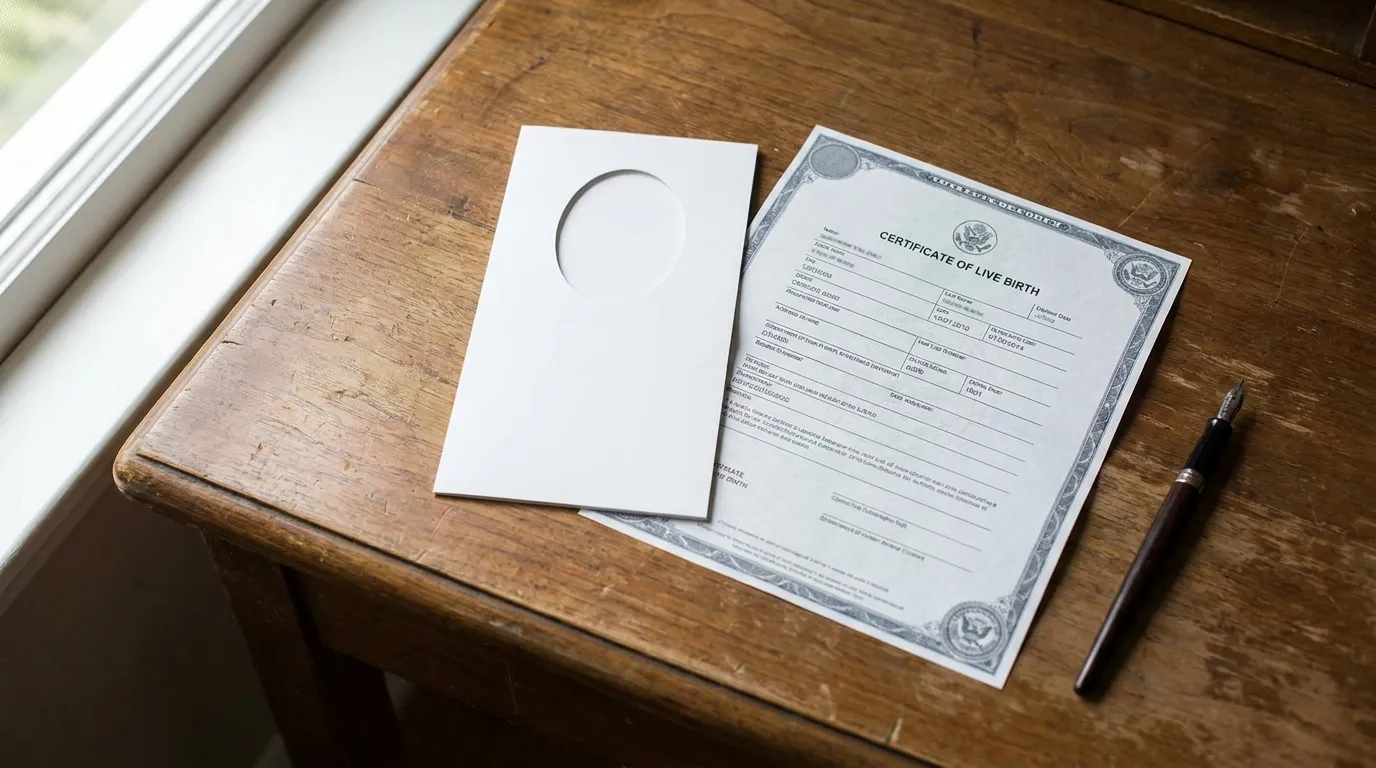
What Real People Say
Expat parenting communities that cover this topic consistently flag the same point of confusion: people conflate the baby’s address registration, which genuinely does piggyback on the parents’ Anmeldung with minimal extra effort, with the residence permit application, which is a separate filing with its own documents and its own six-month clock. Families who’ve been through both processes describe the registration step as close to automatic, and the residence permit step as the one that actually needs a parent to sit down, gather paperwork, and submit something.
The other recurring piece of practical advice from people who’ve done this: start gathering the birth certificate and biometric photo well before the six-month mark, since the certified birth certificate itself can take a few weeks to arrive from the Standesamt, and that’s often the one document holding up an otherwise-ready application.
Step by Step
- Get your baby’s birth certificate from the Standesamt as soon as it’s available, this is usually the slowest single document in the file.
- Confirm which parent’s residence status the child’s application depends on. If both parents hold a residence permit, settlement permit, or EU long-term residence permit, gather both parents’ documents.
- Get a biometric passport photo taken for the baby, sized 45 x 35mm, many photo studios and drugstores in Munich handle infant biometric photos routinely.
- Submit the application online or by post to the Servicestelle für Zuwanderung und Einbürgerung, well before the six-month mark from the birth date.
- Wait for the SZE to invite you to an appointment. You don’t need to search the booking calendar yourself for this specific application.
- Plan for a parent to attend the appointment and, later, to collect the card. Ask the SZE up front whether your baby must be present and whether a power of attorney is needed.
Compliance Note
This page explains the general rule under federal law and Munich’s administrative practice, but it is not legal advice. If your family’s situation involves a more complex custody arrangement or an approaching deadline, contact the Servicestelle für Zuwanderung und Einbürgerung directly for guidance specific to your case.
FAQ & Common Pitfalls
Does my baby's residence status just automatically follow mine?
No, and this is the assumption that catches new parents out. A child born in Germany to a non-EU national who holds a residence permit, a settlement permit, or an EU long-term residence permit needs their own separate residence title under Section 33 of the Residence Act. If both parents (or the sole-custody parent) hold one of those permits at the time of birth, the law provides for the child's permit to be issued ex officio (von Amts wegen), and the federal service description says the immigration authority usually starts the procedure itself after the registration office reports the birth. It is not simply inherited from a parent's status, though, so don't just wait: submit the documents yourself. The deadline is the part in your favor: if the permit has not been issued within six months of the birth, you must apply before those six months end, and until a decision the child's stay is treated as permitted.
Do I need to book an appointment myself, the way I would for an adult renewal?
No, and this is the biggest practical difference from the adult process. For a newborn's first residence title, you submit the application and required documents online (or by post), and the Servicestelle für Zuwanderung und Einbürgerung reviews everything first. Only after that review do they reach out and invite you to an appointment, typically for the biometric photo step or final decision. You aren't refreshing a booking calendar hoping a slot appears.
Does my baby need to physically come to the appointment?
Possibly not, but check your invitation. Fingerprints are only recorded from a child's sixth birthday (Section 78 of the Residence Act), so a newborn has none to give. The federal service description, however, still lists personal appearance and says the identity of the parents and the child is checked at the appointment, so ask the Servicestelle für Zuwanderung und Einbürgerung whether your baby has to be present. The same description says the electronic residence card is collected in person, so also confirm with the SZE whether one parent can collect it alone for a child under 16 and whether a power of attorney is needed.
What documents should I have ready before I submit the application?
Based on the official federal service description, expect to need valid identity documents for the parents and the child, at least one parent's residence permit, settlement permit, or EU long-term residence permit, the child's birth certificate or birth register extract, and a biometric passport photo sized 45 by 35 millimeters. If only one parent with joint custody is applying, a power of attorney from the absent parent is also required. Gathering these before you start the online submission avoids a back-and-forth that could push you closer to that six-month window.