OGS in Cologne: How Primary School After-School Care Works, What It Costs, and When to Register
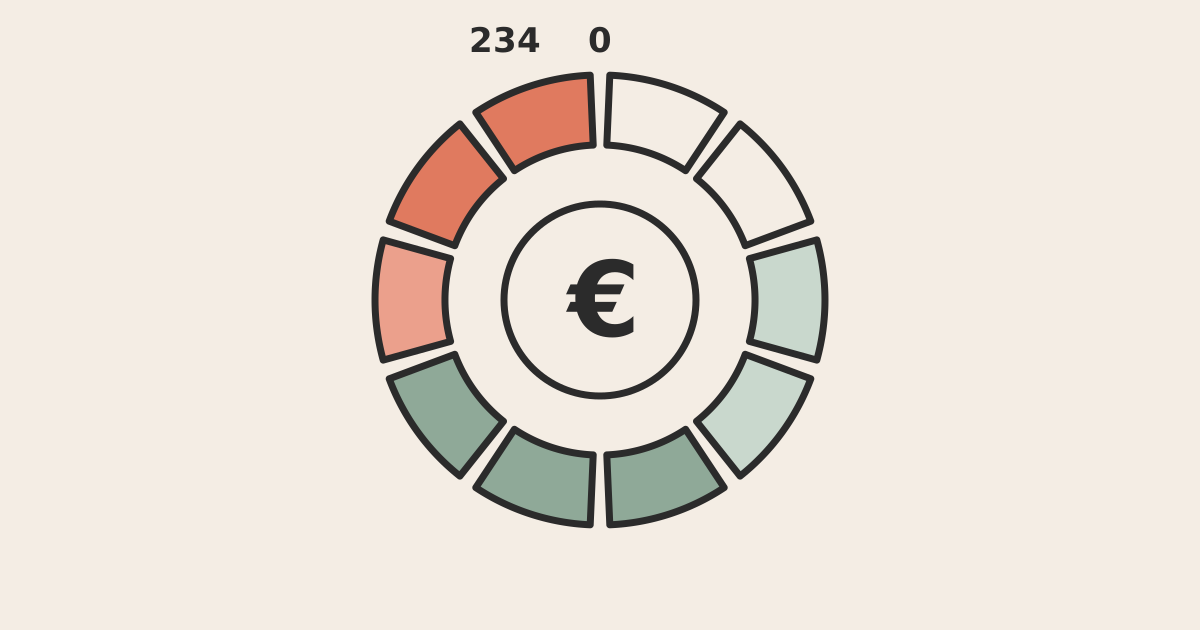
In Cologne, after-school care for primary school children runs through the OGS (Offener Ganztag), booked at your child's school, not through a city-wide application. It is voluntary, but the agreement binds you for a whole school year. Fees follow the city's income table, from 0 euros up to 234 euros a month, and lunch is paid separately. The city reported on 1 September 2026 about 36,000 places and expects every first grader to get one.
How OGS works in Cologne
OGS stands for Offener Ganztag, the school-based after-school care that most Cologne primary school children use. You register at your child’s school, and the school collects the form. OGS is voluntary, but the agreement is made for a whole school year, and the city’s registration page says that when places are limited the school management and the OGS operator choose together.
| Question | What the sources say |
|---|---|
| Who runs it | An OGS operator at the school, with a Betreuungsvertrag for one school year |
| Hours | After class until 16:00, some schools until 17:00. State rule: at the latest 8:00 to 16:00 |
| Attendance | Usually every school day until the contracted time, mostly 16:00 and at least 15:00, with daily lunch |
| Holidays | OGS runs in the holidays, with closures: usually three weeks in summer and between Christmas and New Year. State FAQ: closure of up to four weeks a year is normal, more only if another qualifying offer exists |
| Who owes the legal right | The youth welfare office (Jugendamt), not the school. An OGS place counts as fulfilling the right |
| Registration | At the school, no separate city-wide date |
For the holiday gap itself, see our guide to the summer closure gap, which covers the closure weeks in detail.

Photo by Katerina Holmes on Pexels
What OGS costs
Cologne charges a monthly fee by household income, set in the city’s fee statute of 17 April 2025, valid since 1 August 2025. The table below shows the OGS amounts.
| Annual income | Monthly fee |
|---|---|
| Up to 24,542 | 0 |
| Up to 36,813 | 60 |
| Up to 49,084 | 80 |
| Up to 61,355 | 100 |
| Up to 78,000 | 150 |
| Up to 100,000 | 180 |
| Up to 120,000 | 192 |
| Up to 140,000 | 205 |
| Up to 160,000 | 218 |
| Above 160,000 | 234 |
Income means positive income under the tax code, plus tax-free income, maintenance and public benefits for living costs, with child benefit not counted and recognised childcare costs deducted. It is calculated first as an estimate and made final after your tax assessment, and you must report rises in income. If you do not provide documents, the highest tier applies. When several children of the same payer attend Kita, day care or OGS at the same time, only one fee is charged, for the child in the highest tier. The city’s fee page says lunch is paid separately to the operator, and the state decree allows an extra charge for holiday offers. We found no official city amount for lunch, but one school page and one operator page list flat monthly charges (see the section on what parents and the press report).
A caution on sources: the Kölner Bildungsportal’s cost page still shows an older table, with a top fee of 180 euros. The statute above is the current text. From August 2027 the NRW decree allows the state ceiling to rise by 3 percent each school year.
Registration calendar
- Autumn 2026. The city’s timetable for the 2027 school start lists a letter from the city in September, school registration in October and November, and an early school medical exam in November and December.
- At school registration or when the school asks, ask for the OGS form. Primary school registration was due by 15 November 2025 for the 2026/27 start, and our enrollment guide gives 15 November as the yearly date. The OGS form has no separate city-wide date, so ask the school office when it wants it.
- From March 2027 the school sends its confirmation of the school place. The OGS offer follows from the school and the operator.
- If something goes wrong, the city’s Ganztag hotline is 0221 221-24400 (schulentwicklungsamt@stadt-koeln.de). The right is owed by the Jugendamt, so put your request in writing and keep the date.
The 2026 picture in Cologne
On 1 September 2026 the city reported about 36,000 places in open Ganztag, a supply ratio of 91 percent, and said it expects every first grader at a primary school to get a place. The goal is to provide the legal right for all primary school children by 2029/30, with additional cooperations mainly east of the Rhine and in Chorweiler. The statement gives no figures on waiting lists. A WDR survey published on 25 September 2026 reported 217 older primary school children on Cologne waiting lists (see the next section).
Independent reporting is more cautious. CORRECTIV wrote in January 2026 that in cities like Cologne 20 primary schools need extensions or new canteens, that Cologne calculates a demand of 90 to 95 percent, and that nearly half of the groups no longer have a trained professional as group lead. At one Chorweiler school an additional 200 places had to be created, and the principal said the canteen, planned for 16 years, was supposed to open in 2028. In NRW, 15 municipalities have sued the state over financing, according to kommunal.de.
What parents and the press report
Reporting on Cologne’s OGS in 2025 and 2026 shows steady growth in places next to shortages of rooms and staff and big differences between districts. Each item names its source and date. Items marked older are from 2024 or before. Figures from the municipal association and the teachers’ union are interest-group statements. We did not find enough independent public parent forum posts to describe a pattern, so none are used.
- Places are growing, but quotas are counted differently (Cologne). The city council paper 2591/2024 from September 2024 (older) gave a 2024/25 supply ratio of 87 percent and said a theoretical unmet need of about 1,175 places would shrink before school start, because parents often drop the need they reported at registration. The Kölner Stadt-Anzeiger quoted a city spokesperson on 20 December 2025 with a ratio of 88 percent and 249 places still to create for 2026/27. Rundschau Online reported on 3 September 2026 that the city’s education councillor said supply had grown from 34,500 to 36,000 places in twelve months, 91 percent in Cologne against 68 percent statewide. The Kölner Stadt-Anzeiger’s summary of the second Cologne social report of 8 October 2026 gives 85 percent for 2024/25. The direction is up, but years and counting bases differ, and a city-wide ratio says little about one school.
- The gaps sit in particular districts and schools (Cologne). The Kölner Stadt-Anzeiger reported on 20 December 2025, citing the city, that Innenstadt, Lindenthal and Ehrenfeld were comparatively well supplied while Kalk, Porz and Chorweiler still had gaps. The city’s press release of 1 September 2026 names new cooperations mainly east of the Rhine and in Chorweiler. At school level, the IN VIA page for one primary school (checked 8 November 2026) says all places are taken and there is a waiting list, and the needs form of another school (posted September 2026) says not all requests for 2026/27 could be met. That is two schools, not a city-wide count.
- Older children are the ones on waiting lists (Cologne in an NRW survey). A WDR survey published on 25 September 2026, answered by 253 of 396 NRW municipalities, has Cologne reporting 217 children from higher primary grades on waiting lists, among the longest lists (Duisburg: 733), and a first-grader care rate of 94 percent. According to the NRW ministry FAQ, the legal right belongs to a child who attends Year 1 in 2026/27 or in a later school year, so children who were already in Year 2 to 4 in 2026/27 have no claim. WDR could not show whether contracts were cancelled to make room for first graders. Across NRW, the Städte- und Gemeindebund survey of 3 September 2026 found that about 9 percent of 202 responding municipalities had to put back children without a legal claim or limit existing offers.
- Lunch rooms are a bottleneck (Cologne). Rundschau Online reported on 3 September 2026 that the education councillor said missing rooms, above all kitchens and canteens, mean not every school can cook this year: meals are delivered, or children eat in rooms of clubs or parishes. In the Kölner Stadt-Anzeiger of 20 December 2025, the operator IN VIA, which runs 23 OGS at city primary schools, said some kitchens are old and lack equipment such as dishwashing lines, and a head teacher said only 220 of 300 children could take part at that time. Older: on 17 September 2024 the Kölner Stadt-Anzeiger wrote that many existing schools were built for only half of the children to use OGS.
- Staff shortage in Cologne, no binding quality standard in NRW. On 17 September 2024 (older) the Kölner Stadt-Anzeiger reported the city administration saying that nearly half of the groups no longer had a trained professional as group lead and that many of the 31 operators were not bound by a collective agreement. CORRECTIV’s January 2026 report above gives the same “nearly half”. For NRW, the Städte- und Gemeindebund survey of 3 September 2026 found 78 percent of 202 municipalities reporting staff shortages, 85 percent reporting room shortages and only about half having local quality standards. The Kölner Stadt-Anzeiger of 24 August 2026 called the missing binding pedagogical standards the main criticism of sceptics. The teachers’ union GEW NRW cited on 9 September 2026 its own statewide survey of about 2,900 school and OGS staff from the previous year: 60 percent of the OGS staff said they cannot live from the work, and respondents said 80 percent of OGS operation takes place in ordinary classrooms. Older and local: on 13 November 2024 the Kölner Stadt-Anzeiger reported an open letter from parents at one Cologne school after the operator IN VIA cut three group-lead posts mid-year and stopped external activity groups; the operator said it faced a deficit of about 3 million euros that school year because funding did not follow pay rises.
- Fees: what changed in 2025 (Cologne). The city said in its press release of 19 March 2025 that the fee-free income limit would double from 12,271 to 24,542 euros, that new top bands would be added, and that OGS is the only area where the first increase already starts in the band up to 120,000 euros. On 12 October 2025 JAEB Köln, the city-wide parents council for Kita and day care (not an OGS parents body), wrote that the Kita and OGS fee tables were changed in a fast-track procedure without involving it, and that its complaints failed. We found no comparable account from OGS parents.
- Lunch is a flat monthly charge, and benefit families have paperwork deadlines (Cologne). Two pages checked on 8 November 2026 list the charge: Montessori Pänz e.V. names 76.50 euros a month since 1 August 2025 (a flat average that also covers snacks and a share of staff and material costs), paid in 12 instalments including holidays and not refunded for illness, and a school FAQ (undated) names 70 euros a month, with 0 euros for families with qualifying state support. Families on benefits must hand in current notices: the first page sets 1 August and 1 February as dates, the second asks that August and February fall within the approval period. The first page also notes that the Köln-Pass does not give free lunch. The Kölner Stadt-Anzeiger reported on 25 March 2025 that one Cologne operator put its cost at 4.50 to 5 euros a meal and that the city pays only the material operating costs of kitchens, so staff costs reach parents through the operators. These are operator amounts, not a city rate.
- Paperwork comes earlier than the city calendar suggests (Cologne). The IN VIA page above says parents state their interest at school registration and sign contracts in May and June. The school needs form above, for 2027/28, asks for employer or school certificates by 31 January 2027, requires proof of full measles protection for admission, and says places are allocated from spring 2027. The VGS Köln e.V. page (checked 8 November 2026) describes a selection procedure at some schools with proof such as an employer’s working-time certificate, contracts sent shortly before the summer holidays, and a contract that renews automatically until the end of primary school and can be cancelled for the end of a school year. Deadlines differ by school, so ask each one.
- Pickup times: rigid by rule, flexibility under discussion. WDR reported on 25 September 2026 that contracts normally keep children from 8:00 to 16:00 because the state subsidy is tied to it, that many municipalities say parents who do not need full days want to pick up earlier, and that attendance until at least 15:00 is required; the Familienportal NRW states the same 15:00 rule. For Cologne, a query by the FDP/KSG council group dated 21 September 2026 states that the school committee was told on 15 June 2026 that more flexible pickup, for example at 14:00, should in principle be possible or is aimed for. This is the political group’s own account, and we found no city answer, so plan on 15:00 unless the school confirms otherwise in writing.
The practical path
- Ask your school which OGS operator runs it and until when, since some schools close at 16:00 and others at 17:00.
- Get the fee tier in writing from the operator and the city’s calculation, and keep your tax assessment for the final figure.
- Plan holidays separately. See the closure gap and the emergency holiday care guide.
- Read the legal background in our guide to the federal right. School enrollment itself is covered in the Cologne enrollment guide.
This page is general information, not legal advice. Fees, hours and dates are set by the city, the state and the operators, so check the current official source before you decide.
FAQ & Common Pitfalls
Is there a city-wide application date for OGS?
No separate one. You book OGS at your child's school, which fills places together with the OGS operator. The city's school registration for the 2027 start follows a timetable: a letter from the city in September 2026, school registration in October and November 2026, and confirmation of the school place from March 2027. Primary school registration itself was due by 15 November 2025 for the 2026/27 start, and our enrollment guide gives 15 November as the yearly date, so check the city's page for the exact 2027 date. The OGS form has no separate city-wide date, so ask the school office when it wants it, often at registration.
Who gets a place if there are not enough?
The school management and the OGS operator select together. The city names the parents' employment and the receipt of social benefits among the criteria. The NRW ministry's FAQ says that if places are insufficient, the youth welfare office has to create them, and it gives no ranking rule. The city expects every first grader to get a place in 2026/27.
Can I leave OGS during the school year?
In principle no. The agreement is made for one school year, and parents cannot end it during that year except when the child changes school. Attendance is usually required on every school day until the contracted time, mostly 16:00 and at least 15:00, and it includes daily lunch.
How much does OGS cost in Cologne?
The city's income table sets a monthly fee from 0 euros (income up to 24,542 euros) to 234 euros (income above 160,000 euros). Only one fee is charged when several children of the same payer attend Kita, day care or OGS at the same time. The fee is based on positive income, first as an estimate and then final after the tax assessment. Without income documents the highest tier applies. Lunch is paid on top. We found no official city amount, but one school page and one operator page list flat charges of 70 and 76.50 euros a month.
Will fees rise?
From August 2027 the NRW decree lets the state ceiling rise by 3 percent each school year. Cologne's published table for 2026/27 still shows the 2025 amounts. The state ceiling is set in a separate annual decree, so ask the city for the current table.
My child will attend an international school in Cologne. Does OGS apply?
The sources do not settle this. Under the NRW decree, a private school counts as OGS only if it receives a specific state grant, and we found no source saying that St. George's or Cologne International School do. St. George's lists after-school clubs, and we found no supervised after-school care on its pages. Ask the school and the Jugendamt in writing.
We are moving to Cologne with a child in Year 2, 3 or 4. Can we get an OGS place?
Probably not as a legal right this school year. The NRW ministry's FAQ says the right belongs to a child who attends Year 1 in 2026/27 or in a later school year. A child who is already in Year 2, 3 or 4 in 2026/27 has no claim and depends on the school's selection. A WDR survey published on 25 September 2026 had Cologne reporting 217 children from higher primary grades on waiting lists. Contact the school office before you move, ask about the waiting list and which proof of work hours it wants, and get every answer in writing. The city's Ganztag hotline is 0221 221-24400.