GBS and GTS in Hamburg: Free Core Hours, Income-Based Extras, and How to Apply
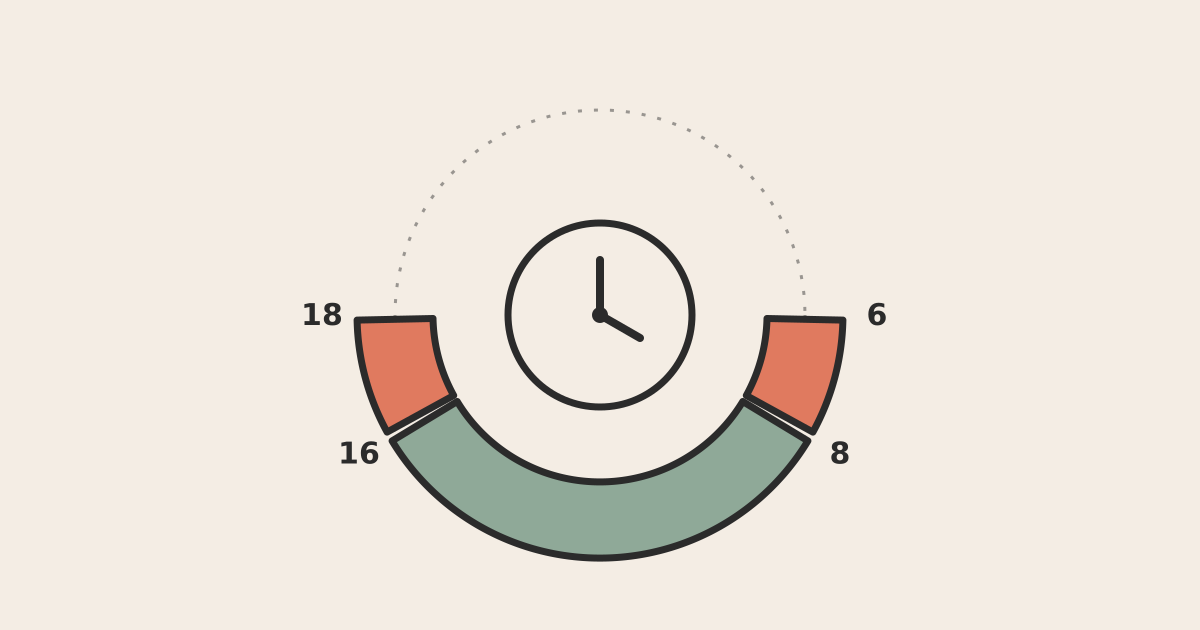
Hamburg's state primary schools offer all-day care as GBS (a school with an outside operator) or GTS (a school that runs its own Ganztag). The core time from 8:00 to 16:00 is free in grades 1 to 4, while early care from 6:00, late care until 18:00 and holiday care are charged by income in five tiers. You apply through the school, online or on paper.
Two models, one free core time
Hamburg’s state primary schools run all-day care in one of two forms. In GBS (Ganztägige Bildung und Betreuung an Schulen), lessons run from 8:00 to 13:00 and an outside youth welfare operator takes over the afternoon at the school. In GTS (Ganztagsschule), the school organises the whole day itself, sometimes with a provider. Both are described in the authority’s school-start brochure for 2026/27.
| Part of the day | Hours | Cost |
|---|---|---|
| Early care | From 6:00 | Income-based, five tiers |
| Core time | 8:00 to 16:00 | Free in grades 1 to 4 (preschool class excepted) |
| Late care | 16:00 to 18:00 | Income-based, five tiers |
| Holiday care | Full day, 11 weeks plus one base week | Income-based, up to 90 euros per week in the city's example |
| Lunch | At every school | Maximum parent price 5.30 euros per meal from 1 August 2026, lower by income tier |
The lunch figure comes from an authority letter of 17 June 2026: the caterer may bill up to 5.65 euros, and the authority covers the 35-cent difference. The social tiers pay less.

Photo by Vanessa Loring on Pexels
What you pay, and who pays less
Fees outside the free core time depend on net family income, household size and the number of younger siblings in paid care. The authority’s fee page describes five tiers, 100, 75, 50, 30 and 20 percent of the maximum fee. Households with more than six people pay the 20 percent tier whatever their income. The euro income thresholds are not published as text on the pages we found, so use the calculator in the online application.
- Siblings: the youngest child in paid care pays in full, the second a third of the fee, the third and later a fifth. Kita, day care and paid GBS care count together.
- Highest tier on request: you can choose to pay the maximum fee without giving income details.
- Benefits: with benefits such as Bürgergeld, Wohngeld, Kinderzuschlag or asylum-seeker benefits (the authority speaks of certain social benefits), lunch is free, six holiday weeks a year are free, and other fees are heavily reduced.
- Caps: a school-hosted copy of the authority’s rules (January 2026) names yearly maxima of 360 euros per weekly hour of early or late care and 90 euros per holiday week (120 with early and late care). We could not confirm these on hamburg.de for 2026/27, so check the fee calculator in the application.
Registration: how and when
- For first graders, the registration round runs for three weeks, usually in January. The Ganztag application opens online when the round starts, and the personal introduction at the school is compulsory. The Bescheid follows in spring. The 2026/27 round ran from 5 to 23 January 2026. For the school start in August 2027, children born between 2 July 2020 and 1 July 2021 are covered, and individual schools list 4 to 22 January 2027 for the registration round (see our enrollment guide).
- Pick the form: GT 1a for GBS or GT 1b for GTS, online via the Serviceportal Hamburg with a Servicekonto, or on paper at the school office.
- For returning pupils, the city’s page says applications for the next school year open on 1 February and run to 31 May. One school FAQ names 31 March, and VSK and first graders end of May. No single official text joins these, so ask your school for its date.
- Help with forms: the GBS/GTS advisory service answers at 040 42863 3579 (Tuesday 14:00 to 16:00, Wednesday and Thursday 10:00 to 12:00) and gbs-beratung@bsfb.hamburg.de. It helps with the forms, and the school processes them.
Hamburg’s own right, and what changed in 2026
Hamburg’s school law gives children from the preschool class up to age 14 a right to all-day education and care from 8:00 to 16:00 on every school day, and a right to care from 6:00 to 8:00, from 16:00 to 18:00 and in the holidays, subject to fees. A declared participation binds you for that school year. The authority says Hamburg has had this right since 2012. For the federal right that began in August 2026, see our national guide.
On staffing, the draft budget for 2027/28 would change how GTS primary schools are staffed for the 8:00 to 16:00 day. The authority’s letter to school heads of 30 June 2026 spoke of 77 percent educator posts and 23 percent honorarium funds. Its information sheet of October 2026 (school-hosted copy) instead describes 100 percent educator posts, part of which schools may still use for honorarium staff, replacing today’s mix of 55 percent educator posts, 26 percent honorarium funds and 19 percent teacher posts. We cannot tell which wording the final budget will follow. The first step would apply from August 2027 to the preschool class and grades 1 and 2, the second from August 2028 to grades 3 and 4. The Bürgerschaft is due to decide the budget in December 2026. Only GTS is affected, not GBS. We found no public waiting-list data, so we cannot say how this feels at your school; the next section collects what parents and the press have reported.
What parents and the press report
Most of the recent public debate concerns GTS schools, not GBS, so check which model each item covers. All items are Hamburg-specific unless marked otherwise. Items from 2014 and 2022 are old and are shown for context only.
- Budget dispute, GTS only (autumn 2026). The Elternkammer, the state parents’ council for schools, decided on 22 September 2026 to call for the planned change in all-day staffing at the 87 GTS primary schools and departments (about 26,000 children, by its count) to be withdrawn, and stressed that it must not be equated with changes at GBS schools. taz reported on 17 September 2026 that 54 GTS heads signed an appeal, and that the plan turns teacher and social pedagogue posts into 377 educator posts to save 16.5 million euros a year. MOPO reported the same day that parent council members fear less learning time with teachers, less extra support and fewer courses. NDR reported on 8 October 2026 that about 800 people protested on 7 October. Outlets give different teacher post counts (taz 247.7, MOPO 220.4 citing a CDU inquiry, NDR about 220).
- The authority’s answer (October 2026). NDR reported on 8 October 2026 that the authority sees no sign that afternoon lessons with teachers improve results, at least in maths and German reading comprehension, as it wrote in reply to an inquiry from the CDU, and that the senator conceded there would be challenges in filling about 370 educator posts, not all at once. The authority’s information sheet of October 2026 says the KERMIT 5 results of the last three school years show no significant differences between GBS and GTS schools and expects more than 1,200 trainee educators to finish each year until 2029. These are the authority’s own claims, not an independent check.
- What a GBS staffing ratio covers (LEA, undated). LEA Hamburg, the parents’ committee for day care and GBS, publishes a calculated ratio that improved in two steps, from 1 to 19 to 1 to 16.2 at schools with social index 1 and 2 and from 1 to 23 to 1 to 19.6 at index 3 to 6. It applies only to the 13:00 to 16:00 core time in 40 school weeks, not to early, late or holiday care. It is a funding ratio, not a count of children in one room. The LEA page is undated and its attachments end in 2023, so we cannot confirm these ratios are still current. An authority report on GBS site visits dated 26 September 2014 (launch phase, so old) found, in a school survey, a median of 12 pupils per carer across afternoon offers, with homework support higher at a median of 15.
- Older complaints (2014 and 2022). WELT reported on 22 January 2014 that 18 parent councils and a district parents’ committee had started a petition (4,546 signatures at the time) for more staff, extra rooms and better meals, while an authority spokesperson said average groups were under 15 children. The Abendblatt reported on 12 November 2014 complaints about staff, rooms and canteen capacity in Harburg, and the authority saw only isolated need for adjustment. LEA said on 19 December 2022 that staff absences were widespread in day care centres and that, as far as it knew, GBS sites looked similar, with many places only able to offer emergency care. Since 2017/18 the staffing budget per GBS group has risen from 1.0 to 1.1 posts, with a further step in 2019/20, according to LEA. We did not find a comparable public parent campaign about GBS in 2025 or 2026.
- Holiday care booking (2025 and 2026). The Abendblatt reported on 6 October 2025 (public teaser only) that many parents find the early GBS holiday survey and the system rigid and outdated. School documents for 2026/27 show why it can feel like two layers: the city booking of a number of weeks with the yearly Ganztag application, then each school’s own dates. One GBS site asks for autumn weeks by 11 September 2026 and summer weeks by 21 May 2027, another by 18 September 2026 for autumn and Christmas and by 18 December 2026 for March, May and summer, a third wants the first half-year binding at school start and the second by the end of January, without exceptions. The authority says early booking is needed for staff planning, and holiday bookings can be adjusted for the last time by 31 March. The Elternkammer asked as early as 23 January 2018 that families be allowed to pick holiday care at another school; we did not find that this was adopted.
- Closing days (2026/27). The city’s rule allows closures of up to four weeks, with emergency care at a neighbouring school. Two GBS school pages list up to 20 closing days a year with emergency care at another site (Schule Grützmühlenweg, undated page; Schule Alsterredder, whose 20 days for 2026/27 include 9 operator closing days and are spread over Christmas, late January, May and July rather than one block). Alsterredder also lists two study days in August 2027 without emergency care.
- Holiday staffing (September 2025). The Gesamtpersonalrat, the staff council of the school authority, wrote on 10 September 2025 that where schools run early, late and holiday care with their own staff, colleagues cover for each other and a bottleneck often arises between 10:00 and 16:00. As it describes it, one absence can break the maximum group size and leave only supervision, and the authority plans a 7 percent substitute reserve. This concerns schools with their own staff, not operator-run GBS sites.
- Fees, change ahead (September 2026). The minutes of the LEA meeting of 3 September 2026 note that GBS fees for early, late and holiday care are also to be adjusted, but only in a later step after the day-care (Kita) fee reform, which is planned in two steps in August 2027 and 2028 (at the time, still subject to Senate approval). No GBS figures were given. Until then the published amounts apply, for example 90 euros per holiday week and 120 euros with early and late care.
Practical steps
- Find out whether your school is GBS or GTS and which hours it offers beyond the core time.
- Book for the whole school year and plan for the cancellation rules.
- Check holiday closing weeks at your own school. See the summer closure gap and the emergency holiday care guide.
- For a private or international school, ask the school and the authority in writing, because the free core time applies at state schools. The International School of Hamburg offers its own after-school care, so confirm days, hours and price with the school.
- For enrollment itself, use the Hamburg school enrollment guide.
This page is general information, not legal advice. Fees, hours and dates are set by the authority and the schools, so check the current official source before you decide.
FAQ & Common Pitfalls
What is the difference between GBS and GTS?
In GBS, lessons run from 8:00 to 13:00 on five days, and a youth welfare operator runs the afternoon and the early and late care on the school grounds. A registered child attends at least three chosen days until at least 15:00. In GTS, the school itself organises the all-day programme, often with a provider. It can be open, partly bound or fully bound, and in the fully bound form 8:00 to 16:00 is compulsory on four days, with the fifth day voluntary. According to a taz report of September 2026, Hamburg has 128 GBS schools and 87 GTS primary schools. The Elternkammer counts 87 GTS primary schools and primary departments, and an authority information sheet of October 2026 gives 128 GBS and 85 GTS primary schools for 2025/26, so treat the exact GTS count as approximate.
Is the core time really free?
Yes. The authority states that the core time from 8:00 to 16:00 is free in grades 1 to 4 at all schools, with the preschool class (VSK) as the exception. You book care for a school year, and the core time cannot be cancelled during it, except in the VSK. Changes take effect from the quarter after next (the authority's wording is 'zum übernächsten Quartal').
What exactly is charged, and how much?
Early care from 6:00, late care until 18:00 and holiday care are charged by income in five tiers: 100, 75, 50, 30 or 20 percent of the maximum fee, depending on net family income, household size and the number of younger siblings in paid care. Households above six people pay the 20 percent tier regardless of income. The euro thresholds for the tiers were not published as text in the sources we found, so use the calculator in the online application. As an example from the city, one week of holiday care costs at most 90 euros, paid in 12 instalments of 7.50 euros.
How many holiday weeks does it cover?
The city's own page says up to 11 holiday weeks plus one optional base week of six freely chosen days, so 12 at most, although one passage of the same page names only 11 or 12. The base week is charged in full. Individual schools or operators may close for up to four weeks, and the school then arranges care at a nearby school. Check your own school's closing weeks.
When and how do I apply?
Use form GT 1a for GBS or GT 1b for GTS, either online through the Serviceportal Hamburg (you need a Servicekonto) or at the school office. First graders apply during the registration round, usually three weeks in January, and the Ganztag application opens at the same time. The 2026/27 round ran from 5 to 23 January 2026, and school pages list 4 to 22 January 2027 for the next one. For children already at school, the city's page says applications for the next school year open on 1 February and run to 31 May, while a school FAQ names 31 March, so ask your school for its date.
Does the federal right change anything in Hamburg?
Little in practice. Hamburg's school law gives children from the preschool class up to age 14 a right to care from 8:00 to 16:00 on every school day, and the authority says Hamburg has had this since 2012. An independent institute (IW Köln) found that all state primary school places count as Ganztag places and that no extra expansion is needed. The free core time applies at state schools, so ask a private or international school about its own after-school care.
Can I change my holiday booking later, and what if my school is closed?
Partly. The authority says holiday and early or late care bookings change with effect from the quarter after next, holiday bookings can be adjusted for the last time by 31 March and early or late care by 31 December, and changes at shorter notice need the consent of the school or operator. Weeks already used cannot be cancelled afterwards, and the base week is paid in full even if you use fewer than six days. On top of the city booking, school pages for 2026/27 show their own deadlines for exact holiday dates, which differ from school to school and are sometimes binding without exceptions. If your school closes for part of the holidays (up to four weeks under the city's rule), emergency care is arranged at a neighbouring school, and two school pages list up to 20 closing days a year, in one case spread over the year rather than in one block. Ask your school for its full closing list before you book.