That Car Seat You Packed From Home Might Be Illegal Here
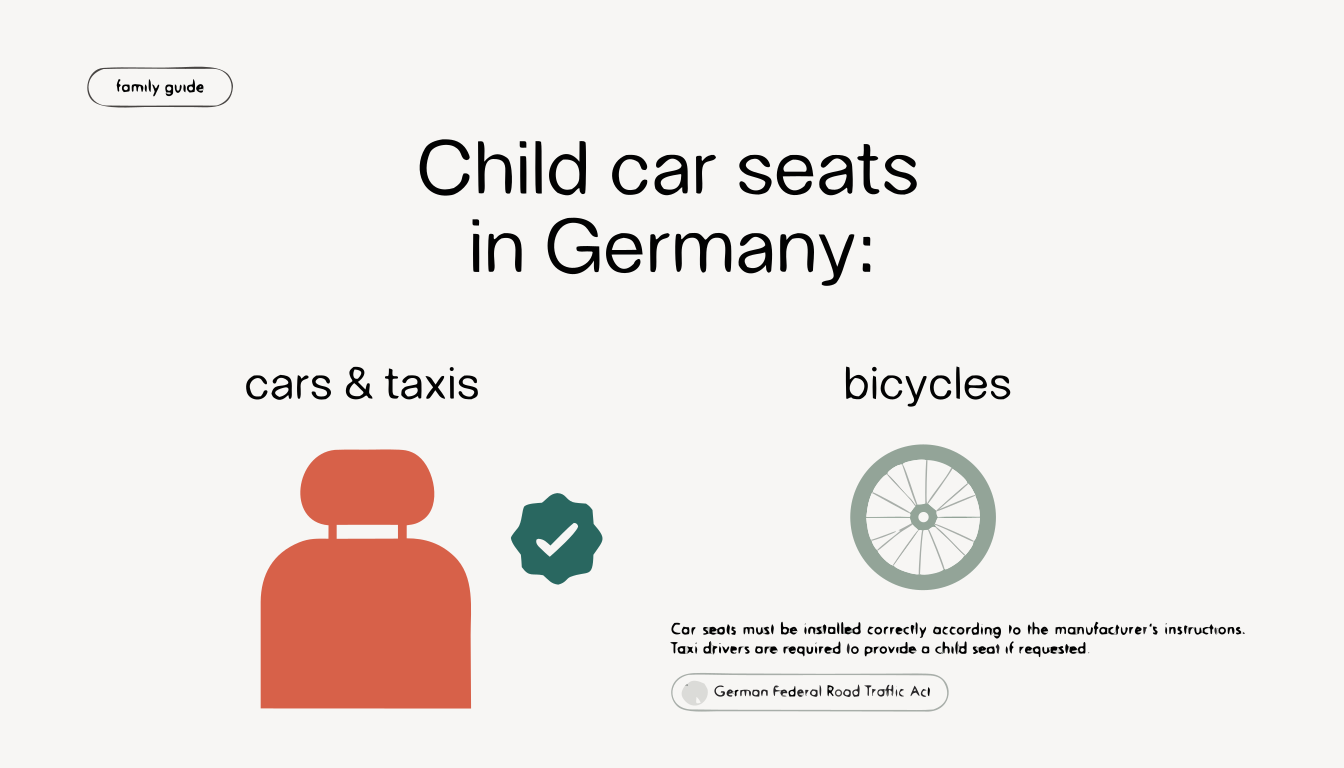
Any child under 12 and shorter than 150cm has to ride in an approved child restraint under § 21 StVO, and the word approved is stricter than it sounds: the seat needs a visible ECE certification mark, R44/03, R44/04, or the newer R129 (i-Size), and a seat from outside Europe, even one that's genuinely safe and legally sold in its home country, doesn't qualify without that mark. Using one anyway risks a 25-euro fine and a real insurance complication if an accident happens while your child wasn't secured to German legal standard. Taxis get a specific carve-out: for occasional, non-regular trips, taxi operators only need to have two seats on board suitable for children weighing 9 to 18kg, infant seats for under 9kg are the passenger's own responsibility, and Uber in Germany doesn't provide seats at all, that's on you too. Bicycle child seats are governed separately: children roughly 1 to 7 years old, front-mounted seats capped around 15kg, rear-mounted around 22 to 25kg, the seat itself certified to DIN EN 14344, and the adult riding must be at least 16.
The Official Rule
Germany’s child seat requirement, § 21 StVO, covers any child under 12 who’s also shorter than 150cm, they have to be secured in an approved Rückhalteeinrichtung, a child restraint system, whenever they’re in a car. The word “approved” is doing real work here, and it’s the detail that catches newly arrived families off guard most often.
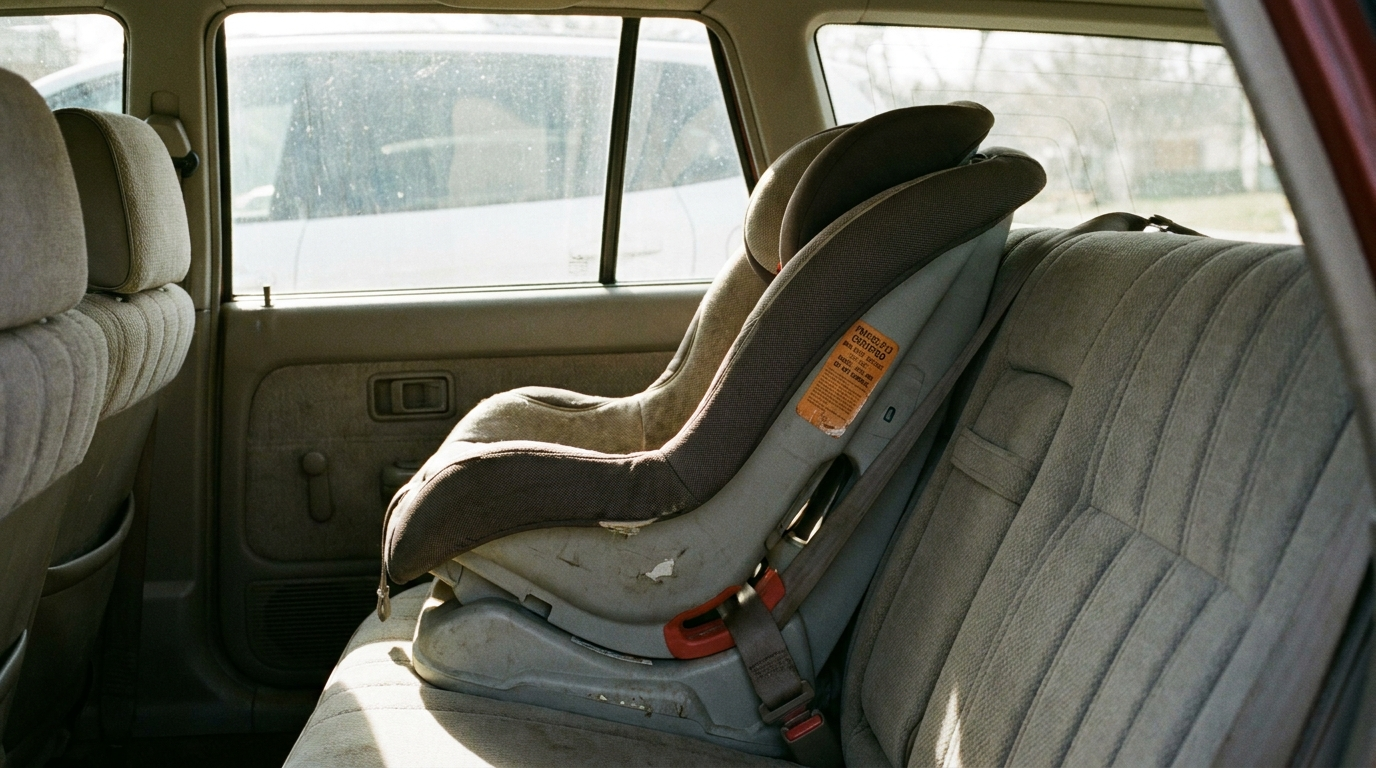
A seat only counts as approved if it carries a specific ECE certification mark: R44/03, R44/04, or the newer R129, also known as i-Size. This matters enormously if you’re arriving from outside Europe. A car seat that’s genuinely safe, properly certified, and legally sold in its country of origin, the US, Turkey outside EU-aligned frameworks, or elsewhere, simply doesn’t qualify in Germany without one of these specific marks, regardless of how good the seat actually is. Using one anyway isn’t just a paperwork technicality: it risks a 25-euro fine on the spot, and more seriously, a real insurance complication if an accident ever happens while your child wasn’t secured to the German legal standard, insurers can point to that as a failure to meet legal safety requirements.
| Situation | What's required |
|---|---|
| Private car, child under 12 and under 150cm | ECE-marked seat (R44/03, R44/04, or R129), no exceptions |
| Taxi, child 9-18kg | Taxi must have at least one suitable seat on board |
| Taxi, child under 9kg | Passenger's own responsibility, taxis aren't required to provide one |
| Uber / ride-share | No seats provided at all, always bring your own |
| Bicycle, roughly ages 1-7 | DIN EN 14344 certified seat, rider must be 16+ |
Taxis get a specific, narrow carve-out from the general rule, but it’s easy to misjudge its scope. For occasional, non-regular trips, taxi operators are only required to carry two suitable seats on board for children weighing between 9 and 18kg. Infant seats for children under 9kg remain the passenger’s own responsibility, taxis aren’t expected to stock those. Uber in Germany takes a harder line still: it doesn’t provide child seats under any circumstances, so for ride-share specifically, you’re always bringing your own regardless of your child’s weight.
Bicycle child seats operate under an entirely separate set of rules, covering a different age range and a different certification standard. The general guidance covers children roughly 1 to 7 years old, with weight limits doing more practical work than the age bracket alone, front-mounted seats are typically capped around 15kg, rear-mounted ones around 22 to 25kg depending on the specific model. The seat itself needs to meet the DIN EN 14344 standard, and the adult doing the riding has to be at least 16 years old.
What Real People Say
The car seat certification issue comes up repeatedly as one of the more expensive surprises for newly arrived families, people who assumed a seat that met rigorous safety standards elsewhere would simply transfer over describe the real frustration of learning it doesn’t, and the practical workaround people consistently land on is treating a German-market seat as a near-immediate purchase after arrival rather than something to sort out eventually.
The taxi and Uber distinction is less widely known and catches parents off guard specifically when they’re relying on ride-share in a pinch, the assumption that “a taxi service will have a seat” doesn’t reliably hold, and confirming this in advance, before you actually need a ride urgently, comes up often as the practical fix.
Step by Step
- Check whether your existing car seat has an ECE R44/03, R44/04, or R129 mark, if it doesn’t, treat it as not usable in Germany, not as a temporary option.
- Budget for a German-market seat as an early purchase after arrival, rather than trying to bridge the gap with a seat that won’t legally qualify.
- For taxi trips with a child between 9 and 18kg, confirm with the specific company that a suitable seat will be on board, rather than assuming it automatically will be.
- For a child under 9kg, or for any Uber/ride-share trip, always bring your own seat, neither is required to provide one.
- For bicycle trips, confirm your seat meets DIN EN 14344 and fits your child’s current weight, not just their age, and remember the rider must be at least 16.
Compliance Note
This page explains the general legal framework for child restraint requirements in Germany, but specific enforcement, fines, and insurance implications can vary by situation. For your specific circumstances, confirm current requirements with a German road safety authority or your insurer.
FAQ & Common Pitfalls
We brought our child's car seat from outside the EU. Can we still use it while we sort out a replacement?
Legally, no, not on German roads, even briefly. A seat without an ECE R44/03, R44/04, or R129 mark isn't recognized regardless of how safe it actually is or how it was certified back home, and using it risks both a 25-euro fine and a genuinely serious insurance complication if there's ever an accident. It's worth budgeting for a German-market seat as one of the first purchases after arriving, rather than treating your existing seat as a temporary bridge.
Do we need to bring our own car seat every time we take a taxi with our toddler?
For a child under 9kg, yes, taxis aren't required to provide infant seats, that's on the passenger. For a child between 9 and 18kg, taxis are required to have at least one suitable seat on board for occasional, non-regular trips, so you may not need to bring your own in that weight range, though confirming with the specific taxi company before you need it in a hurry is the safer approach. Uber doesn't provide seats under any circumstances in Germany, so for ride-share specifically, always bring your own.
Our 6-year-old still wants to ride on the back of our bike. Is there an age cutoff?
The general guidance covers roughly ages 1 to 7 for a dedicated bicycle child seat, with weight limits doing more of the practical work than age alone, around 15kg for front-mounted seats and 22 to 25kg for rear-mounted ones, and the seat itself needs to meet the DIN EN 14344 standard. Beyond that age or weight range, other options like a trailer or a child's own bike become the more relevant question rather than a bicycle seat.