
Thinking About a Secondhand Car Seat? Here's the One Question That Actually Matters
Germany's active Kleinanzeigen secondhand market makes buying a used child car seat a genuinely tempting budget option, but ADAC is direct about the one absolute dealbreaker: never buy a seat that's been in an accident, even a minor one, since internal locking mechanisms and structural components can be damaged in ways that aren't visible from the outside, and that hidden damage means the seat may not lock securely onto its base when you actually need it to. Beyond crash history, age matters too, most manufacturers specify a maximum usable lifespan of roughly 6 to 10 years from the production date, since the plastic and foam materials degrade over time regardless of how the seat looks. Before buying, check that the certification label under the round E-mark doesn't start with '01' or '02', those older ECE R44 sub-standards were banned from use back in April 2008. A complete, unbroken seat with intact straps, no cracks in the padding, and the original instruction manual still included are the other genuine green flags worth checking in person before handing over any money.
The Official Rule
Germany’s Kleinanzeigen secondhand marketplace is genuinely active for baby and child gear, and for a budget-conscious family, a used car seat can look like an easy way to save real money on something you’ll only need for a limited window of years. It can be a reasonable choice, but only if you know the specific checks that actually matter before handing over cash.
The one absolute dealbreaker, according to ADAC’s own guidance on buying used car seats, is crash history. Never buy a seat that’s been in an accident, even one that felt minor at the time. The reasoning is specific and genuinely serious: internal locking mechanisms and structural components can be bent or compromised in ways that simply aren’t visible from the outside, and that hidden damage means the seat may not lock securely onto its base when you actually need it to protect your child.
| Check | What to look for |
|---|---|
| Crash history | Never buy if it's been in any accident, even minor, ask directly |
| Age | Roughly 6-10 years max from production date, per manufacturer |
| Certification label | Must not start with "01" or "02" under the round E-mark |
| Physical completeness | Intact straps, no cracks in padding, original manual included |
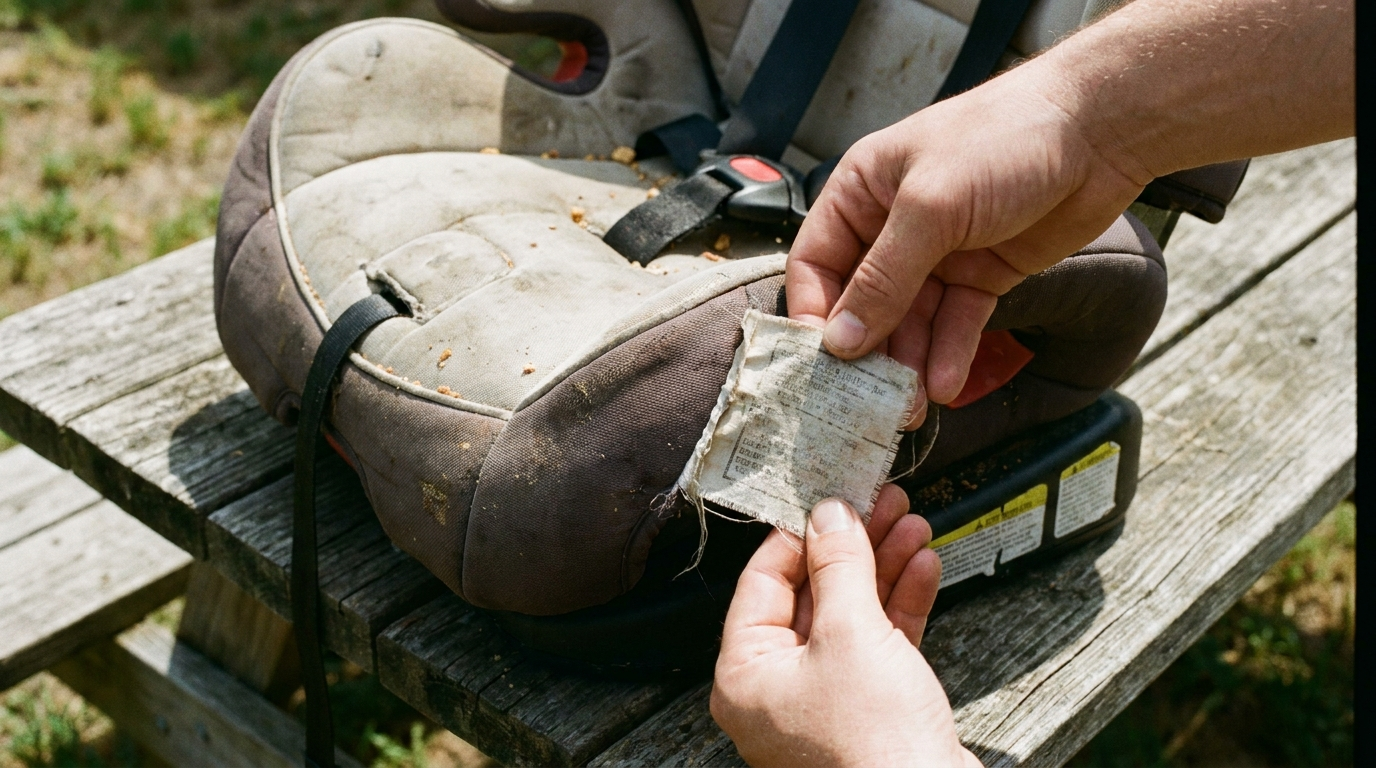
Age is the second major factor, and it’s easy to miss precisely because a seat can look pristine and still be past its usable life. ADAC’s guidance on how old a seat can be points to a maximum usable lifespan of roughly 6 to 10 years from the production date, since the plastic and foam materials genuinely degrade over time regardless of how carefully the seat was handled or how new it looks in photos. The specific figure varies by manufacturer, so checking the instruction manual, or contacting the manufacturer directly if it’s missing, is worth the extra step.
Before buying, check the certification label located under the round E-mark, and make sure the number doesn’t start with “01” or “02.” Those older ECE R44 sub-standards were legally banned from use back in April 2008, and a seat carrying one isn’t legal to use in Germany today regardless of how well-maintained it otherwise looks. Look instead for R44/03, R44/04, or the current R129 (i-Size) standard.
What Real People Say
Parents navigating the secondhand market describe the crash-history question as the one they’re most tempted to skip, since a seller who says “no, never in an accident” is easy to simply trust, but the practical, safer approach that experienced buyers describe is asking specifically and directly, including whether the seat was ever dropped, rather than accepting a general assurance that it “looks fine.”
The age question comes up as a genuine surprise for buyers who assumed a good-looking secondhand seat at a great price was automatically a smart purchase, only to later realize it was already close to or past its manufacturer-specified usable life, a detail that isn’t visible without actually checking the production date and the specific manufacturer’s guidance.
Step by Step
- Ask the seller directly whether the seat has ever been in an accident, even a minor one, or ever been dropped, and treat any uncertainty as a reason to pass.
- Check the production date and compare it against the manufacturer’s specified maximum usable lifespan, typically 6 to 10 years.
- Look at the certification label under the round E-mark, confirm it doesn’t start with “01” or “02.”
- Inspect the seat physically for intact straps and uncracked padding, and confirm the original instruction manual is included.
- If any of these checks raise doubt, treat that as sufficient reason to keep looking, rather than assuming a good price outweighs a safety uncertainty.
Compliance Note
This page explains general safety guidance for buying a secondhand child car seat in Germany, current as of mid-2026. It is not safety certification advice. For your specific seat and situation, confirm details directly with the manufacturer or a certified child safety retailer.
FAQ & Common Pitfalls
How do I actually find out if a used car seat was ever in an accident?
Ask the seller directly and specifically, not just whether the seat 'looks fine,' but whether it was ever installed in a car involved in a collision of any kind, even one that felt minor. ADAC is explicit that this is a genuine dealbreaker regardless of how the seat looks externally, internal locking mechanisms can be bent or compromised in ways you simply can't see, and that damage means the seat might not lock securely onto its base in a real crash. If a seller can't confirm the seat's full history with confidence, it's safer to treat that uncertainty itself as a reason to pass.
The seat looks brand new. Does age still matter if there's no visible wear?
Yes, and this is easy to overlook precisely because visible condition doesn't tell the whole story. Most manufacturers specify a maximum usable lifespan of roughly 6 to 10 years from the production date, check the manufacturer's own instruction manual for the specific figure, because the plastic and foam materials degrade with age regardless of how gently the seat was actually used or how new it looks.
How do I check if the seat's certification is still legally valid?
Look at the certification label located under the round E-mark. If the number there starts with '01' or '02', that seat carries an older ECE R44 sub-standard that was banned from use in Germany back in April 2008, and it isn't legal to use regardless of its physical condition. Newer labels showing R44/03, R44/04, or the current R129 (i-Size) standard are the ones to look for.
What else should I physically check before buying, beyond crash history and age?
Confirm the seat is genuinely complete: the straps should be intact with no fraying or cuts, the padding shouldn't show cracks or structural damage, and the original instruction manual should ideally still be included. Also ask directly whether the seat was ever dropped, since a hard fall can cause the same kind of hidden structural damage as a car accident, even without ever having been installed in a vehicle during a collision.