Secondhand Baby Gear in Munich: Where to Actually Look, and What Not to Buy Used
Munich has a genuinely active secondhand market for baby and kids' gear, mostly run through Kindergarten- and community-organized Kinderflohmärkte, which sell everything from maternity and seasonal children's clothing to strollers, playpens, cots, toys, and car and bike seats, with aggregator sites like kinderflohmarkt.com and babynews.de listing current dates across the city and its surroundings. Vinted covers the same secondhand clothing and small-goods territory online, on your own schedule rather than a single afternoon event. There's one significant exception to buying secondhand freely, though: child car seats. Germany's ADAC and consumer protection groups are direct about this, a car seat that's been in an accident or dropped should never be bought or used, since even invisible damage to the plastic shell can cause it to fail in a real crash, and you can only trust a seat's full history if you know the previous owner personally. Manufacturers also specify a maximum usable lifespan of roughly 6 to 10 years, since the plastic itself ages and becomes brittle over time regardless of accident history.
The Official Rule
If you’re trying to furnish a nursery or replace outgrown gear without buying everything new, Munich has a genuinely active secondhand scene, though it’s worth knowing where the line sits between “great place to save money” and “don’t risk it.”
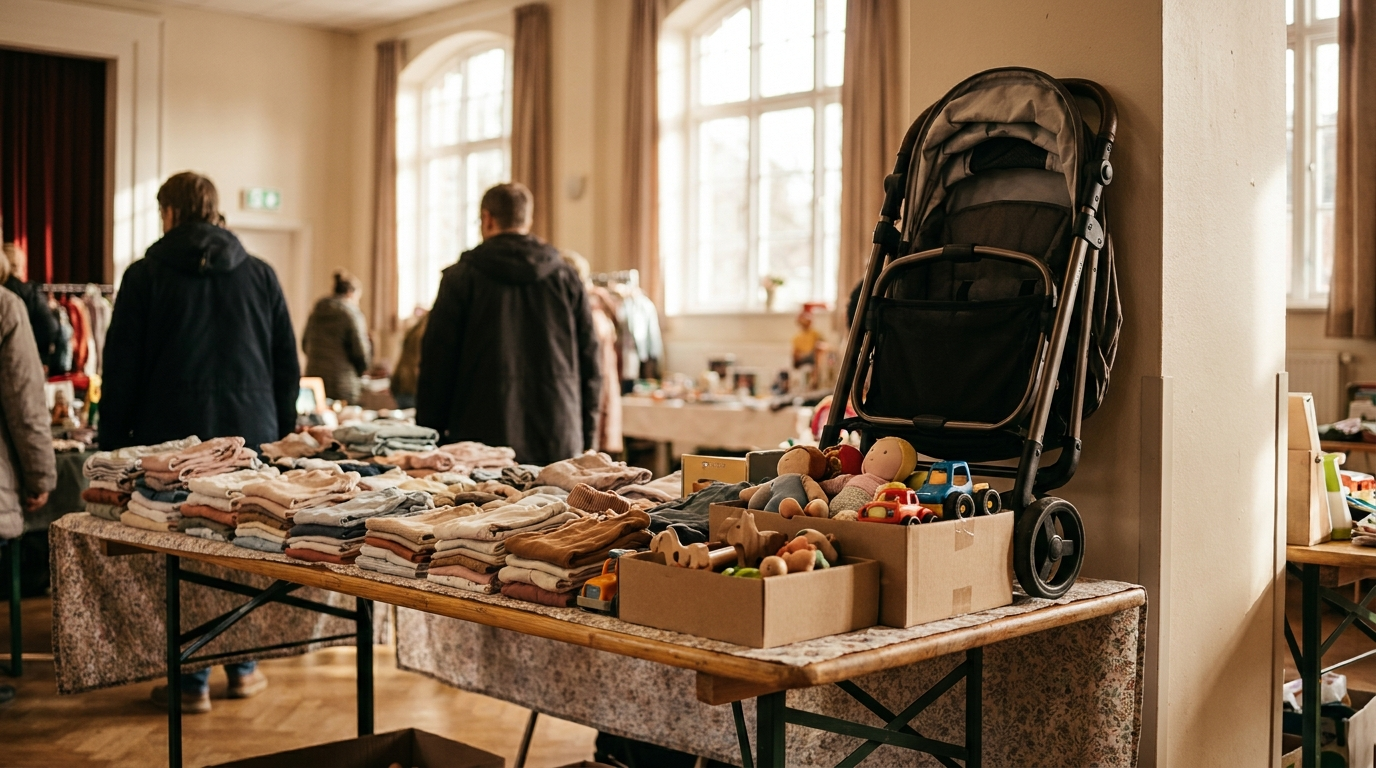
The main hub is the Kinderflohmarkt, a flea market organized by a specific Kindergarten or community group, typically a one-off afternoon event rather than a permanent shop, selling everything from maternity and seasonal children’s clothing to strollers, playpens, cots, toys, and car or bike seats. Since these are individual, scheduled events rather than a fixed location, aggregator sites like kinderflohmarkt.com are the practical way to find out what’s actually happening across Munich and its surroundings on a given weekend. For the same secondhand clothing and small-goods territory but on your own schedule, Vinted covers similar ground online.
| Item type | Secondhand approach |
|---|---|
| Clothing, toys, playpens, cots | Generally fine via Kinderflohmarkt or Vinted |
| Strollers | Generally fine, inspect for structural wear |
| Bike seats | Generally fine, check mounting hardware condition |
| Car seats | Only from someone whose full history you know personally |
Child car seats are the significant exception to buying freely secondhand. ADAC’s own guidance is direct: a seat that’s been in an accident, or simply dropped, should never be bought or used again, because even damage invisible to the eye can cause the plastic shell to fail in a real crash. The only way to actually trust a used seat’s history is knowing the previous owner personally, which rules out an anonymous flea market table or online listing without a verifiable background. On top of accident history, manufacturers specify a maximum usable lifespan of roughly 6 to 10 years for a given seat, since the plastic itself ages and becomes brittle over time regardless of whether it was ever in a collision.
What Real People Say
The practical split that emerges from ADAC’s own guidance is worth internalizing: most baby gear, clothing, toys, playpens, strollers, holds up fine secondhand and represents genuine savings with minimal real risk. Car seats are categorically different because their entire safety function depends on structural integrity that can be compromised invisibly, and a Kinderflohmarkt table or online listing simply can’t give you the verified history a car seat actually needs.
If you do end up considering a used seat from someone you know well, personally, not just a seller with good reviews, ADAC’s inspection checklist is worth going through point by point: the plastic shell for cracks or deformation, the harness for fraying, the buckle for clean engagement and release, the adjuster for unwanted loosening, and Isofix connectors for proper function if the seat uses them. Test-fitting it in your own car before finalizing anything is also worth the extra step.
Step by Step
- Check kinderflohmarkt.com or babynews.de/muenchen for upcoming Kinderflohmarkt dates rather than assuming there’s a fixed shop location.
- Use Vinted for secondhand clothing and small goods on your own schedule, outside the timing of a specific flea market event.
- Feel free to buy strollers, playpens, cots, and toys secondhand, inspecting for basic structural wear as you would with any used item.
- Never buy a car seat with an unknown or unverifiable history, including anything from an anonymous flea market table or online listing.
- Only consider a used car seat from someone whose full history you personally know, and even then, check the manufacturer’s stated maximum lifespan (roughly 6-10 years).
- If you do buy a used car seat from a trusted source, inspect it against ADAC’s checklist: shell condition, harness condition, buckle function, adjuster function, and Isofix function, before using it.
Compliance Note
This page explains general practices and safety guidance around secondhand baby gear in Munich, current as of mid-2026. It is not safety certification advice for any specific product. For car seats especially, confirm current manufacturer guidance and consider ADAC’s full inspection recommendations before using any secondhand seat.
FAQ & Common Pitfalls
Where do I actually find current Kinderflohmarkt dates in Munich?
Aggregator sites like kinderflohmarkt.com and babynews.de/muenchen maintain current listings of upcoming flea markets organized by Kindergartens and community groups across the city and surrounding area, since individual events are typically one-off afternoons rather than permanent shops.
Is it ever safe to buy a used child car seat?
Only if you know the seat's complete history personally, meaning you know the previous owner and can be confident it was never in an accident and never dropped. ADAC and German consumer protection groups are explicit that seats bought from an anonymous flea market table or online listing without a known history carry a real safety risk, since even small, invisible cracks or deformation in the plastic shell can cause a seat to fail in a real crash.
How old can a used car seat be before it's no longer safe, even without any accident history?
Manufacturers typically specify a maximum usable lifespan of roughly 6 to 10 years, since the plastic shell itself ages and becomes brittle over time, independent of whether the seat was ever in an accident. Check the specific manufacturer's stated lifespan for the seat in question rather than assuming a general number applies.
What should I actually inspect if I do decide to buy a used car seat from someone I trust?
ADAC recommends checking the plastic shell for cracks, breaks, or deformation, the harness straps for fraying or crush marks, that the buckle mechanism engages and releases cleanly, that the harness adjuster doesn't loosen on its own, and, if relevant, that Isofix connectors function properly. It's also worth test-fitting the seat in your own car before finalizing the purchase.