
A Noise Dispute With Your Neighbor in Munich: Who to Actually Contact, and in What Order
Most noise disputes in Munich follow a predictable ladder, and skipping steps usually backfires. Start with a direct, calm conversation with the neighbor, that alone resolves most cases. If it continues, notify your landlord or property manager in writing, keeping a Lärmprotokoll (a log of date, time, and type of disturbance). For an acute disturbance happening right now, especially at night, call the police non-emergency line, not 110. For a persistent but non-acute pattern, you can report it to the Bußgeldstelle at the Kreisverwaltungsreferat (KVR), but you must be able to name the person responsible and provide a neighbor who was also disturbed as a witness, anonymous reports aren't processed. Munich's own Hausarbeits- und Musiklärmverordnung sets quiet hours at 22:00 to 7:00 at night and 12:00 to 15:00 at midday for household and garden noise specifically, and the general catch-all offense, § 117 OWiG, carries a fine of up to 5,000 euros for avoidable noise. One important exception: if the noise in question is ordinary noise from children playing, this escalation path rarely helps, that's governed by separate, more protective rules.
The Official Rule
Munich doesn’t leave the order of steps to guesswork, even if no single source spells out the whole ladder in one place. Piecing together the city’s own Bußgeldstelle guidance, the underlying statute, and how the police and Ordnungsamt actually divide the work gives a clear practical sequence.
The legal foundation for a general noise complaint is § 117 OWiG, unzulässiger Lärm. It defines an administrative offense as making noise “without justified cause or in an impermissible or, under the circumstances, avoidable extent” that’s capable of significantly disturbing the public or neighbors, or harming someone’s health. The fine tops out at 5,000 euros, but that figure is a ceiling for genuinely persistent, documented cases, not a starting point. Crucially, § 117 turns on what’s avoidable, which is exactly why ordinary noise, like children playing, gets treated differently under separate case law rather than folded into this statute.
Munich adds its own layer on top of the federal statute: the Hausarbeits- und Musiklärmverordnung. This city ordinance sets night quiet hours from 22:00 to 7:00, and a midday quiet period from 12:00 to 15:00, specifically for disruptive household and garden work and music. Note that the morning end of the night window, 7:00 rather than the more commonly cited 6:00 used elsewhere in Germany, is a genuinely Munich-specific detail worth knowing before you assume a 6:30am vacuum cleaner is automatically fair game.
| Situation | Contact | What they can actually do |
|---|---|---|
| First occurrence, ongoing but not urgent | The neighbor directly | Resolves the large majority of disputes without any authority involved |
| Continues after a direct conversation | Landlord or property manager, in writing | Can mediate, issue a warning to the disturbing tenant, and start a documented paper trail |
| Acute disturbance happening right now, especially at night | Police, non-emergency line (not 110) | Can respond on-site, attempt to resolve it directly, and document the incident |
| Persistent, documented pattern, not urgent in the moment | Bußgeldstelle, Kreisverwaltungsreferat (KVR) | Investigates, hears all parties, can issue a formal fine, but only if you can name the responsible person and provide a disturbed witness |
| Landlord not acting on a documented, ongoing problem | Mieterverein (tenant association) | Advises on rent reduction claims and further legal options |
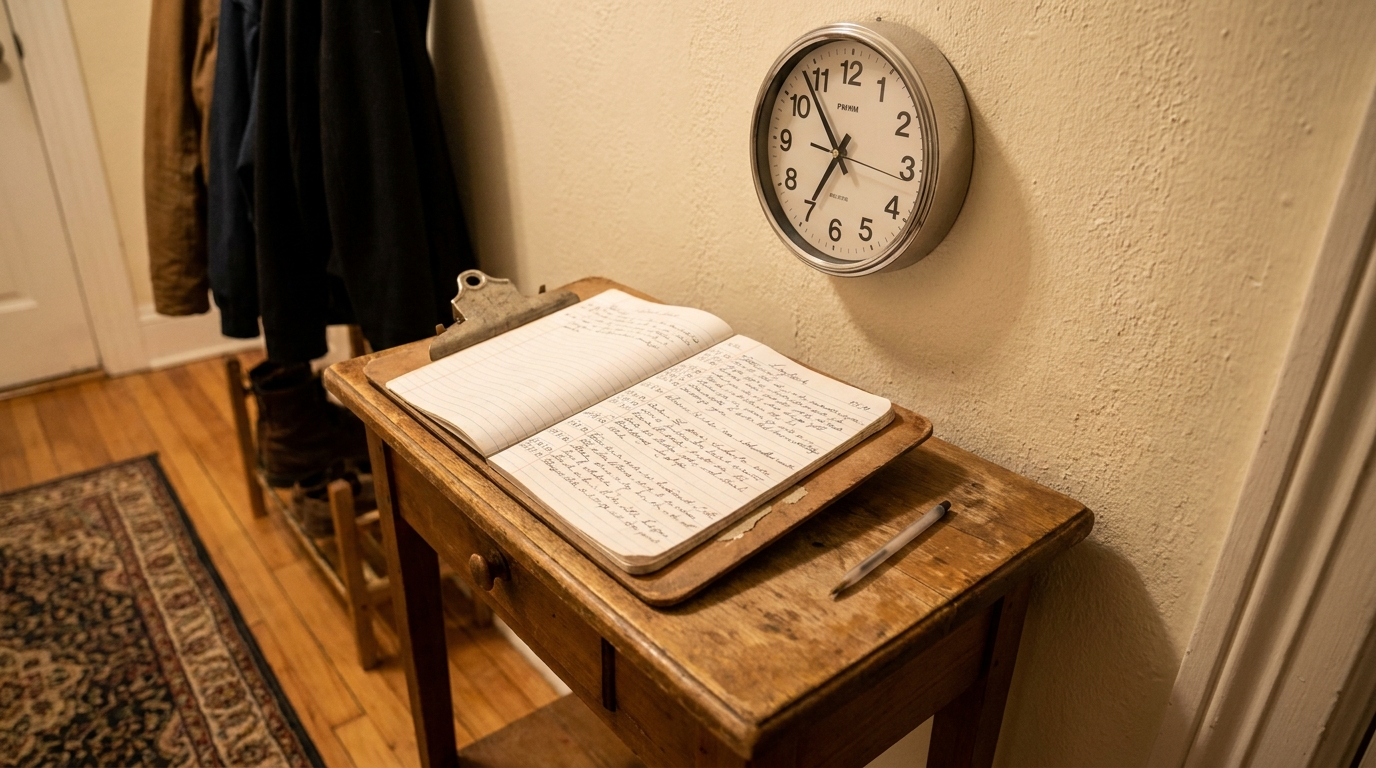
One requirement genuinely surprises people used to anonymous tip lines elsewhere: Munich’s Bußgeldstelle cannot process a report against an unnamed person, and it needs at least one disturbed witness, not just your own account. This is precisely why a Lärmprotokoll, a simple log of date, time, duration, and nature of each disturbance, matters from the very first incident, not just once you’ve decided to escalate. Without it, you’re rebuilding a timeline from memory exactly when you need it to be most credible.
What Real People Say
The pattern that comes up again and again on forums like Toytown Germany, and in expat explainers like The Munich Eye’s Ruhezeit guide, is that people who skip straight to calling the police or filing an Ordnungsamt report over a first-time, moderate disturbance tend to find the process frustrating and disproportionate to what actually happened. The advice that shows up consistently is to start with a calm, direct conversation, ideally not in the heat of the moment, and treat the landlord notification as the real second step, since a written complaint is often what finally gets a chronically noisy neighbor’s attention in a way an informal chat didn’t.
German legal explainer channels covering Ruhestörung on YouTube reinforce the same order, and add a detail worth internalizing: officers responding to an active noise call are, in the first instance, there to de-escalate and remind people of the rules, not to write a fine on the spot. The formal Bußgeldstelle process, with its named-person and witness requirements, exists specifically for the pattern that keeps recurring after that informal intervention hasn’t worked.
Step by Step
- Try a direct, calm conversation firstMost disputes resolve here. Pick a moment that isn't immediately after the disturbance, when both sides can actually hear each other.
- Start a Lärmprotokoll the same day it continuesLog the date, start and end time, and nature of each incident. This becomes your evidence base for every step that follows.
- Notify your landlord or property manager in writingInclude your log. A written notice on file also matters if you later need to show your landlord had a genuine chance to act.
- For an acute disturbance right now, call the non-emergency police line, not 110This applies especially at night, when waiting for a business-hours process isn't realistic.
- For a persistent, documented pattern, report it to the KVR BußgeldstelleYou'll need to name the person responsible and provide a disturbed neighbor as a witness. Anonymous or unnamed reports aren't processed.
- If your landlord still isn't acting, contact a MietervereinThey can advise on whether the ongoing, documented disturbance supports a rent reduction claim.
Compliance Note
This page explains the general escalation process for noise disputes under Munich and German administrative law, but this is not legal advice, and outcomes depend on the specific facts of your situation. For your specific case, consult a Mietrecht attorney, your local Mieterverein, or contact the Kreisverwaltungsreferat directly.
FAQ & Common Pitfalls
Can I just report my neighbor to the Ordnungsamt anonymously?
No. Munich's Bußgeldstelle at the Kreisverwaltungsreferat explicitly requires that a report name the person responsible for the disturbance, and that you provide at least one witness, typically another neighbor, who was also significantly disturbed at the stated time. An anonymous tip about noise you can't attach to a specific person and specific incident generally won't be processed into a case. This is exactly why keeping a written Lärmprotokoll from the start matters, it gives you the dates, times, and pattern you'll need if it does escalate that far.
What's the actual difference between calling the police and reporting to the Ordnungsamt?
It comes down to timing. The police handle acute situations, a disturbance happening right now that you want stopped tonight, especially outside business hours or during night quiet hours. The Ordnungsamt's Bußgeldstelle, by contrast, handles a documented pattern of persistent violations after the fact, they investigate, hear all sides, and can issue a formal fine, but that process takes time and isn't a same-night fix. If your neighbor is being loud at 11pm right now, the non-emergency police line is the realistic option, not an online form to the Bußgeldstelle.
Is there a fixed decibel limit that defines illegal noise in Munich?
Not really, and that surprises a lot of newcomers expecting a precise number. § 117 OWiG defines unlawful noise in terms of what's avoidable and what significantly disturbs the general public or neighbors, evaluated from the perspective of a reasonable average person and the specific building's acoustics, not a fixed decibel meter reading. What's fixed, at least in Munich, are the quiet hour windows themselves: 22:00 to 7:00 at night and 12:00 to 15:00 at midday for household and garden noise under the city's own Hausarbeits- und Musiklärmverordnung.
My landlord isn't doing anything after I reported a noisy neighbor. What now?
This is where a Mieterverein (tenant association) membership becomes genuinely useful, they can advise on whether your landlord's inaction opens the door to a rent reduction claim, since landlords do have an obligation to address disturbances once properly notified. Keep your Lärmprotokoll running in the meantime regardless of what your landlord does, it's the evidence base for every option below it on this ladder, from a formal Ordnungsamt report to a rent reduction claim to, in genuinely persistent and severe cases, legal action.
Does any of this apply if the noise I'm dealing with is just normal kids playing?
Not really, and this is worth knowing before you invest time in a formal complaint. German courts, including a 2017 Bundesgerichtshof decision, treat ordinary noise from children playing as something other tenants generally have to tolerate, it isn't typically treated as the kind of avoidable disturbance § 117 OWiG or a landlord notice is built for. If a Kita, playground, or a family's children are the actual source, the more useful starting point is understanding what's specifically protected and what genuinely isn't, rather than this general escalation ladder.