Landing Before You Have a German SIM? A Travel eSIM Can Bridge Those First Few Days
The gap between landing in Munich and actually walking into a shop to register for a proper German SIM, often 2 to 5 days once you factor in jet lag, unpacking, and finding a store, doesn't have to mean going without mobile data. A travel or tourist eSIM, installed on your phone before you even leave home but left inactive until you land, gives you an immediate, no-queue mobile connection the moment you arrive: maps, messaging your new landlord, checking transit routes, all working before you've dealt with any German paperwork at all. Since most modern phones support dual SIM, you can run this alongside your existing home number, keeping that number active for calls and important texts while the travel eSIM handles data. One important limit worth knowing upfront: this bridge solution does not solve the separate problem of needing a German phone number for things like bank verification codes or appointment confirmation SMS, those specifically require an actual German-registered number, so treat the travel eSIM purely as a connectivity bridge for your first few days, not a substitute for the German SIM registration process you'll still need to complete.
The Official Rule
Arriving in Munich for a permanent move creates an immediate, practical gap: you need mobile connectivity right away for maps, messaging, and logistics, but actually registering for a proper German SIM card typically means finding a shop, going through identity verification, and often waiting for activation, a process that realistically takes 2 to 5 days once jet lag, unpacking, and simply locating a store are factored in.
A travel or tourist eSIM is specifically designed to close exactly this gap, and the practical approach, according to guidance on using eSIMs for German travel, is installing the eSIM profile on your phone before you even leave home, ideally a few days to a week ahead of departure, but leaving it inactive until you’ve actually landed. This means the moment you land, you can activate it and have an immediate, no-queue mobile connection, checking directions, messaging your new landlord about arrival time, or looking up transit routes, all before you’ve dealt with a single piece of German paperwork.
| Need | Does a travel eSIM solve it? |
|---|---|
| Immediate mobile data on arrival | Yes, this is exactly what it's for |
| Maps, messaging, transit lookup | Yes |
| Keeping your home number active for calls | Yes, via dual SIM on most modern phones |
| German bank account verification SMS | No, requires an actual German-registered number |
| Official appointment confirmation SMS | No, same limitation |
Because most modern phones support dual SIM functionality, you don’t have to choose between staying reachable on your home number and having local data. You can set the Germany-focused travel eSIM as your default line for cellular data, while keeping your existing home number active specifically for calls and text messages, including any two-factor authentication codes tied to accounts back home that you’d otherwise miss during the transition.
One limit is worth understanding clearly before you rely on this too heavily: a travel eSIM does not solve the separate, specific requirement for a German phone number that many services demand. Bank account verification codes, appointment confirmation texts from German offices, and similar services generally require a number actually registered in Germany, not a foreign or virtual travel eSIM number. Treat the travel eSIM strictly as a connectivity bridge for your first few days, not a substitute for the actual German SIM registration process you’ll still need to complete once you’re able to visit a shop in person.
What Real People Say
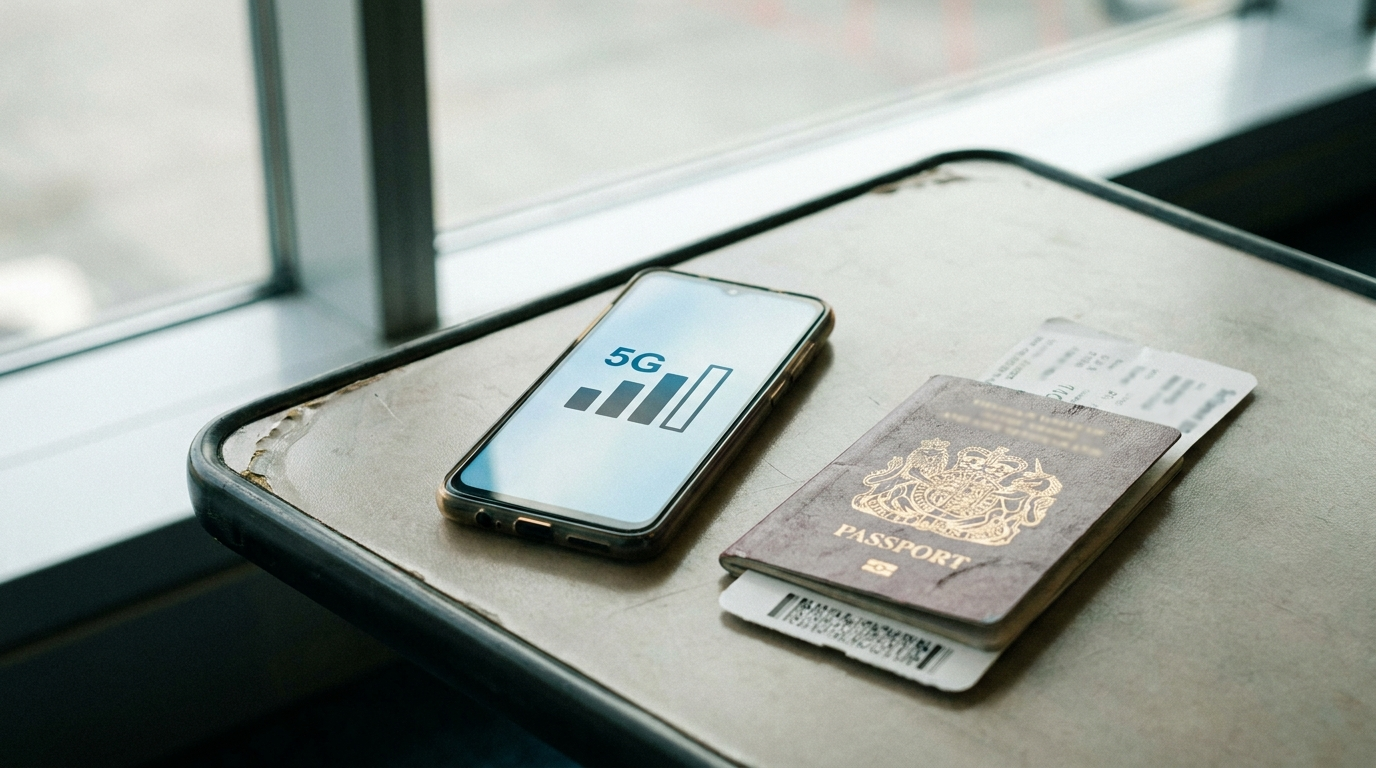
Newcomers describe the specific relief of landing and immediately having maps and messaging working, rather than hunting for airport WiFi passwords or trying to find a SIM kiosk with luggage and jet-lagged kids in tow, small logistics that add up to real stress during an already demanding first day. The pattern that works best, based on how people describe using this successfully, is treating the eSIM purchase and installation as a pre-departure task, not something to figure out after arrival.
The most common mistake people describe is either activating the eSIM too early, at home, before departure, wasting days of a plan that’s often time-limited, or assuming it replaces the need for a genuine German SIM entirely, only to discover weeks later that a bank or government office won’t accept their travel eSIM’s number for verification purposes.
Step by Step
- Choose and purchase a travel eSIM plan before you leave home, ideally a few days to a week ahead of your move date.
- Install the eSIM profile on your phone while still at home, but don’t activate it yet.
- Activate the eSIM as soon as you land in Germany, giving you immediate mobile data with no queue or shop visit needed.
- Set up dual SIM so your home number stays active for calls and texts while the travel eSIM handles data.
- Still plan to register for a proper German SIM within your first week or two, since the travel eSIM doesn’t provide a German number for banking, appointments, or official verification purposes.
Compliance Note
This page explains a general practical approach to using a travel eSIM as a connectivity bridge when moving to Germany, current as of mid-2026. It is not a substitute for completing German SIM registration, which remains necessary for services requiring a German phone number. Confirm specific eSIM provider terms and coverage directly before purchasing.
FAQ & Common Pitfalls
When should we actually install and activate the travel eSIM?
Install the eSIM profile on your phone before you leave home, ideally a few days to a week ahead, so it's ready to go. Don't activate it until you've actually landed in Germany, though, activating early wastes days of a typically time-limited data plan while you're still at home and don't need it yet.
Can we still receive calls and texts on our home number while using the travel eSIM?
Yes, most modern phones support dual SIM functionality, so you can set the Germany-focused travel eSIM as your default line for data while keeping your home number active specifically for calls and texts. This is genuinely useful for catching important messages, including two-factor authentication codes tied to accounts back home, without losing connectivity for everyday use in Germany.
Does this travel eSIM help us with things like opening a German bank account or confirming appointments by SMS?
No, and this is the most important limit to understand upfront. Banks, government offices, and many services that send verification codes or confirmations by SMS specifically require a German-registered phone number, not a foreign or virtual travel eSIM number. The travel eSIM solves your connectivity gap for the first few days, it doesn't solve the separate requirement for an actual German number, which you'll still need to get through proper SIM registration once you're settled.
Is a travel eSIM actually necessary, or can we just rely on WiFi for the first few days?
It depends on your situation, but relying purely on WiFi means being disconnected the moment you step outside an apartment or a cafe, right when you're most likely to need maps, transit directions, or messaging in an unfamiliar city. For a family managing kids, luggage, and a new address all at once, having reliable mobile data from the moment you land removes one genuine source of stress during an already demanding transition period.