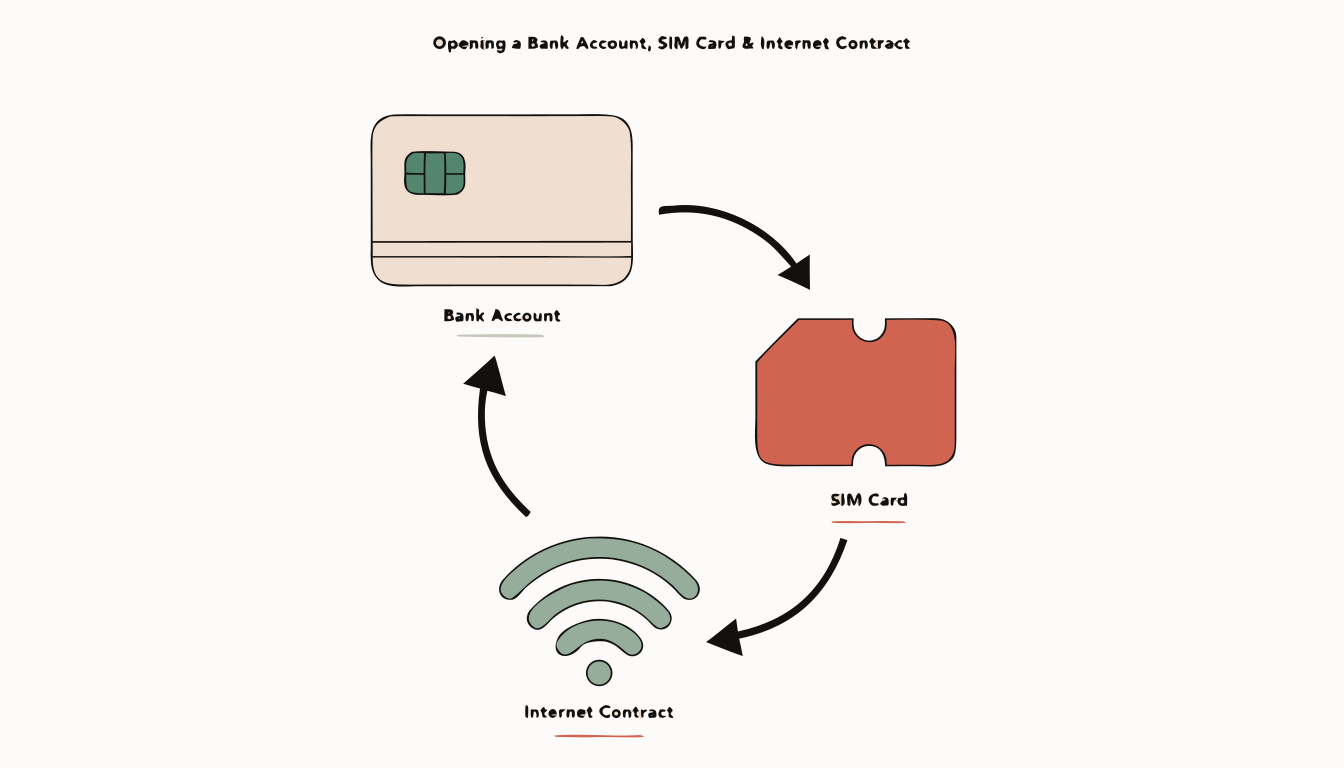
The Newcomer's Chicken-and-Egg Problem: Bank Account, SIM Card, Internet, in What Order?
Contract SIM plans, standard bank accounts at some providers, and home internet contracts in Germany often want a SCHUFA credit check, and a newcomer with zero German credit history isn't going to pass one, not because of bad credit but because there's no history at all to check. The way around this genuinely exists, and it starts with prepaid, not contracts. A prepaid SIM plan, Congstar's 'Prepaid wie ich will' is one commonly cited option, involves no debt relationship at all, you spend only what you've loaded, so there's no credit check to fail, and this works even with a negative SCHUFA entry, not just a missing one. For a bank account, German law requires banks to offer a Basiskonto, a basic account, to any consumer legally residing in the EU, regardless of creditworthiness or refugee status, and separately, some providers, particularly newer or foreign-based ones, skip SCHUFA checks for account opening entirely. For home internet, prepaid options exist here too: no contract, immediately usable, payable through recharge cards or online top-up without necessarily needing a German bank account behind it. The realistic sequence for a newcomer: prepaid SIM and a Basiskonto or SCHUFA-free bank account first, then use those to build enough of a footprint to move into contract plans once you actually want to.
The Official Rule
Newcomers to Germany run into a genuinely frustrating loop almost immediately: getting a contract SIM plan often wants a SCHUFA credit check, some standard bank accounts do too, and home internet contracts frequently follow the same pattern, but a SCHUFA check on someone with zero German financial history doesn’t come back clean, it comes back essentially blank, and blank often gets treated with the same caution as bad credit.
The practical way through this starts with recognizing that prepaid options exist specifically because they sidestep the credit-check question entirely. A prepaid SIM plan involves no debt relationship by design, you spend only what you’ve already loaded onto it, so there’s no credit risk for a provider to assess in the first place, no credit check needed. This matters enough that some prepaid providers, Congstar’s “Prepaid wie ich will” line is a commonly cited example, work even for someone with an actual negative SCHUFA entry, not just a missing one, because the underlying product doesn’t depend on creditworthiness at all.
| Contract plan | Prepaid plan | |
|---|---|---|
| Debt relationship | Yes, you're billed after use | None, you spend only what's loaded |
| SCHUFA check typically required | Often yes | Typically no |
| Works with no German credit history | Not reliably | Yes, by design |
For a bank account specifically, German law actually gives you a real, guaranteed entitlement worth knowing about explicitly: the Basiskonto. Banks are legally required to offer this basic account to any consumer legally residing in the EU, regardless of their creditworthiness or refugee status, this isn’t a courtesy a bank might extend, it’s a legal requirement. Separately from that guarantee, some banks, particularly newer digital providers or foreign-based ones, skip SCHUFA checks for account opening entirely as part of their standard process, giving you another practical path in alongside the Basiskonto right.
Home internet has a prepaid path too, and it’s worth knowing about specifically because contract internet is often the last piece newcomers realize has the same SCHUFA friction as phone plans. Prepaid internet options exist that require no contract, are usable immediately, and can be paid for through recharge cards or online top-up, in some cases without necessarily needing a German bank account behind the payment method at all.
Put together, a realistic sequence emerges for someone starting completely from zero. Prepaid SIM first, since it sidesteps the credit question entirely. A Basiskonto or a SCHUFA-free bank account alongside it, since you’re legally entitled to the former regardless of your situation. Prepaid internet if a fixed-line contract isn’t yet workable. Once you’ve built up a genuine footprint, an address history, a bank account with real activity, moving into contract plans for any of these becomes meaningfully more straightforward.
What Real People Say
Newcomers navigating this loop consistently describe the initial frustration of not understanding why they were being treated cautiously despite having no actual negative history, and the reframing that helps most is understanding that a SCHUFA check is fundamentally about verifiable track record, not about being judged as untrustworthy.
The practical sequence, prepaid and a Basiskonto first, contracts later once there’s a real footprint, comes up repeatedly in newcomer community discussions as the approach that actually works, as opposed to repeatedly getting declined for contract products before realizing prepaid was the intended starting point all along.
Step by Step
- Start with a prepaid SIM plan rather than attempting a contract plan first, this sidesteps the SCHUFA question entirely by design.
- Open a Basiskonto if a standard account application is declined, remember this is a legal entitlement for any legal EU resident, not something a bank can simply refuse.
- Consider a SCHUFA-free bank account provider as an alternative path, particularly newer digital or foreign-based banks that skip the check as standard practice.
- If a fixed-line internet contract isn’t yet workable, use a prepaid internet option as a bridge, rather than going without connectivity while you build up a German footprint.
- Revisit contract plans once you’ve established real history, an active bank account, an established address, this generally makes qualifying meaningfully easier later.
Compliance Note
This page explains general strategies newcomers use to navigate SCHUFA-related barriers for bank accounts, SIM cards, and internet contracts in Germany, but specific provider policies and eligibility can vary and change. For your specific situation, confirm current requirements directly with individual banks and providers.
FAQ & Common Pitfalls
Why would a bank or phone provider reject us if we don't actually have bad credit, just no credit history at all?
Because a SCHUFA check isn't really asking 'is this person financially responsible,' it's asking 'is there a track record I can verify,' and a genuinely new arrival has no German track record either way, good or bad. Some providers treat a blank SCHUFA file cautiously, similarly to a negative one, simply because there's nothing to confirm reliability. This is exactly why prepaid, which sidesteps the credit-check question by removing debt from the equation entirely, is the practical starting point rather than a downgrade.
Is a Basiskonto a real, normal bank account, or some kind of limited version?
It's a genuinely real account with the core functions you'd expect, receiving transfers, paying bills, using a debit card, and German law requires banks to offer one to any consumer legally residing in the EU regardless of creditworthiness or refugee status, this is a legal entitlement, not a favor a bank is choosing to extend. It may have some limitations compared to a premium account tier, but it functions as your actual bank account, not a placeholder.
Once we've been in Germany a while and built up some history, is it worth switching from prepaid to contract plans?
For many families, yes, contract plans often work out cheaper per month for heavy, predictable usage once you're eligible for one, and a longer-term account or address history in Germany generally makes qualifying for one more straightforward. Treating prepaid as the practical starting point rather than the permanent solution, and reassessing after you've established a real footprint, is a reasonable approach rather than staying on prepaid indefinitely out of habit.