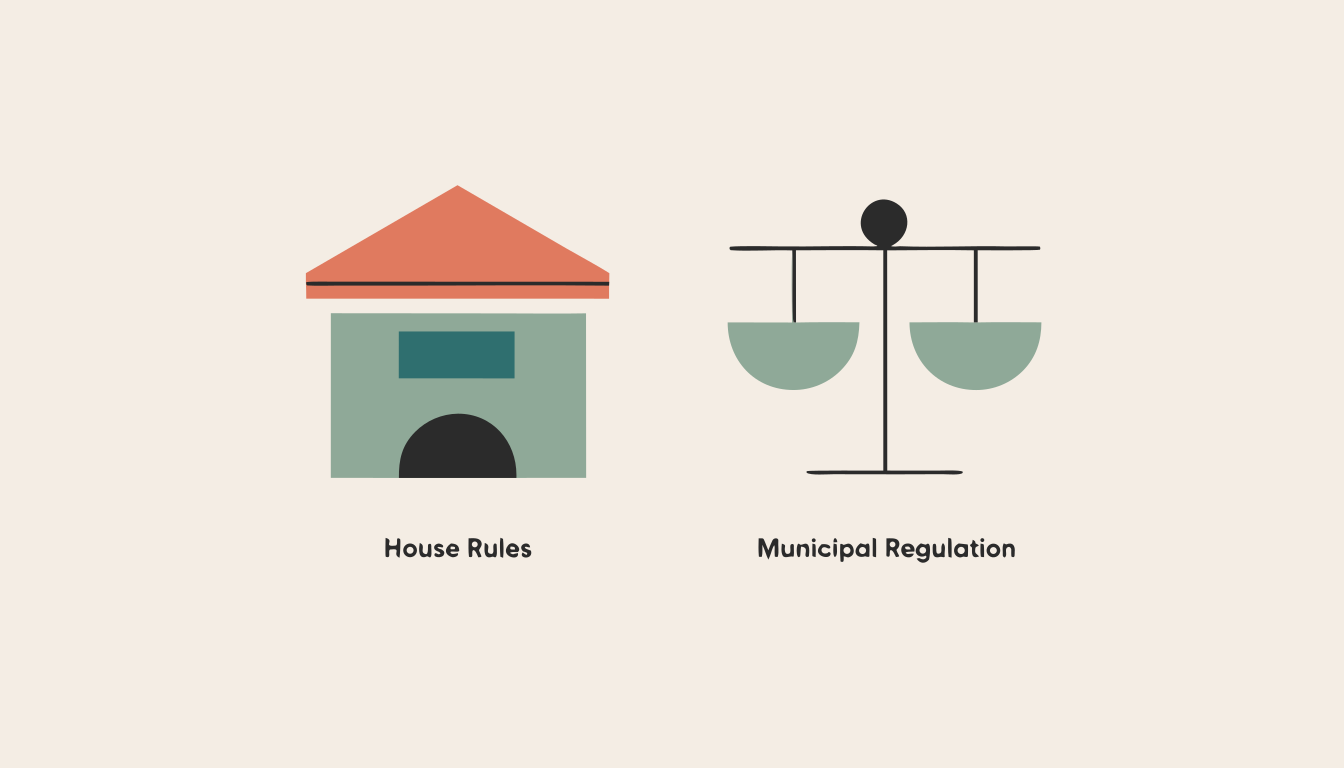
Your Hausordnung Bans Sunday Laundry, the City Doesn't: Which Rule Actually Wins?
When a building's Hausordnung sets stricter quiet-hour rules than the general municipal standard, the stricter Hausordnung rule generally wins and is binding on every tenant, as long as it was validly incorporated into the lease (Mietvertrag), typically by being explicitly referenced or attached at signing. The safest approach as a tenant is simply to follow whichever rule is stricter whenever the two differ, since that's always the compliant choice regardless of which document technically controls. The one hard limit worth knowing: a Hausordnung can be stricter than the general standard, but it can never be more lenient than mandatory statutory quiet hours, especially night rest and Sunday and holiday rest, these override any private contractual arrangement that tries to loosen them. So a landlord can add extra restrictions through the Hausordnung, but can't use it to legally permit, say, loud drilling during the legally mandated Sunday quiet period.
The Official Rule
Munich renters sometimes discover their building’s own Hausordnung is noticeably stricter than what they’d expect from general municipal or customary quiet-hours standards, a Sunday washing-machine ban, an earlier evening cutoff, a stricter midday rest window, and the natural question is which rule actually applies.
A validly incorporated Hausordnung’s rules generally take precedence, including when they’re stricter than the general standard. promietrecht.de’s explainer is direct about this: when quiet hours are set out in a Hausordnung and that Hausordnung has been validly incorporated into the Mietvertrag, its rule takes precedence over the generally customary standard and every tenant in the building is expected to follow it.
The safest practical approach cuts through any ambiguity: always follow whichever of the two rules is stricter. mietrecht.com’s guidance frames this plainly, if a Hausordnung’s terms are more generous than the general rule, the general legal or municipal quiet hours still have to be observed regardless. If the Hausordnung is stricter, those additional restrictions apply too. Following the stricter of the two, whichever that happens to be in a given building, is always the compliant choice.
| Situation | Which rule applies |
|---|---|
| Hausordnung is stricter than the general standard, validly incorporated into the lease | The stricter Hausordnung rule applies |
| Hausordnung is more lenient than mandatory statutory quiet hours (night rest, Sunday/holiday rest) | Mandatory statutory quiet hours still apply, the lenient Hausordnung term doesn't override them |
| Hausordnung wasn't validly incorporated into the lease | Weaker claim to binding force as a contract term, general standard is the safer default |
There’s one hard ceiling on how far a Hausordnung’s strictness can go: it cannot loosen mandatory statutory quiet hours. immowelt’s guidance and opacta’s explainer both confirm that mandatory legal protections, especially night rest and Sunday and public holiday rest, always take precedence over any contractual arrangement, including a Hausordnung, that tries to permit noise during those legally protected windows. A Hausordnung can add restrictions on top of the baseline, but it can never be used to carve out an exception that undercuts a legally mandated quiet period.
What Real People Say
Tenants navigating their first German Hausordnung consistently describe the same moment of confusion: encountering a rule, often about Sunday laundry or a specific evening cutoff, that reads stricter than what a general search about German quiet hours would suggest, and wondering whether it’s genuinely enforceable or just a building tradition with no real teeth. Tenancy-law guidance is consistent in resolving this the same way: if it was properly part of the signed lease, treat it as binding, and when in doubt, the stricter rule is always the safe one to follow regardless of which document technically wins in a given case.
The other pattern worth knowing is that landlords occasionally try to use a Hausordnung to loosen a mandatory quiet period, permitting renovation noise on a Sunday, for instance, and tenancy-law resources are equally consistent that this specific direction doesn’t work, mandatory statutory quiet hours simply aren’t something a private house rule can contract around.
Step by Step
- Check whether your building’s Hausordnung was explicitly referenced in or attached to your Mietvertrag at signing, this is what determines whether it’s validly incorporated and binding as a contract term.
- Compare your Hausordnung’s specific quiet-hour rules against the general municipal or customary standard, and note anywhere it’s stricter, that’s the rule you’re expected to follow in your building.
- When genuinely unsure which rule applies to a specific situation, default to whichever is stricter, this is always the compliant choice regardless of which document technically controls.
- Know the one hard limit: mandatory statutory quiet hours, especially night rest and Sunday/holiday rest, always override any contractual term, including a Hausordnung, that tries to loosen them.
- If a landlord or neighbor cites a Hausordnung rule that seems to permit something mandatory quiet hours would otherwise prohibit, that specific claim is worth double-checking, since a Hausordnung genuinely cannot achieve that legally.
Compliance Note
This page explains the general legal framework around Hausordnung and quiet-hour rules in German tenancy law, but this is not legal advice, and specific situations can depend on your individual lease terms and local rules. For your specific situation, consult a Mietrecht (tenancy law) attorney or your local Mieterverein.
FAQ & Common Pitfalls
Our Hausordnung bans using the washing machine at all on Sundays. Is that actually enforceable, or just a suggestion?
If the Hausordnung was validly incorporated into your lease, typically by being explicitly referenced in the Mietvertrag or attached to it at signing, this kind of stricter, specific rule is generally enforceable, not just a suggestion. This is a common example of a Hausordnung being stricter than the general Sunday-quiet standard, which usually restricts noisy activity rather than banning appliance use outright, and the stricter written rule is the one you're expected to follow.
What if the Hausordnung was just handed to us after we signed the lease, not referenced in it?
This is exactly where the 'validly incorporated' condition matters. A Hausordnung that wasn't explicitly referenced in or attached to the Mietvertrag at signing has a weaker claim to being binding as a contractual term, though building-wide house rules can still carry some weight through other means. If you're ever genuinely unsure whether a specific Hausordnung rule applies to you, this timing detail, whether it was part of your actual signed agreement, is the first thing worth checking.
Can our landlord add a rule to the Hausordnung banning all noise after 8 PM, even though the general rule allows it until 10 PM?
Yes, a landlord can generally set a stricter rule through a validly incorporated Hausordnung, an 8 PM cutoff instead of the usual 10 PM night-rest start is the kind of building-specific restriction this mechanism is meant to allow. What a landlord cannot do is the reverse, use the Hausordnung to permit noise during a period where mandatory statutory quiet hours, like the standard night-rest window, would otherwise apply.
Does this same 'stricter wins, but can't loosen mandatory rules' logic apply to noise from children specifically?
The general quiet-hours hierarchy described here still applies to when noise is or isn't allowed, but it's worth knowing that ordinary child noise itself sits under a separate, specifically protective legal framework that a Hausordnung's quiet hours can't override either. A Hausordnung can still set stricter general quiet hours for the building, but it can't be used to specifically prohibit or penalize normal, age-appropriate child noise during otherwise permitted hours.