There's a New Line on Your Heating Bill, and It's Actually Your Landlord's Problem Too
Since 2023, Germany's Kohlendioxidkostenaufteilungsgesetz, the CO2-Kostenaufteilungsgesetz, genuinely requires landlords to shoulder part of the CO2 costs generated by heating and hot water in a rented building, this isn't a cost you're simply expected to absorb entirely on your own anymore. The split works through a real, ten-step model for residential and mixed-use buildings: the worse a building's energy efficiency actually is, the more of the CO2 cost your landlord has to cover. At the poor end, buildings emitting 52 kg or more of CO2 per square meter annually, landlords genuinely have to cover up to 95 percent of the CO2 cost. At the other end, genuinely efficient buildings emitting less than 12 kg of CO2 per square meter annually, roughly Effizienzhaus 55 standard, tenants cover the full 100 percent, since there's little room left to improve. Your landlord is legally required to actually show this CO2 cost breakdown and their specific share in your heating bill (Heizkostenabrechnung), and if they genuinely fail to do this, you have a real, concrete remedy: you're entitled to reduce your share of the heating costs by 3 percent.
The Official Rule
A CO2 cost line item that started appearing on heating bills in 2023 isn’t simply an extra charge you have to absorb, it’s actually the product of a real law designed to share that specific cost with your landlord.
Since 2023, Germany’s Kohlendioxidkostenaufteilungsgesetz, the CO2-Kostenaufteilungsgesetz, genuinely requires landlords to shoulder part of the CO2 costs generated by heating and hot water in a rented building. This became relevant starting with heating cost statements for the year 2023, it’s a real, statutory obligation, not a voluntary landlord practice that varies by building.
| Building efficiency | Landlord's share of CO2 cost |
|---|---|
| Poor (52+ kg CO2/m² per year) | Up to 95% |
| Very efficient (under 12 kg CO2/m² per year, ~EH 55) | 0%, tenant covers 100% |
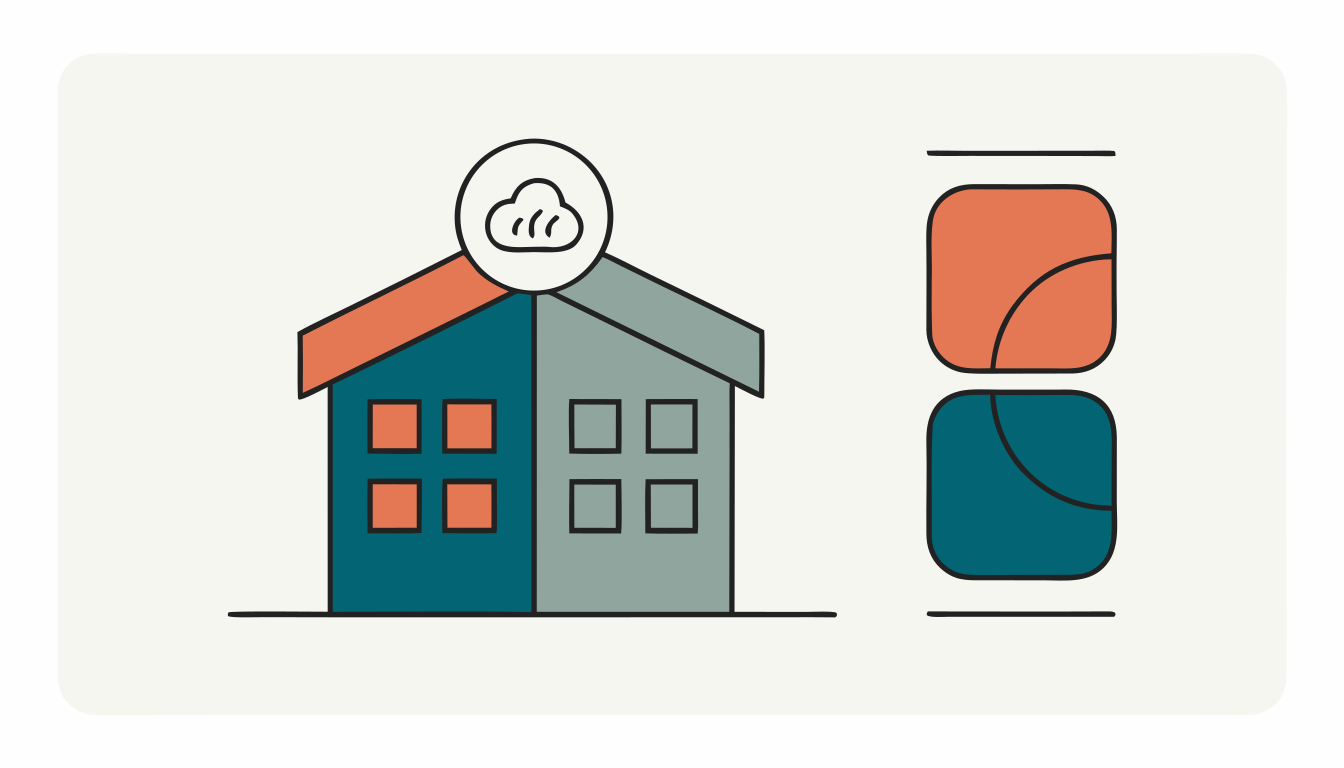
The actual split works through a real, ten-step model that applies to residential and mixed-use buildings. The core logic is genuinely straightforward once you see it: the worse a building’s actual energy efficiency, the more of the CO2 cost your landlord has to cover, this creates a real financial incentive for landlords to actually invest in improving inefficient buildings rather than simply passing the full cost downstream.
At the poor end of the scale, buildings genuinely emitting 52 kg or more of CO2 per square meter of living space annually, landlords have to cover up to 95 percent of the CO2 cost. This is a substantial shift of what used to be an entirely tenant-borne cost, and it applies specifically to older, less efficient buildings where tenants have historically had the least ability to control heating costs themselves.
At the other end, genuinely efficient buildings, emitting less than 12 kg of CO2 per square meter annually, roughly corresponding to Effizienzhaus 55 standard, put the full 100 percent of the CO2 cost on tenants. The reasoning here is that there’s genuinely little room left for further efficiency improvement in a building already performing this well, so the cost-sharing incentive doesn’t apply in the same way.
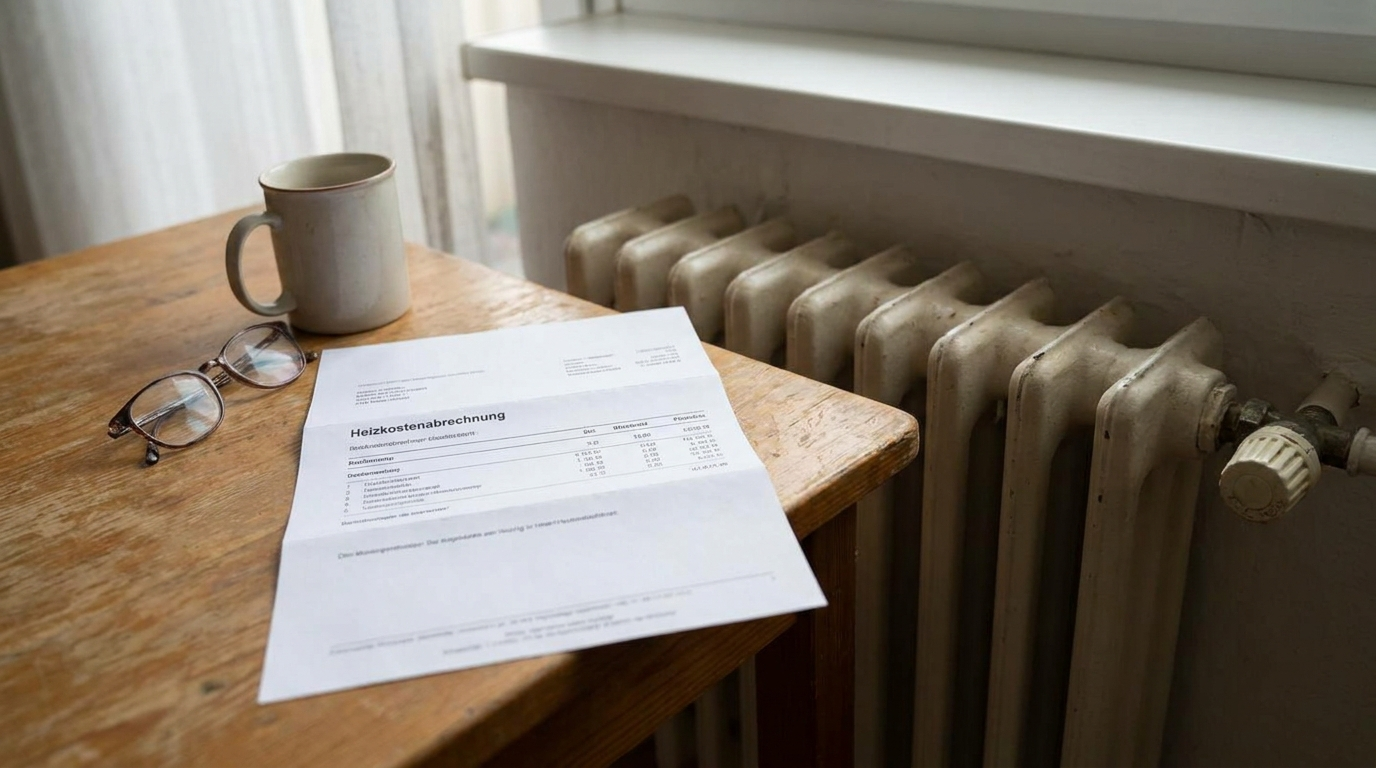
Your landlord is legally required to actually show this CO2 cost breakdown and their specific calculated share directly in your Heizkostenabrechnung. This isn’t optional documentation, it’s a required part of a compliant heating cost statement. If your landlord genuinely fails to disclose this breakdown, you have a real, concrete remedy: you’re entitled to reduce your own share of the heating costs by 3 percent, a specific, quantified consequence rather than a vague right to complain.
What Real People Say
Tenants who noticed a new CO2 line item on their heating bill for the first time consistently describe initial confusion about whether this was simply an additional cost being passed to them, several mention real relief at learning the law specifically requires landlords to absorb a meaningful share, particularly in older, less efficient buildings.
Consumer protection resources describing this law consistently emphasize the 3 percent reduction remedy as the detail tenants are most likely to overlook, since a missing or incomplete CO2 breakdown on a heating bill is easy to miss if you’re not specifically looking for it, and the reduction requires you to actually notice the gap and act on it.
Step by Step
- Check your Heizkostenabrechnung for a specific CO2 cost breakdown showing your landlord’s calculated share, not just a total figure.
- If that breakdown is missing or unclear, know that you’re entitled to reduce your own heating cost share by 3 percent.
- If you’re unsure where your building falls on the efficiency scale, ask your landlord to explain how the applicable tier was calculated.
- Keep your heating bills from year to year, this makes it easier to spot when a CO2 breakdown is missing or inconsistent.
- If a dispute over the CO2 cost split arises, consult a Mietrecht attorney or your local Mieterverein before assuming you have to simply pay whatever figure appears on the bill.
Compliance Note
This page explains the general framework around the CO2-Kostenaufteilungsgesetz, but this is not legal advice, and specific calculations depend on your building’s actual emissions data. For your specific situation, consult a Mietrecht (tenancy law) attorney or your local Mieterverein.
FAQ & Common Pitfalls
Our heating bill just has a total CO2 cost figure with no breakdown of who pays what. Is that actually compliant?
No, genuinely not, your landlord is legally required to show the specific breakdown of the CO2 cost and their own share, not just a total figure folded into the bill. If this breakdown is missing, you have a real, concrete remedy available, you're entitled to reduce your share of the heating costs by 3 percent, this isn't a minor technicality to overlook.
How do we actually know where our specific building falls on the efficiency scale that determines the split?
This is genuinely tied to your building's actual CO2 emissions per square meter of living space annually, and it's your landlord's responsibility to calculate and disclose the applicable tier as part of the CO2 cost breakdown on your Heizkostenabrechnung. If that breakdown is missing or unclear, that's specifically the situation the 3 percent reduction remedy is meant to address.
Our building is genuinely older and probably not very energy efficient. Does that mean our landlord is paying most of our CO2 costs?
Based on the ten-step model, genuinely likely yes, if your building's emissions are on the higher end, 52 kg of CO2 per square meter annually or more, your landlord's share can be as high as 95 percent. This is precisely the mechanism's intended effect, buildings with worse energy efficiency shift more of the CO2 cost burden onto the landlord specifically, since they're the one positioned to actually invest in efficiency improvements.