Your Kid Outgrew the Big Car Seat. Here's When a Booster Actually Becomes the Right Call
The move from a full harness car seat to a simpler booster seat is one parents shouldn't rush, ADAC's own guidance is that this transition ideally shouldn't happen before around age 4, since it's genuinely a step down in built-in restraint, not just a size upgrade. A child needs to be at least 100cm tall and around 15kg before sitting on a non-integral seat (one relying on the car's own three-point belt rather than its own harness) is appropriate at all, since younger hips are typically still too small to be secured safely by a regular seatbelt alone. Certification labels reflect this too: booster seats with a back support and headrest can start from 100cm at the earliest, while backless booster cushions aren't certified for use below 125cm. For the 4 to 12 age range broadly (which under German rules extends up to 150cm), a booster with a full back and headrest continues to offer meaningfully better side-impact protection than a backless cushion, which is why safety guidance recommends the back-and-headrest version even once a child is technically old enough for the backless option.
The Official Rule
Somewhere between the toddler years and the edge of Germany’s 150cm/age-12 threshold, most families face a specific, practical question: when does it actually make sense to move a child out of their harness-equipped car seat and into a simpler booster? The answer depends on genuine developmental and certification factors, not just how big a child looks or how much they’d prefer a “grown-up” seat.
ADAC’s own guidance is explicit that this transition shouldn’t happen too early, recommending waiting until around age 4 at the earliest. The reasoning matters: a booster relies on the car’s own three-point seatbelt rather than a dedicated harness system built into the seat itself, which is a genuine step down in built-in restraint, not simply a size upgrade or a matter of convenience.
| Seat type | Minimum height | Notes |
|---|---|---|
| Non-integral seat generally (belt-based) | ~100cm and ~15kg | Before this, hips are typically too small for safe seatbelt fit |
| Booster with back support and headrest | From 100cm at earliest | Meaningfully better side-impact protection |
| Backless booster cushion | Not certified below 125cm | Simpler, but less side-impact protection |
Beyond age, there’s a concrete height and weight floor before a non-integral seat is appropriate at all: roughly 100cm in height and around 15kg in weight. ADAC’s guidance on booster seat timing is clear about why this floor exists: below that size, a child’s hips are typically still too small to be secured safely by a regular three-point seatbelt on its own, regardless of age, which is why a dedicated harness system remains the safer option until a child physically reaches that threshold.
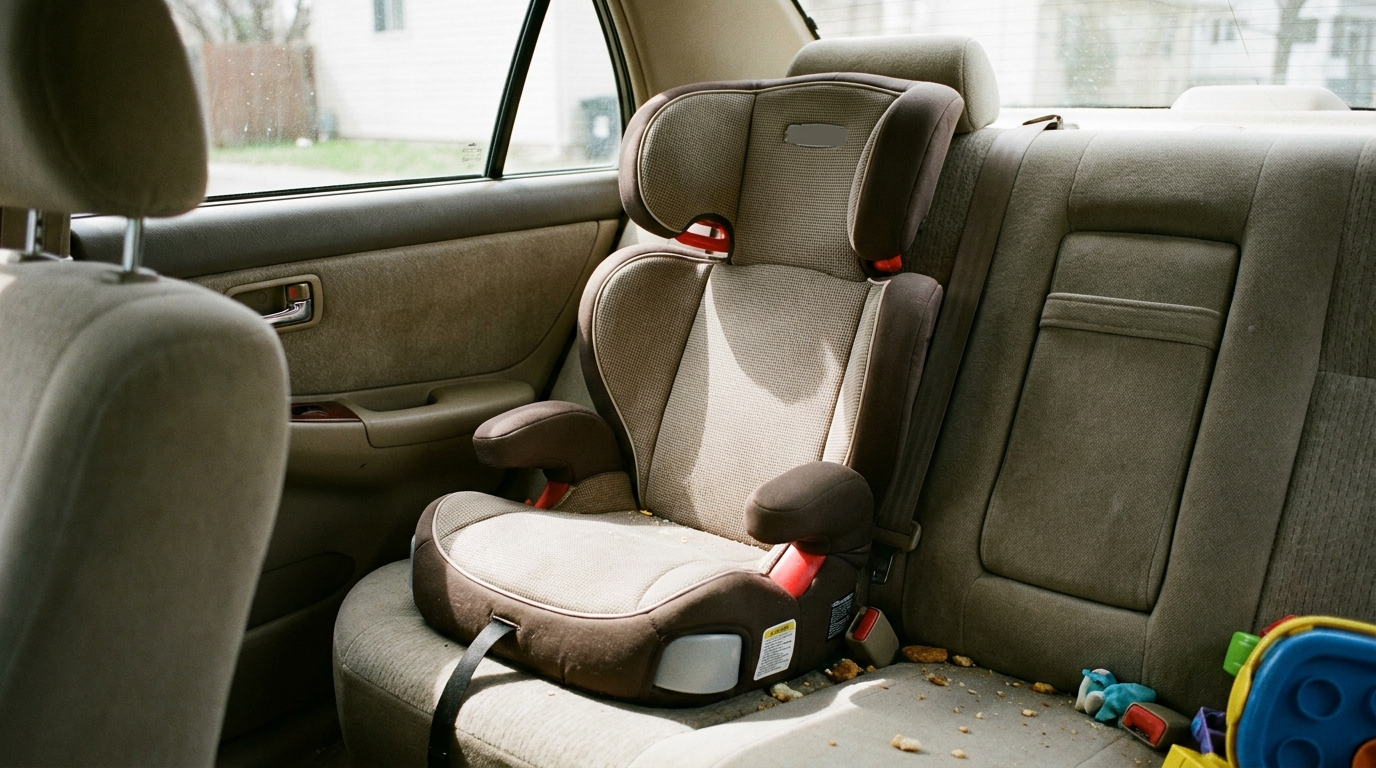
Certification standards draw a further, meaningful distinction within the booster category itself. Booster seats that include a back support and headrest can be certified starting from 100cm at the earliest, while backless booster cushions, the simplest and most minimal option, aren’t certified for use at all below 125cm. Even once a child is old enough and tall enough to legally use a backless cushion, a version with full back and headrest continues to provide meaningfully better protection specifically in a side-impact collision, which is why safety guidance generally recommends the fuller version over a simple cushion wherever it’s practical to use one.
Throughout this entire transition, Germany’s overall legal requirement doesn’t relax: any child under 12 and under 150cm still needs an appropriate restraint of some kind, moving to a booster doesn’t mean moving out of the requirement entirely, it means moving to a different, appropriate category of seat within it.
What Real People Say
The recurring pattern parents describe is a child pushing to switch to a booster earlier than the recommended age, generally because it looks more like a “big kid” seat or is simply less bulky, and the practical guidance that experienced parents and safety sources land on consistently is holding that line until the actual height, weight, and age benchmarks are genuinely met, rather than switching based on a child’s preference alone.
The back-support-versus-backless distinction is less widely known, and parents who’ve researched it describe being surprised that a backless booster isn’t just a lighter, more portable version of the same protection, it’s a genuinely different, lower level of side-impact protection, which shifts the calculation toward choosing the back-and-headrest version by default rather than treating the backless cushion as the obvious next step simply because a child has grown enough to legally use one.
Step by Step
- Don’t switch to a booster before around age 4, even if your child seems physically ready sooner, per ADAC’s own recommendation.
- Confirm your child is at least 100cm and around 15kg before considering any non-integral, belt-based seat.
- Choose a booster with back support and headrest over a backless cushion where practical, for meaningfully better side-impact protection.
- Don’t move to a backless booster cushion below 125cm, it isn’t certified for that height range at all.
- Remember Germany’s overall requirement (under 12, under 150cm) continues to apply, a booster transition changes the type of seat required, not whether one is required.
Compliance Note
This page explains general safety guidance for transitioning children to booster seats in Germany, current as of mid-2026. It is not safety certification advice. For your specific child’s needs, confirm current guidance with ADAC or a certified child safety retailer.
FAQ & Common Pitfalls
Our child is 3 and a half and seems ready for a booster. Should we switch now?
ADAC's guidance specifically recommends not making this switch too early, generally waiting until around age 4. The reasoning is that a booster seat relies on the car's own three-point seatbelt rather than a dedicated harness, which is a genuine reduction in built-in restraint, not simply a size upgrade, so it's worth waiting until your child has both the height and the physical development to make that transition safely rather than switching purely because a booster is more convenient.
What are the actual height and weight minimums before a booster makes sense?
A child generally needs to be at least 100cm tall and around 15kg before sitting on a non-integral seat, one without its own harness, relying instead on the car's seatbelt, is appropriate at all. Below that, a child's hips are typically still too small for a regular seatbelt to sit correctly and safely across them, which is why younger children need a seat with its own harness system instead.
Is there a difference between a booster with a back and headrest versus a simple booster cushion?
Yes, and it's a meaningful safety difference, not just a comfort one. Certification allows booster seats with a back support and headrest starting from 100cm at the earliest, while backless booster cushions aren't certified for use below 125cm at all. Even once a child is old enough for the backless option, a version with full back and headrest continues to offer meaningfully better protection in a side-impact collision, which is why it's generally the recommended choice over a simple cushion where practical.
Our child is 9 and 140cm. Do they still legally need any kind of seat?
Yes, Germany's overall requirement, under 12 years old and under 150cm, continues to apply throughout this entire age and height range, a 9-year-old at 140cm still needs an appropriate child restraint, whether that's a booster with back support or, depending on specific height and comfort, potentially a backless booster cushion. The requirement doesn't disappear simply because a child has moved past the harness-seat stage.