
Citizenship by Birth in Frankfurt: Automatic, and Genuinely Separate From the City's Naturalization Backlog
A baby born in Frankfurt to two foreign parents becomes a German citizen automatically at birth, alongside keeping the parents' own nationality, but only if at least one parent has had continuous, lawful habitual residence in Germany for 5 years and holds an unlimited residence permit, EU long-term residence, or Swiss free-movement status at the time of the birth. That 5-year threshold applies only to children born on or after 27 June 2024, when Germany's citizenship reform took effect; a child born before 26 June 2024 falls under the old 8-year rule instead. Nobody applies for this. Standesamt Frankfurt registers it automatically as part of ordinary birth registration, and its own guidance for new parents describes a cross-check with FIO, the Ausländerbehörde, to confirm the qualifying parent's residence history, typically taking around 5 to 6 weeks after the birth is registered. This is worth understanding as a genuinely separate process from the city's own naturalization backlog, already documented on this site's Frankfurt naturalization guide as running to roughly a 12-month appointment wait: ius soli isn't an Einbürgerung application at all, it doesn't sit in that queue, and a newborn's automatic citizenship isn't affected by how long Standesamt Frankfurt is currently taking to process adult naturalization files. Since the same 2024 reform also scrapped the old rule forcing these children to pick one nationality at adulthood, a child born this way keeps both German citizenship and the parents' nationality permanently.
The Official Rule
A child born in Germany to two foreign parents becomes a German citizen automatically at birth, in addition to keeping the parents’ own nationality, but only under a specific condition: at least one parent has to have had continuous, lawful habitual residence in Germany for a set number of years and hold an unlimited residence permit, EU long-term residence, or Swiss free-movement status at the time of the birth. Frankfurt’s own Standesamt page confirms the current version of that number directly: at least 5 years of residence, but only for children born on or after 27 June 2024, the date Germany’s citizenship reform took effect. For a child born before 26 June 2024, the previous 8-year residence requirement is what actually applied at the time of birth instead.
| Child's birth date | Residence requirement for the qualifying parent |
|---|---|
| On or after 27 June 2024 | 5 continuous years, plus unlimited residence status |
| Before 26 June 2024 | 8 continuous years, plus unlimited residence status |
Nobody applies for this. Section 4 of the Staatsangehörigkeitsgesetz makes it automatic, and Standesamt Frankfurt checks the qualifying conditions as part of the ordinary birth registration process itself, not as a separate Einbürgerung application. To verify the residence condition, Standesamt Frankfurt’s own guidance for new parents describes reaching out to FIO, the Ausländerbehörde, to confirm the qualifying parent’s residence history, a cross-check the office’s own materials describe as typically taking around 5 to 6 weeks after the birth is registered.
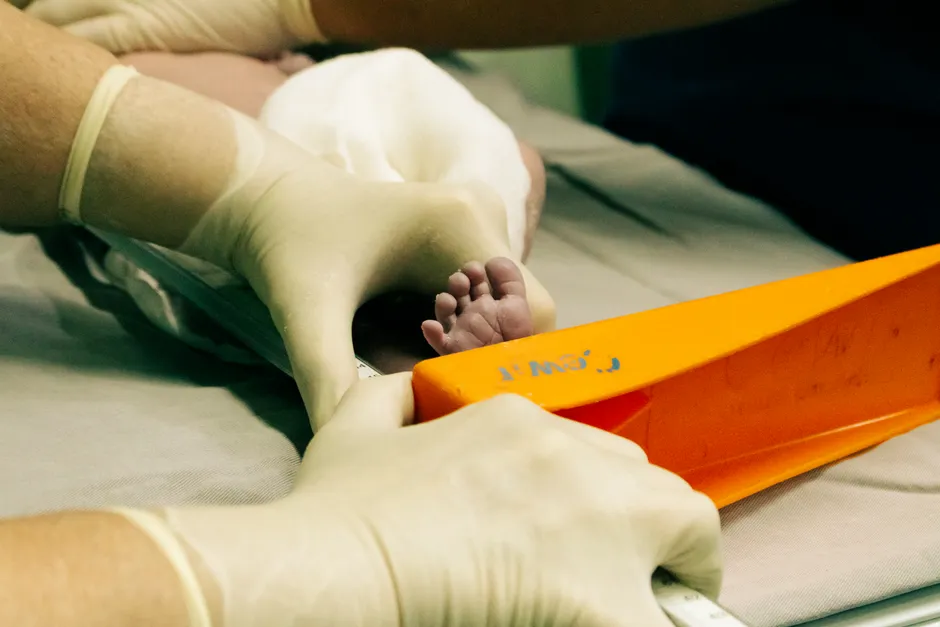
Photo by Bruno Curly on Pexels
A Genuinely Separate Process From Frankfurt’s Naturalization Backlog
This is the point worth understanding clearly if you’ve already come across this site’s guide to Frankfurt’s naturalization process, which documents Standesamt Frankfurt’s own reported appointment wait running to roughly 12 months as of late 2025, with total processing for some applicants potentially stretching toward 2029. It’s an entirely reasonable worry for a new parent to have: does that backlog also delay a newborn’s automatic citizenship?
It doesn’t, and the reason is structural rather than a matter of Standesamt Frankfurt simply prioritizing one case over another. That backlog concerns Einbürgerung, adult naturalization applications filed under Sections 8, 9, or 10 StAG, a process that requires an application, a fee, a B1 certificate, and an Einbürgerungstest for most applicants. Ius soli under Section 4 StAG is a different legal mechanism entirely: automatic, checked as part of ordinary birth registration, with no application filed and no place in that same queue. The roughly 5 to 6 week cross-check with FIO is an internal verification step between two city offices, not a public appointment queue a family waits in.
What Changed in 2024, Beyond Just the Years
The same 2024 reform that shortened the residence requirement also removed a rule that used to complicate things for a child gaining citizenship this way: the old requirement forcing a child to choose between German citizenship and their parents’ nationality once they turned 21 is gone. A child who qualifies for automatic citizenship by birth now keeps both nationalities permanently, no forced choice at adulthood, the same change this site has already documented for Frankfurt’s naturalization process more broadly.
Getting Formal Proof
The automatic status itself is what matters legally, but a formal Staatsangehörigkeitsausweis (citizenship certificate) is worth requesting if you need documentary proof, most commonly for a German passport application for the child. A fee applies for this certificate; other German cities’ own service pages document a figure of 51 euros, though this wasn’t independently confirmed on Frankfurt’s own page checked for this article, so confirm the current amount directly with Standesamt Frankfurt rather than assuming it carries over exactly.
Step by Step
- Register the birth as normal. The citizenship check happens as part of this process, there's no separate form to file for ius soli itself.
- Provide the qualifying parent's passport or residence document with the current residence status recorded, since Standesamt Frankfurt needs this to check eligibility.
- Expect a roughly 5 to 6 week wait while Standesamt Frankfurt cross-checks the parent's residence history with FIO, a routine internal step, not something you need to actively chase.
- Don't confuse this with Frankfurt's naturalization backlog. Ius soli isn't an Einbürgerung application and isn't affected by the multi-month wait documented for adult naturalization cases.
- Request a Staatsangehörigkeitsausweis if you need formal proof, for instance for a German passport application, and confirm the current fee directly with Standesamt Frankfurt.
- If your child was born before 26 June 2024, check which residence threshold actually applied at the time of birth, since the reform's 5-year figure doesn't apply retroactively to earlier births.
Compliance Note
This page explains the general legal framework under Section 4 StAG and how Standesamt Frankfurt currently describes its own process, current as of mid-2026. It is not legal advice, and eligibility depends on the specific residence and permit history of the qualifying parent at the time of birth. For your specific situation, confirm current requirements directly with Standesamt Frankfurt or a lawyer specializing in Staatsangehörigkeitsrecht (nationality law).
FAQ & Common Pitfalls
Do we need to apply for our newborn to receive German citizenship this way?
No. This is the single most important thing to understand about ius soli in Frankfurt. Nobody files an Einbürgerung application for a newborn under Section 4 StAG. Standesamt Frankfurt checks the qualifying conditions automatically as part of ordinary birth registration, and if a parent's residence and permit status qualify, the child is German from the moment of birth without any separate request. Confusing this with the naturalization (Einbürgerung) process, which does require an application and does sit in Standesamt Frankfurt's own reported backlog, is a common and understandable mix-up worth clearing up early.
Does Frankfurt's own naturalization backlog delay our newborn's citizenship?
No, and this is worth stating plainly given how prominently Frankfurt's own naturalization wait has been reported. This site's companion guide to Frankfurt naturalization documents a roughly 12-month appointment wait for Einbürgerung applications, with total processing potentially stretching toward 2029 for some filers. That backlog concerns adult naturalization applications filed under Sections 8, 9, or 10 StAG. Ius soli under Section 4 StAG is a completely different legal mechanism, automatic, not an application, checked as part of birth registration, and it doesn't sit anywhere near that queue.
How long does the citizenship check itself actually take?
Standesamt Frankfurt's own guidance for new parents describes a cross-check with FIO, the Ausländerbehörde, to confirm the qualifying parent's residence history, typically taking around 5 to 6 weeks after the birth is registered. This is an internal check between two city offices rather than something the parents actively manage or wait in a public queue for, and it's a separate, much shorter timeline than anything documented for actual naturalization applications in Frankfurt.
What if our child was born before the 2024 reform changed the residence requirement?
Then the old rule applies instead. Frankfurt's own guidance is direct that the 5-year threshold covers only children born on or after 27 June 2024; for a child born before 26 June 2024, the previous 8-year residence requirement is what actually governed the case at the time of birth. If you're unsure which rule applied to your child's specific birth date, or a birthdate falls right at that boundary, confirm directly with Standesamt Frankfurt rather than assuming either figure.
Do we need a formal certificate, or is the automatic citizenship enough on its own?
For most everyday purposes, the automatic status itself is what matters legally, but a formal Staatsangehörigkeitsausweis (citizenship certificate) is worth requesting if you need documentary proof, for a German passport application, for instance. A fee applies; the figure documented on other German cities' own service pages is 51 EUR, but confirm the current amount directly with Standesamt Frankfurt since this wasn't independently verified on Frankfurt's own page for this article.