Wertstoffinsel: Why Munich Has No Curbside Recycling Pickup, and Where Glass Actually Goes
Unlike many other German cities that collect recycling curbside through a Gelbe Tonne (yellow bin) or Gelber Sack (yellow bag), Munich runs entirely on a Bringsystem for sales packaging, meaning you bring glass, cans, plastic, and composite packaging yourself to one of over 900 Wertstoffinseln (recycling islands) scattered around the city. Glass specifically gets sorted by color into brown, green, and clear containers, with anything an unusual color, blue, red, or black bottles, going into the green container. Drop-off hours run Monday through Saturday, 7am to 7pm, and packaging just needs to be emptied first, rinsing isn't required. This changes from 2027 onward, when Munich introduces a citywide Gelbe Tonne for plastic, composite, and metal packaging, but glass containers are staying at the Wertstoffinseln permanently, even after that change.
The Official Rule
Munich’s approach to packaging recycling genuinely differs from many other German cities. Rather than a curbside collection system, a Gelbe Tonne (yellow bin) picked up regularly from your building, or a Gelber Sack (yellow bag) set out on scheduled days, Munich runs entirely on a Bringsystem: you bring your sales packaging, glass, cans, plastic, and composite materials, yourself to a Wertstoffinsel (recycling island). There are over 900 of these scattered across the city, run by the waste authority AWM.
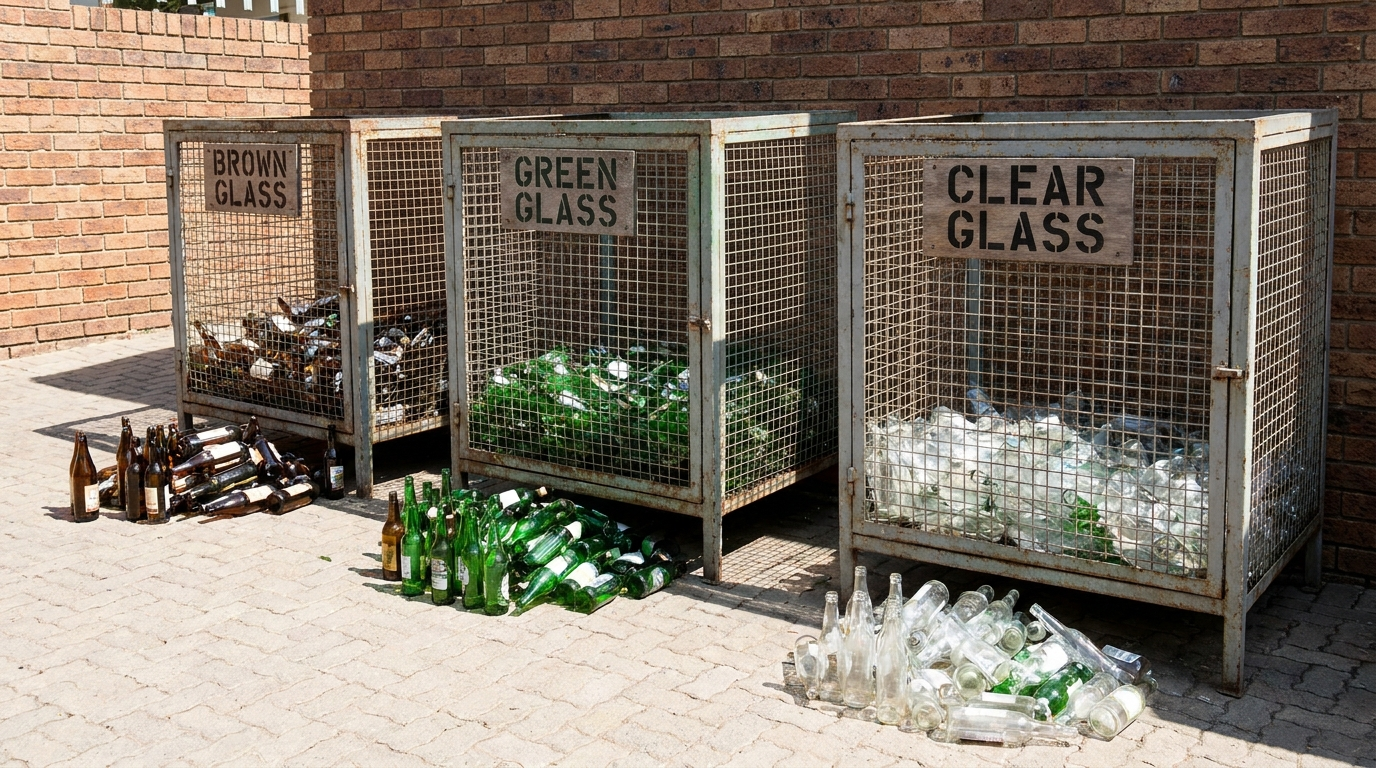
Glass specifically has its own sorting logic within this system. Containers are separated by color: brown glass, green glass, and clear (white) glass each get their own container. Bottles in unusual colors that don’t fit those three categories, blue, red, or black glass, go into the green glass container rather than needing their own separate stream.
| Glass color | Which container |
|---|---|
| Brown | Brown glass container |
| Green | Green glass container |
| Clear / white | Clear glass container |
| Unusual colors (blue, red, black) | Green glass container |
Drop-off hours are set specifically to limit noise disruption, Monday through Saturday, 7am to 7pm. Before dropping packaging off, it needs to be emptied of its contents, but Munich’s official guidance is explicit that rinsing or washing isn’t necessary, getting the food or liquid out is the actual requirement, not achieving spotless cleanliness.
A real system change is coming, though not for glass. Starting in 2027, Munich is introducing a citywide Gelbe Tonne specifically for plastic, composite, and metal sales packaging, moving that portion of recycling toward the collection-based model more common elsewhere in Germany. Glass containers, however, are staying at the Wertstoffinseln permanently, even after that change takes effect, so the bring-yourself system for glass specifically isn’t going away.
If you ever run into an issue with a specific container, it’s overflowing, damaged, or the location itself seems wrong, responsibility for emptying and maintaining Munich’s Wertstoffinseln is split between two companies, REMONDIS and Wittmann, depending on which one manages that particular location. AWM’s own channels can point you toward whichever company is responsible for the specific island you’re dealing with.
What Real People Say
Newcomers, especially those arriving from cities with curbside recycling collection, consistently describe the bring-yourself model as the single biggest adjustment in Munich’s waste system, since it requires actively remembering to make a trip rather than simply setting a bin out on a scheduled day. Once people identify their nearest Wertstoffinsel and build the habit, most describe it becoming a normal, low-friction part of the routine, often combined with a regular errand like grocery shopping rather than treated as its own separate trip.
The color-sorting requirement for glass is the other detail people mention getting used to, particularly the fact that unusually colored bottles go into the green container rather than needing to be puzzled over, once that specific rule is known it resolves most of the hesitation people describe feeling the first few times.
Step by Step
- Find your nearest Wertstoffinsel using AWM’s location information or the city’s Open Data Portal, worth doing once shortly after you move in.
- Empty packaging of its contents before disposal, but don’t worry about rinsing it out, that’s not required.
- Sort glass by color: brown, green, or clear, with any unusually colored bottle going into the green container.
- Stick to the drop-off hours, Monday through Saturday, 7am to 7pm, these exist specifically to limit noise for nearby residents.
- If you spot a problem with a specific container or location, report it through AWM, who can direct the issue to whichever company, REMONDIS or Wittmann, manages that island.
- Watch for the 2027 change, when a citywide Gelbe Tonne arrives for plastic, composite, and metal packaging, though your glass routine at the Wertstoffinsel will stay the same.
Compliance Note
This page explains the general framework for Munich’s Wertstoffinsel system, but specific rules, hours, and the 2027 Gelbe Tonne rollout can change or be refined over time. For anything specific to your location, confirm current details directly with AWM.
FAQ & Common Pitfalls
Why doesn't Munich just have curbside recycling pickup like other German cities?
Munich has historically run its packaging recycling as a Bringsystem, a bring-it-yourself model centered on the Wertstoffinseln, rather than the collection-based Gelbe Tonne or Gelber Sack system many other German cities use. This is set to change starting in 2027, when a citywide Gelbe Tonne is introduced specifically for plastic, composite, and metal sales packaging. Glass is the one category staying with the drop-off island system permanently, even after that broader change takes effect.
How do we find the nearest Wertstoffinsel to us?
With over 900 locations spread across Munich, there's very likely one within easy reach of wherever you live, and the city publishes the full location dataset through its Open Data Portal, which is worth checking once when you move in rather than hunting for a container on the fly. Since these are genuinely spread throughout residential areas, it's also common to simply notice one during your normal daily routes once you know to look for it.
Do we need to wash out jars and bottles before recycling them?
No, and this is a detail that surprises some newcomers coming from stricter recycling cultures. Munich's official guidance is specifically that packaging needs to be emptied of its contents before disposal, but rinsing or washing it out isn't required. Getting the food or liquid contents out is the actual requirement, not achieving a spotless container.