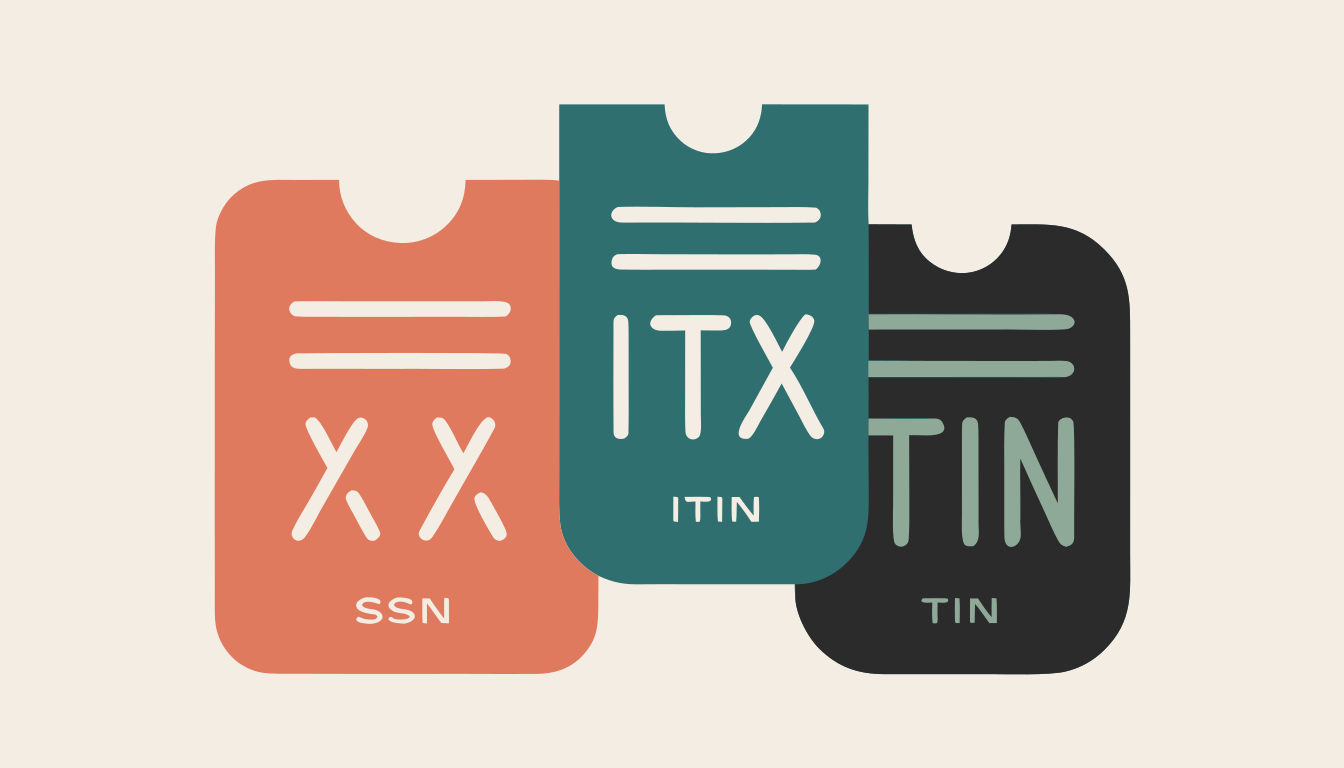
Steuer-ID, Steuernummer, Sozialversicherungsnummer: Which Number Is Which, and Who Issues It
Newly arrived families in Munich end up juggling three different official numbers issued by three completely separate authorities, and mixing them up is one of the most common early paperwork mistakes. The Steuer-ID (Steuerliche Identifikationsnummer) is an 11-digit number assigned once, for life, by the Bundeszentralamt für Steuern (BZSt), it never changes no matter how often you move or change jobs, and it's the number that appears on your payslip. The Steuernummer is assigned by your local Finanzamt for processing specific tax matters, and unlike the Steuer-ID, it genuinely can change, moving to a new city or a change in marital status can trigger a new one. The Sozialversicherungsnummer, a 12-character alphanumeric code issued by Deutsche Rentenversicherung, runs through an entirely different system altogether, tracking pension, health, and social insurance contributions, and has nothing to do with either tax number. Knowing which of the three a given form, employer, or Behörde is actually asking for saves a genuinely common source of new-arrival confusion.
The Official Rule
Three different German authorities each issue their own number to newly arrived families, and the fact that all three get loosely referred to as some version of a “tax number” or “ID number” in casual conversation is exactly what causes the confusion.
| Number | Issued by | Format | Does it change? | Main use |
|---|---|---|---|---|
| Steuer-ID (Steuerliche Identifikationsnummer) | Bundeszentralamt für Steuern (BZSt) | 11 digits | No, fixed for life | Wage tax reporting (ELStAM), appears on payslips |
| Steuernummer | Your local Finanzamt | Varies by state format | Yes, can change | Processing your specific tax filings with that Finanzamt |
| Sozialversicherungsnummer (Rentenversicherungsnummer) | Deutsche Rentenversicherung | 12-character alphanumeric | No, fixed for life | Pension, health, and social insurance contribution tracking |
The Steuer-ID is the one designed to never change. Sparkasse’s consumer guidance and Hanseatic Bank’s explainer both confirm it’s assigned once, for life, by the Bundeszentralamt für Steuern, and stays fixed regardless of how many times you move or change jobs within Germany. It’s specifically what appears on your payslip and what gets used to report your wage tax data through the ELStAM system, which is why an employer’s payroll department almost always means this number when it asks for your “Steuer-ID” or occasionally, loosely, your “tax number.”
The Steuernummer is a genuinely different thing, tied to your local Finanzamt rather than to you personally. t-online’s explainer and Dr. Iris Fohr’s tax-advisor guidance both note this number is used specifically for processing your individual filings with whichever Finanzamt currently handles your case, and unlike the Steuer-ID, it genuinely can change: moving to a different city, or certain changes like marital status, can shift which Finanzamt is responsible for you and result in a new Steuernummer being issued.
The Sozialversicherungsnummer runs through a completely separate system, Deutsche Rentenversicherung, not the tax authorities at all. This 12-character alphanumeric code tracks your contributions and record across pension, health, and other social insurance, and has no relationship whatsoever to either of the two tax numbers above, despite the superficial resemblance in how the three get talked about interchangeably in everyday speech.
What Real People Say
Newcomers describe the confusion showing up at very specific, predictable moments: an employer’s onboarding form asking for a “tax number” without specifying which one, a Finanzamt letter referencing a Steuernummer that looks nothing like the 11-digit Steuer-ID they already have memorized, or a health insurance form asking for a Sozialversicherungsnummer that hasn’t even been issued yet because a first job hasn’t started. Tax advisors describing this pattern to clients consistently emphasize the same fix: identify which of the three authorities is actually asking, BZSt, your Finanzamt, or Deutsche Rentenversicherung, since that alone usually clarifies which number is actually needed.
The most consistently cited practical tip is to keep all three numbers, once you have them, recorded together in one place, precisely because they look superficially similar (strings of digits with no obvious label) but come from entirely different letters, systems, and government bodies, making it genuinely easy to reach for the wrong one under time pressure.
Step by Step
- Locate your Steuer-ID first, it’s the 11-digit number on the BZSt letter you should have received after Anmeldung, and the one your employer will ask for during onboarding.
- Don’t confuse a Finanzamt letter’s Steuernummer with your Steuer-ID, they look different and serve different purposes, the Steuernummer is specific to your filings with that particular Finanzamt.
- Expect your Sozialversicherungsnummer to arrive once you start your first job, it’s issued through the German social insurance system, not the tax authorities, so don’t expect it at the same time as your Steuer-ID.
- When a form or Behörde asks for a specific number, check which authority they represent, an employer or ELStAM-related request almost always means the Steuer-ID, a Finanzamt-specific filing means the Steuernummer, and anything about pension, health, or social insurance means the Sozialversicherungsnummer.
- Keep all three recorded together once issued, in a single, secure place, so you’re not searching multiple documents under deadline pressure later.
Compliance Note
This page explains the general framework distinguishing Germany’s Steuer-ID, Steuernummer, and Sozialversicherungsnummer, current as of mid-2026. It is not tax or legal advice. For questions about your specific numbers or filings, contact the Bundeszentralamt für Steuern, your local Finanzamt, or Deutsche Rentenversicherung directly.
FAQ & Common Pitfalls
My employer is asking for my 'tax number'. Which of the three do they actually need?
Almost always the Steuer-ID, the 11-digit lifetime number from BZSt, since this is what gets reported to the tax office for your wage tax (Lohnsteuer) via the ELStAM system. Your Steuernummer, by contrast, is specific to your own personal tax filings with your local Finanzamt and isn't typically what an employer's payroll department needs.
Why would my Steuernummer change but not my Steuer-ID?
The Steuer-ID is designed as a fixed, lifelong personal identifier, precisely so it never needs to change regardless of where you live or work in Germany. The Steuernummer, on the other hand, is tied to which specific Finanzamt is currently handling your tax affairs, so moving to a new city, or certain changes like marital status, can mean a different Finanzamt takes over and issues a new Steuernummer for your file.
Is the Sozialversicherungsnummer the same as a Rentenversicherungsnummer?
Yes, these refer to the same number, Rentenversicherungsnummer is simply the more precise term for what's commonly called the Sozialversicherungsnummer in everyday conversation, reflecting that Deutsche Rentenversicherung is the authority that issues and manages it, even though it also covers health and other social insurance record-keeping, not pension contributions alone.
Do I need to apply for all three separately when I arrive in Germany?
Not proactively for two of them. Your Steuer-ID is generated automatically once you complete Anmeldung, address registration, and gets mailed to your registered address, usually within a few weeks. Your Sozialversicherungsnummer is typically issued automatically once you start your first job and are enrolled in the German social insurance system. Your Steuernummer is the one you're more likely to interact with directly, it gets assigned when you first file taxes or otherwise open a case with your local Finanzamt.