
Alnatura, Denns, or VollCorner: Munich's Three Organic Supermarket Chains Compared
If you want a dedicated organic supermarket rather than just the small Bio section inside a regular REWE or Edeka, Munich effectively offers three real options, and they're not interchangeable. Alnatura and Denns BioMarkt are national German chains with several Munich branches each, both scored well in 2024 satisfaction surveys, and Denns in particular tends to run cheaper on everyday staples like eggs, milk, and butter. VollCorner is different: it's a genuinely Munich-founded chain, started in 1988 by a small group led by Willi Pfaff, still family-connected today with 20 stores across the city and a new one opening in Lehel as recently as June 2026. Across all three, the products go beyond the baseline EU organic seal, look for the stricter Bioland, Demeter, or Naturland labels on the shelf if the specific growing standard matters to you, since these association labels permit fewer additives and set tougher rules than the EU minimum alone. Expect organic groceries generally to run 20 to 40 percent above conventional prices, regardless of which of the three you choose.
The Lay of the Land
A regular REWE or Edeka in Munich carries a Bio shelf, but it’s a shelf, not a store. If you want organic and sustainably farmed groceries as the default rather than the exception, Munich has three real dedicated chains, and they’re not simply interchangeable versions of each other.
VollCorner is the one genuinely native to Munich. It started in autumn 1988, founded by a small group of young Munich entrepreneurs led by Willi Pfaff, a trained wholesale and retail merchant. The very first store opened on Maistraße, a spot the founders chose for its corner location, and getting it ready took roughly a dozen volunteers three months of real renovation work, tearing out walls, replacing plumbing, digging up the old flooring. A second store followed in 1991 on Frundsbergstraße in Neuhausen, and when a larger, 240-square-meter third location on Arnulfstraße threatened to make the smaller Frundsbergstraße shop redundant, a genuine customer petition kept it open. The 2001 BSE food-safety crisis changed VollCorner’s trajectory more than any single business decision: consumer demand for verified organic food spiked so sharply that, as the company’s own account puts it, staff could barely keep the shelves restocked, and the Arnulfstraße store became the template for VollCorner’s branch-by-branch expansion from there. Birgit Neumann joined as an equal partner in 2000, and at the end of 2023 a generational handover brought in Paul Pfaff (Willi’s nephew) and Stefan Berktold as co-managing directors, with Willi Pfaff staying on to advise. VollCorner now runs 20 stores across Munich, the newest opening in Lehel in June 2026, still organized as a privately held GmbH rather than a cooperative, despite its collective origin story.
Alnatura and Denns BioMarkt are the two national chains with a real Munich footprint, both with multiple branches spread across neighborhoods like Schwabing and Isarvorstadt. A 2024 customer satisfaction survey covered by trade outlet BioHandel scored both well, Alnatura at 1.76 overall and Denns at 1.90, with both praised specifically for price-to-quality ratio compared to other grocery retailers generally. The same coverage highlights Denns as a consistent standout on everyday staples specifically, eggs, milk, and butter, the kind of items a family actually buys every week, while Alnatura leans more on the strength and pricing of its own house brand across a broader range.
| Chain | Origin | Munich presence | What stands out |
|---|---|---|---|
| VollCorner | Munich-founded, 1988 | 20 stores, newest opened in Lehel, June 2026 | Locally founded GmbH, still connected to the founding family |
| Alnatura | National chain | Several branches, e.g. Schwabing, Isarvorstadt | Strong, competitively priced own-brand range |
| Denns BioMarkt | National chain (dennree Gruppe) | Several branches, e.g. Schwabing | Frequently cheapest on everyday staples like eggs, milk, butter |
The label on the shelf matters more than which of the three chains you’re standing in. Every product in all three stores meets at minimum the EU organic standard, EU Regulation 2018/848, which bans chemical-synthetic pesticides, mineral nitrogen fertilizer, and genetic engineering, and requires ecological feed for livestock. That’s a genuine legal floor, not marketing language, but it’s also the loosest of the labels you’ll see, it allows a farm to convert only part of its land to organic production, and it permits a wider range of food additives, around 53, than Germany’s own organic associations do. Bioland, Germany’s largest organic farming association, restricts itself to roughly 22 permitted additives and requires whole-farm conversion, with a particular focus on closed-cycle farming within Germany. Demeter is the oldest and strictest of the three, rooted in biodynamic, anthroposophic farming methods, and allows only about 21 additives, the tightest of the group. Naturland occupies its own niche, layering social and fair-trade criteria on top of ecological ones, relevant if a product’s supply chain crosses into imported goods.
| Label | Basis | Roughly how many additives allowed |
|---|---|---|
| EU organic seal (green leaf) | EU Regulation 2018/848, legal minimum | ~53 |
| Bioland | Germany's largest organic association, whole-farm conversion required | ~22 |
| Naturland | Ecological plus social and fair-trade criteria | Stricter than EU minimum |
| Demeter | Biodynamic, anthroposophic farming, oldest association | ~21 |
What Real People Say
The pattern that comes through in independent comparisons and trade coverage isn’t “pick a winner”, it’s that families tend to settle into a routine that mixes convenience with a specific chain’s actual strengths. Someone who values a wide own-brand selection and doesn’t mind driving slightly further gravitates to Alnatura. Someone doing a weekly staples run for a household with children, where eggs, milk, and butter are the actual budget line that matters, tends to notice Denns running cheaper on exactly those items. And residents who’ve been in Munich a while and specifically want to support a locally founded business, or who live near one of VollCorner’s 20 branches, treat it as the default rather than a special trip.
Step by Step
- Don’t assume the three chains are interchangeable on price, compare a few of your actual weekly staples (eggs, milk, bread) rather than assuming one chain is cheaper across the board.
- If a specific growing standard matters to you, read the label, not just the store name, all three stock some products at the EU minimum and some certified Bioland, Naturland, or Demeter, mixed on the same shelves.
- If your household is watching a grocery budget closely, check Denns first for everyday staples, then compare against Alnatura’s own-brand range for anything packaged.
- If you want to support a Munich-founded business specifically, check VollCorner’s 20 locations, including the new Lehel branch that opened in June 2026, for one near you.
- Budget realistically: expect organic groceries generally to run 20-40% above equivalent conventional products, regardless of which of the three chains you use.
Compliance Note
This page reflects publicly available company information, trade press surveys, and label definitions current as of mid-2026. Store counts, specific branch locations, and pricing can change; confirm current details directly with each chain before making assumptions about a specific store.
FAQ & Common Pitfalls
Is the EU organic seal (the green leaf logo) enough, or do I need to look for something stricter?
The EU organic seal is a genuine legal minimum, banning chemical-synthetic pesticides, mineral nitrogen fertilizer, and genetic engineering, and it's a meaningful baseline, not just marketing. But it also allows partial farm conversion and permits a wider range of food additives than Germany's own organic associations do. If you specifically want the strictest standard, Demeter, based on biodynamic farming, allows the fewest additives of the three main German associations. Bioland and Naturland sit between the EU minimum and Demeter, with Naturland adding social and fair-trade criteria on top of ecological ones.
Which is actually cheaper day to day, Alnatura, Denns, or VollCorner?
Independent comparisons don't put one chain as uniformly cheapest across the board, it depends on the specific product. Denns has stood out in price analyses specifically for everyday staples like eggs, milk, and butter. Alnatura leans on a strong, often competitively priced own-brand range. VollCorner, as a smaller regional chain without the same national purchasing scale, isn't generally the cheapest of the three, but its stores are worth checking for a genuinely local product selection you won't find in a national chain.
Is VollCorner a co-op or a regular company?
VollCorner is a GmbH, a private limited company, not a cooperative, despite its collective, founder-led origins in 1988. Willi Pfaff led the founding group, Birgit Neumann became an equal partner in 2000, and at the end of 2023 the next generation, Paul Pfaff and Stefan Berktold, took over as co-managing directors, with Willi Pfaff staying on in an advisory role.
Do these stores only sell packaged goods, or can I get fresh produce and bakery items too?
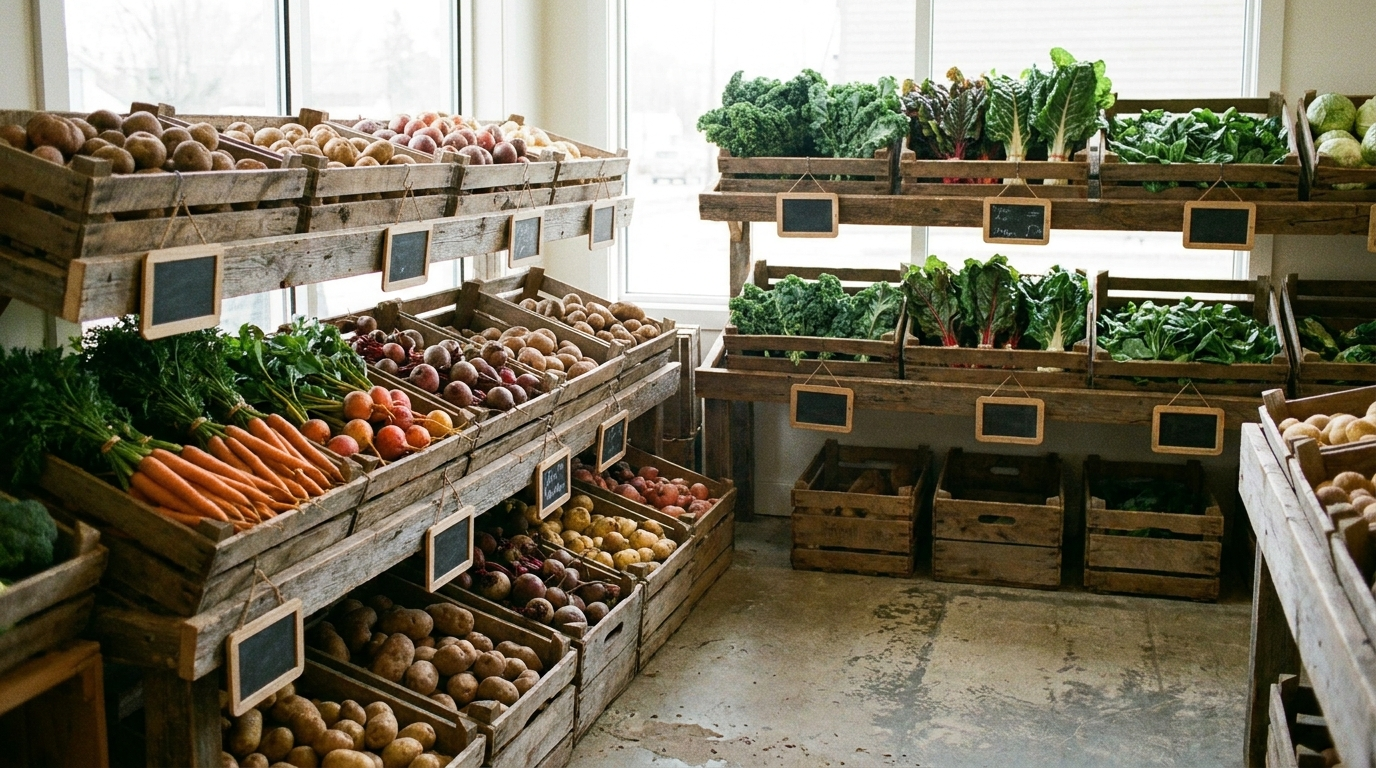
All three carry fresh produce, bread, dairy, and often a deli or prepared-food counter alongside packaged goods, they function as genuine full grocery stores rather than a specialty aisle. The organic and bio label applies across the whole assortment, not just to a shelf of vitamins and snacks, which is the main practical difference from the small Bio corner inside a conventional supermarket.