The Heel-Prick Test Your Newborn Already Had, and Why You Never Heard the Results
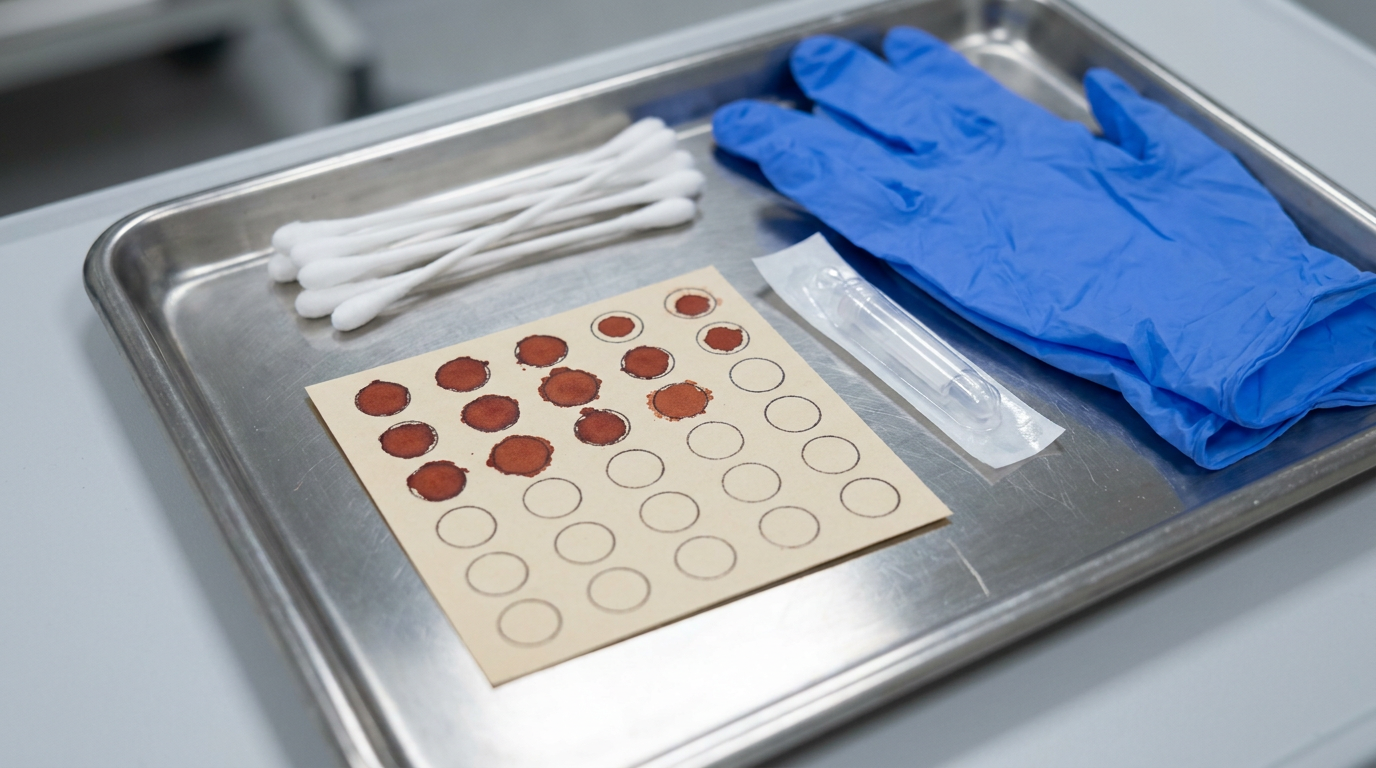
The Neugeborenenscreening, a small blood sample taken from your newborn's heel between the 36th and 72nd hour of life, gets confused with the U-Untersuchungen constantly, but it's actually a genuinely separate official process in Bavaria, run by the LGL (Bayerisches Landesamt für Gesundheit und Lebensmittelsicherheit), the state health office, rather than your Kinderarzt's own practice. It screens for a specific set of rare but serious metabolic and hormonal conditions where early detection genuinely changes outcomes. The detail that confuses a lot of parents, newcomers especially: a normal result generally isn't proactively communicated to you at all, the LGL's own guidance is explicit that unremarkable findings are only shared if you specifically ask. Bavaria runs a dedicated tracking system precisely because of this silent-by-default approach, comparing screening data against civil birth registries to make sure no newborn's sample gets lost or overlooked, including babies transferred to a children's hospital shortly after birth. Since 1999, this screening has led to early diagnosis in around 2,500 children in Bavaria, with over 99 percent of all Bavarian newborns screened.
The Official Rule
Somewhere in the blur of your baby’s first few days, a nurse or midwife pricked their heel for a small blood sample, and unless something specific was flagged, you likely never heard about it again. That silence is genuinely by design, not a gap in the system, but it’s worth understanding what actually happened and why.
The Neugeborenenscreening is taken between the 36th and 72nd hour of your baby’s life, according to LGL Bayern, Bavaria’s state health office, which runs this process as its own distinct official program. This is a genuinely important distinction: it’s not part of your Kinderarzt’s practice or the U1-U9 checkup sequence documented in the U-Heft, it’s a separate state-run screening for a specific set of rare but serious metabolic and hormonal conditions, where catching the condition early genuinely changes the outcome for the child.
| Neugeborenenscreening | U-Untersuchungen (U1-U9) | |
|---|---|---|
| Run by | LGL (Bavarian state health office) | Your Kinderarzt's practice |
| When | Once, 36-72 hours after birth | Ongoing sequence through age 5 |
| Normal result communication | Only shared if you ask | Documented directly with you at each visit |
The detail that confuses a lot of parents, and newcomers in particular: a normal result generally isn’t proactively communicated to you at all. The LGL’s own guidance states plainly that unremarkable findings are only shared if you specifically request them, silence is the expected, intentional outcome of a normal screening, not a sign that something was lost or overlooked. This runs counter to how most other medical results work, where you’d typically expect to be told either way, which is exactly why it catches people off guard.
Precisely because this is a silent-by-default system, Bavaria runs a dedicated tracking mechanism to make sure nothing genuinely falls through the cracks. According to BayernPortal’s official description of the screening and its counseling process, the LGL cross-references screening data against civil birth registries, ensuring a sample doesn’t get lost or a screening doesn’t get skipped even if a newborn is transferred to a children’s hospital shortly after birth, rather than relying purely on a single hospital’s internal record-keeping.
The program has a genuinely strong track record. Since its introduction in 1999, this screening has led to early diagnosis in roughly 2,500 children in Bavaria, with over 99 percent of all Bavarian newborns screened, a level of coverage that reflects how routinely and reliably this process actually runs, even though most families never hear about it directly.
What Real People Say
The recurring pattern in how parents describe this is genuine, if brief, confusion: a heel-prick happened at some point in the newborn blur, and then nothing, no call, no letter, no mention at the next Kinderarzt visit. Once parents learn that silence is the actual designed outcome for a normal result, rather than an oversight, the confusion tends to resolve quickly, though it’s a detail that would be genuinely useful to know upfront rather than discovering after searching for an answer.
Parents who specifically wanted confirmation of a normal result describe simply asking their birth clinic, hebamme, or the LGL directly and getting a straightforward answer, the information isn’t hidden, it’s just not pushed to you automatically the way other results are.
Step by Step
- Know that the heel-prick test your newborn had is a separate LGL-run process, not part of your Kinderarzt’s regular U-checkups.
- Don’t interpret silence about the result as something going wrong, a normal result generally isn’t proactively communicated at all.
- If you want explicit confirmation of the result, ask your birth clinic, hebamme, or the LGL directly, this information is available on request.
- If your baby was transferred to a different hospital shortly after birth, trust that Bavaria’s tracking system is designed to follow the sample, rather than assuming it may have been lost in the transfer.
- Keep this process mentally separate from the U-Heft and U1-U9 schedule, they’re related in spirit but run through entirely different institutions.
Compliance Note
This page explains the general framework for newborn screening (Neugeborenenscreening) in Bavaria, current as of mid-2026. It is not medical advice. For questions about your specific child’s screening or results, contact your birth clinic, hebamme, Kinderarzt, or the LGL directly.
FAQ & Common Pitfalls
We never heard anything back about our baby's heel-prick test. Does that mean it didn't happen, or got lost?
Almost certainly neither. Bavaria's LGL is explicit in its own guidance that unremarkable (normal) results generally aren't proactively communicated to parents at all, you're only told if you specifically ask. Silence is the expected, designed outcome for a normal result, not a sign that something went wrong or got lost in the process.
Is this the same thing as the U-Untersuchungen or the U-Heft?
No, and this is exactly the confusion worth clearing up. The Neugeborenenscreening is run by the LGL, Bavaria's state health office, as its own distinct official process, separate from your Kinderarzt's practice and the U1-U9 checkup sequence documented in the U-Heft. It happens once, very early, using a heel-prick blood sample, rather than being part of the ongoing U-checkup schedule.
What if our baby gets transferred to a children's hospital shortly after birth? Does the screening still happen?
Yes, this is specifically one of the scenarios Bavaria's tracking system is designed to handle. The LGL cross-references screening data against civil birth registries precisely to make sure a newborn's sample doesn't get lost or overlooked even if the baby is moved to a different facility shortly after birth, rather than relying purely on one hospital's internal tracking.
Can we actually get the specific result if we want to see it, even if it's normal?
Yes, the process allows for this, unremarkable results are shared on request, you're not blocked from finding out, the system is simply designed not to proactively push that information to you by default. If you want confirmation, asking your birth clinic, hebamme, or the LGL directly is the way to get it rather than assuming you have to wait for something to be flagged.