Bringing Your Spouse or Child to Munich: The Real Consulate-to-KVR Appointment Chain
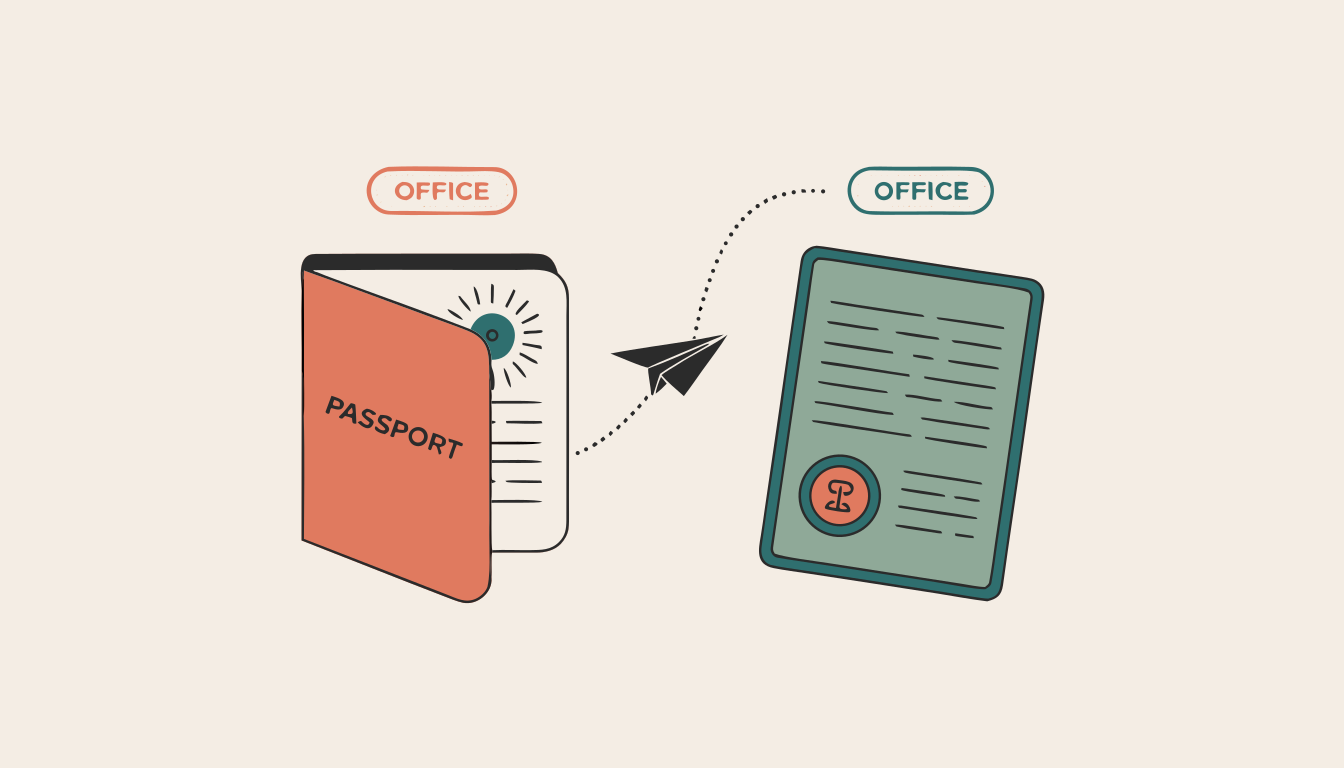
Bringing a spouse or child to Munich from abroad is a completely different process from renewing your own residence permit, and it isn't a single appointment, it's a chain of four linked steps across two authorities. First, your family member books a visa appointment at a German consulate in their home country and submits documents (marriage or birth certificate with apostille, an A1 German certificate for spouses, and proof of your income and housing in Munich). The consulate forwards the file to Munich's KVR for a Vorabzustimmung, a pre-approval that typically takes two to four months. Only after that pre-approval does the consulate issue a 90-day entry visa. Once your family member arrives in Munich, they must apply for their actual residence permit at the KVR within that 90-day window. Processing times for the consulate stage vary enormously by country, roughly three to six months in Latin America and Western Europe, but 12 to 24 months at high-volume posts in Turkey, Lebanon, India, Egypt, and North Africa, so the single biggest mistake is assuming the whole thing moves at the same speed everywhere.
The Official Rule
Renewing your own residence permit in Munich is stressful enough on its own. Bringing a spouse or child to join you from abroad is a different kind of process entirely, and the biggest misconception people carry into it is expecting one appointment to solve the whole thing. It doesn’t. It’s a chain, and each link has its own office, its own document requirements, and its own timeline.
- Phase 1: Consulate visa appointmentYour family member books an appointment at the German consulate or embassy in their home country and submits their passport, marriage or birth certificate (with apostille and certified translation), an A1 German certificate for spouses, and your proof of income and housing in Munich.
- Phase 2: Munich KVR pre-approval (Vorabzustimmung)The consulate forwards the file to the KVR, which reviews it against German requirements, income, housing space, and general eligibility. This step typically takes two to four months on its own.
- Phase 3: Visa issuanceOnce the KVR's pre-approval reaches the consulate, it issues a national (D) visa valid for 90 days, allowing entry into Germany specifically for this purpose.
- Phase 4: Residence permit application after entryWithin that 90-day window, your family member applies for their actual residence permit at Munich's KVR, a separate filing from everything that came before.
The single biggest planning mistake is assuming this moves at the same pace everywhere. According to Klamert & Partner, a Munich immigration law firm that handles these cases regularly, consulates in Latin America and Western Europe often process the full path in three to six months. High-volume posts in Turkey, Lebanon, India, Egypt, and North Africa commonly run 12 to 24 months, and total timelines can stretch past two years once every phase is stacked together. This isn’t something Munich’s KVR controls or can speed up, it’s a bottleneck at the consulate stage itself.
| Region | Typical total timeline |
|---|---|
| Latin America, Western Europe | 3 to 6 months |
| High-volume posts (Turkey, Lebanon, India, Egypt, North Africa) | 12 to 24 months |
Documentation problems are what actually cause most of the delay within any given timeline. A marriage certificate arriving without its apostille, an A1 German language certificate from a testing center the consulate doesn’t recognize (only Goethe-Institut, telc, and ÖSD certificates are consistently accepted), or income documentation that doesn’t clearly cover Munich’s cost of living once rent and insurance are factored in, each of these can bounce a file back through review. Required proof of adequate housing space is also specific: at least 12 square meters per family member over 6 years old, 10 square meters for those younger, documented through a rental contract.
What Real People Say
Personal accounts of this process, including experience videos from people who’ve actually gone through spousal reunification into Germany, describe the Vorabzustimmung stage as the part that feels the most like waiting in the dark: the consulate has your documents, the KVR is reviewing them, and there’s genuinely little to do but wait once everything is submitted correctly. The consistent advice across these accounts is to treat every document requirement as non-negotiable before the first consulate appointment rather than hoping something incomplete slides through, since a rejection or a request for more paperwork tends to cost far more time than getting it right the first time would have.
Munich immigration lawyers who handle this regularly describe three points where they’re typically brought in: before the application, to get the documentation and income proof structured correctly from the start, during the process, if the consulate or KVR requests something unclear, and after a rejection, to pursue a formal objection.
Step by Step
- Confirm eligibility and gather core documents early: passport, marriage or birth certificate with apostille and certified translation, and (for spouses) an A1 German certificate from an accepted testing center.
- Prepare Munich-side proof before the consulate appointment: recent pay stubs, employment contract or tax return, a signed rental agreement showing adequate space per person, and health insurance confirmation.
- Book the consulate appointment as early as possible, since appointment availability itself can be a bottleneck at busy diplomatic posts.
- Expect the Vorabzustimmung stage to take two to four months once the consulate forwards the file to Munich’s KVR, and avoid assuming silence means something has gone wrong.
- Once the visa is issued, track the 90-day entry window carefully, both for entering Germany and for filing the residence permit application after arrival.
- File the residence permit application at the KVR within 90 days of entry, and expect roughly 12 weeks of processing once the file is complete.
Compliance Note
This page explains the general process and typical timelines under German immigration law and Munich’s administrative practice, but it is not legal advice. Family reunification cases vary significantly by nationality, marital history, and individual circumstances, so consult an immigration attorney or the Servicestelle für Zuwanderung und Einbürgerung directly for guidance specific to your situation.
FAQ & Common Pitfalls
Is the Vorabzustimmung the same thing as the visa?
No, and this is worth understanding clearly before you start counting down to a flight. The Vorabzustimmung is Munich's KVR pre-approving the case on the German side, assessing your income, housing, and the general requirements, and sending that result to the consulate abroad. It is not itself a visa, and it doesn't grant any right to enter Germany. The consulate still makes the final decision on the actual visa, even once the KVR has already signed off, so a pre-approval is real progress, not the finish line.
Why do wait times vary so much between countries?
It comes down to how many applications a given diplomatic post is handling relative to its staffing. Consulates in Latin America and Western Europe with lower application volumes tend to process family reunification cases in three to six months from the initial appointment. High-volume posts, commonly cited examples include Turkey, Lebanon, India, Egypt, and North Africa, can take 12 to 24 months, sometimes stretching past two years total once every phase is added up. This is a structural bottleneck at the consulate itself, not something Munich's KVR controls.
What's the most common reason this process gets delayed for months?
Documentation problems, consistently. A marriage certificate missing its apostille, an A1 German certificate from a testing center the consulate doesn't recognize, or income documentation that falls short of what's needed to cover a family's living costs in an expensive city like Munich are all cited as frequent stumbling blocks. Each of these can send a file back through a review loop that adds weeks or months, so getting every document right before the first consulate appointment matters more than almost anything else in this process.
Once my family member arrives, how much time do we have to apply for their actual residence permit?
Ninety days from entry, or before the entry visa itself expires, whichever applies to your situation. That deadline is for submitting the residence permit application at the KVR, not for having it fully decided, and official guidance notes the review itself typically takes around 12 weeks once your file is complete. Missing the 90-day window to file is the kind of mistake that's genuinely avoidable if you treat it as a hard date from the moment your family member lands.