
Getting Off Munich's Default Energy Tariff (Electricity and Gas for New Arrivals)
If you move into a Munich apartment and never sign an electricity or gas contract, Stadtwerke München (SWM) supplies you automatically under Grundversorgung, the basic tariff, and that tariff regularly runs 25 to 40 percent above a contract you'd get through a comparison site. Leaving it is easy (two weeks' notice, no penalty), but the timing only works one way: since a 2025 rule change, a new contract can't be backdated to cover the weeks you already spent on the expensive default, so the real fix is comparing tariffs before or right at move-in, not months later.
The Official Rule
Munich’s Grundversorger, the basic supplier legally obligated to serve any household in the city, is SWM Versorgungs GmbH, for both electricity and gas. If you move into a Munich apartment and don’t sign a contract with SWM or anyone else, the moment you draw your first kilowatt-hour you’re automatically a Grundversorgung customer. This isn’t a glitch or a punishment. It’s required under Section 36 of the Energiewirtschaftsgesetz (Energy Industry Act), which obligates basic suppliers to publish standard prices and supply any household customer at those terms, no exceptions, no minimum contract length.
The trade-off for that guarantee is price. As of the price sheet effective 1 February 2026, SWM’s electricity Grundversorgung runs a work rate of 32.44 cents per kWh plus an annual base price of roughly 149.70 euros before meter costs. Gas Grundversorgung follows a similar structure. Neither number looks dramatic in isolation, but a market check by the Verbraucherzentrale Bundesverband (vzbv) in October 2025 found that the cheapest available Sondervertrag (special, fixed-term contract) averaged about 27 percent below Grundversorgung costs across German basic-supply regions, and several expat-facing guides put typical Munich savings even higher, in the 30 to 40 percent range depending on how competitive your address’s market is.
Leaving Grundversorgung is deliberately easy, on paper. Under the StromGVV and GasGVV regulations that govern basic supply specifically, you can cancel at any time with just two weeks’ notice, no justification needed, no penalty. If SWM raises its Grundversorgung prices, you can even cancel immediately without waiting out those two weeks. Compare that to a typical Sondervertrag, which can lock you in for up to 24 months, and the irony becomes clear: the tariff everyone falls into by accident is the one that’s easiest to leave, and the cheaper tariff you’d actively choose is the one with the longer commitment.
| Grundversorgung (default) | Sondervertrag (chosen contract) | |
|---|---|---|
| Price | Roughly 25 to 40% above market | Market rate, varies by provider |
| Contract length | None | Often up to 24 months |
| Notice period to leave | 2 weeks, any time, no penalty | Set by the contract terms |
| If the price rises | Can cancel immediately, no waiting | Fixed for the term, with SWM's own guarantee tariffs |
The part that trips people up is timing, not difficulty. Since a reform that took effect on 6 June 2025, retroactive correction of energy supplier registrations is no longer possible. If you’ve already spent a month drawing power under Grundversorgung before switching, that month stays billed at Grundversorgung rates. Some older expat guides still describe a backdating window, and that used to be closer to true for the related concept of Ersatzversorgung (a stopgap that applies for up to three months when it’s unclear who’s actually supplying a property, for instance right after a previous tenant’s contract ends), but the current, general rule for a standard Grundversorgung move-in is that a new contract only applies going forward. The practical upshot: compare tariffs before you move in if you can, or within your first few days if you can’t, rather than assuming you can clean it up later at no cost.
SWM itself sells several tariffs that undercut its own Grundversorgung, if you’d rather stay with them than switch providers entirely: M/Strom Fix (12-month price guarantee), M/Strom Fix Extra (up to 24 months), and a handful of Ökostrom (green electricity) variants with similar guarantee structures. That’s worth checking alongside comparison sites like Verivox or Check24, since staying with your existing supplier under a proper contract, rather than switching companies, is sometimes the simplest move.
What Real People Say
The pattern that comes up again and again in expat guides isn’t confusion about what Grundversorgung is, it’s the surprise that it’s the default at all. One widely shared framing calls it a hidden tax: nobody tells you at move-in that skipping the “pick a provider” step costs you money every single month until you fix it, sometimes hundreds of euros a year by the time a family notices. Estimates vary by guide and by how competitive your postcode’s market is, but savings in the 200 to 400 euro per year range for a typical household show up consistently enough to take seriously.
The mistake people describe making isn’t laziness, it’s more often a gap in the moving checklist. One account from a longer-running expat guide describes a genuinely messy version of this: a tenant whose landlord cancelled the previous occupant’s contract before the new tenant had signed anything, leaving them stuck for roughly two months with an unfamiliar default supplier and no clear paper trail of who was billing them for what. The lesson isn’t that this is common, it’s that “my landlord’s already got it sorted” is an assumption worth double-checking rather than a fact.
On the comparison-tool side, the advice is fairly consistent across guides: have your postcode, an estimate of annual consumption, and your meter number ready before you start comparing, since most sites ask for exactly that. Verivox and Check24 are the two named most often, and both are free to use for the household, they earn a commission from whichever provider you end up choosing rather than charging you directly.
Step by Step
- Before your move-in date, or within your first few days in the new apartment, decide you’re not going to let Grundversorgung happen by default. It’s not dangerous to be on it briefly, but every week on it is a week billed at the higher rate with no way to claim it back later.
- Compare tariffs using your postcode, an annual consumption estimate, and your meter number. Verivox and Check24 are the two most commonly used comparison sites in Germany; SWM’s own alternative tariffs (M/Strom Fix and its Ökostrom variants) are worth a look too if you’d rather not deal with a new company.
- Sign the new contract and let the provider handle canceling the old one. Nearly every provider’s signup form includes a box authorizing them to cancel your existing supplier on your behalf, so you shouldn’t need to write two separate cancellation letters.
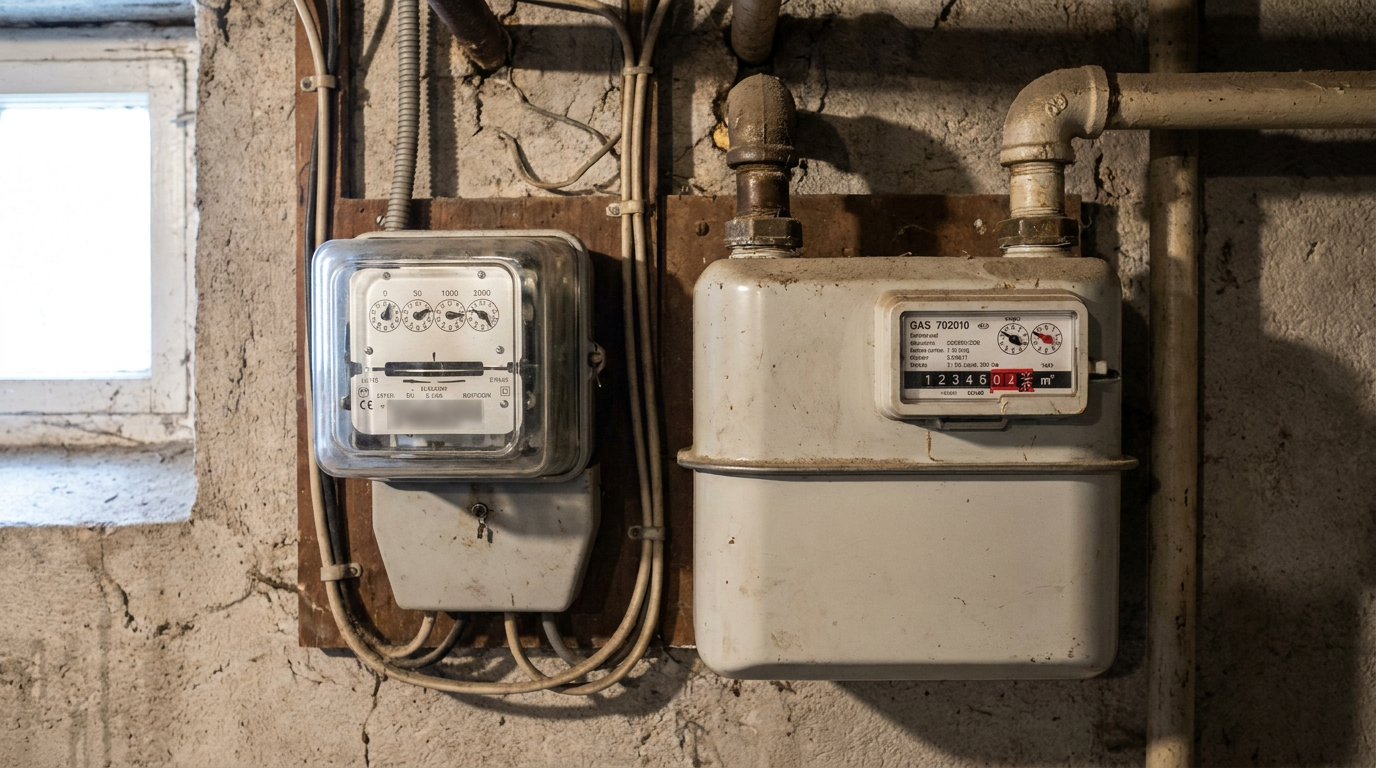
- Read your meter (Zählernummer and Zählerstand) on the day the new contract actually starts, and keep that number somewhere you can find it. It’s your evidence if the old and new supplier ever disagree about the handover date.
- If you’re already on Grundversorgung and just found out, don’t wait for a “better time.” You can leave with two weeks’ notice and no penalty, but the switch only applies from that point forward, so the sooner you compare and sign, the sooner the higher rate stops accumulating.
- Handle water separately, and don’t assume it works the same way as electricity and gas. M-Wasser is normally your landlord’s contract, not yours, and the cost shows up in your Nebenkosten statement rather than a bill in your own name. Check your lease if you’re unsure.
FAQ & Common Pitfalls
Is Grundversorgung a scam, or some kind of penalty tariff?
Neither. Grundversorgung is a legally required safety net under Section 36 of the Energiewirtschaftsgesetz (Energy Industry Act): the designated basic supplier, SWM in Munich's case, has to publish its general prices and supply any household that asks, including one that just moved in and hasn't picked a provider yet. It's completely legitimate and reliable, your lights stay on and your bill is real, calculated at published rates. The catch is simply that basic suppliers have to be ready to serve anyone at any moment, with no minimum term and no ability to plan ahead the way a fixed-contract provider can, and that flexibility gets priced in. It's not a punishment, it's just structurally the most expensive normal option.
I only realized weeks after moving in that I never signed a contract. Can I switch now and get the cheaper rate backdated to my move-in date?
No, and this is worth knowing before you assume otherwise. Some older guides mention a grace period for backdating, but the rules changed: since a reform that took effect on 6 June 2025, there's no more retroactive correction of energy registrations. A new contract you sign today only takes effect from today (or the next available switch date) forward. The weeks you already spent on Grundversorgung get billed at Grundversorgung rates no matter when you switch. That makes the lesson less about damage control and more about timing: compare tariffs before you move in, or within your first few days, rather than treating it as something you can fix retroactively later.
Do I need to register the water supply (M-Wasser) myself, the way I do for electricity and gas?
Usually not. Electricity and gas work differently from water because German law makes the registered property owner the party who owes SWM for water and wastewater, so it's typically your landlord who holds the water contract and arranges the connection, not you. As a tenant, you normally pay for your water use through your Nebenkosten (utility cost statement) rather than signing your own M-Wasser contract. The one exception is if your rental agreement explicitly excludes water from the Nebenkosten, in which case you would need to register directly with SWM. If you're not sure which applies to you, check your lease or ask your landlord before assuming either way.
How long does actually switching away from Grundversorgung take?
Budget roughly six to ten weeks from comparing tariffs to your new contract actually starting, though the technical switch itself can now happen within 24 hours on a business day under a 2025 reform, so a lot of that window is paperwork and notice periods rather than technical delay. In practice you pick a new tariff through a comparison site or directly with a provider, give them your meter number and a recent reading, and tick the box authorizing them to cancel your old contract for you, most providers handle that cancellation on your behalf so you're not writing two separate letters. Read your own meter on the day the new contract starts and keep that number somewhere safe, it's your proof if the old and new supplier ever disagree about where one contract ended and the other began.