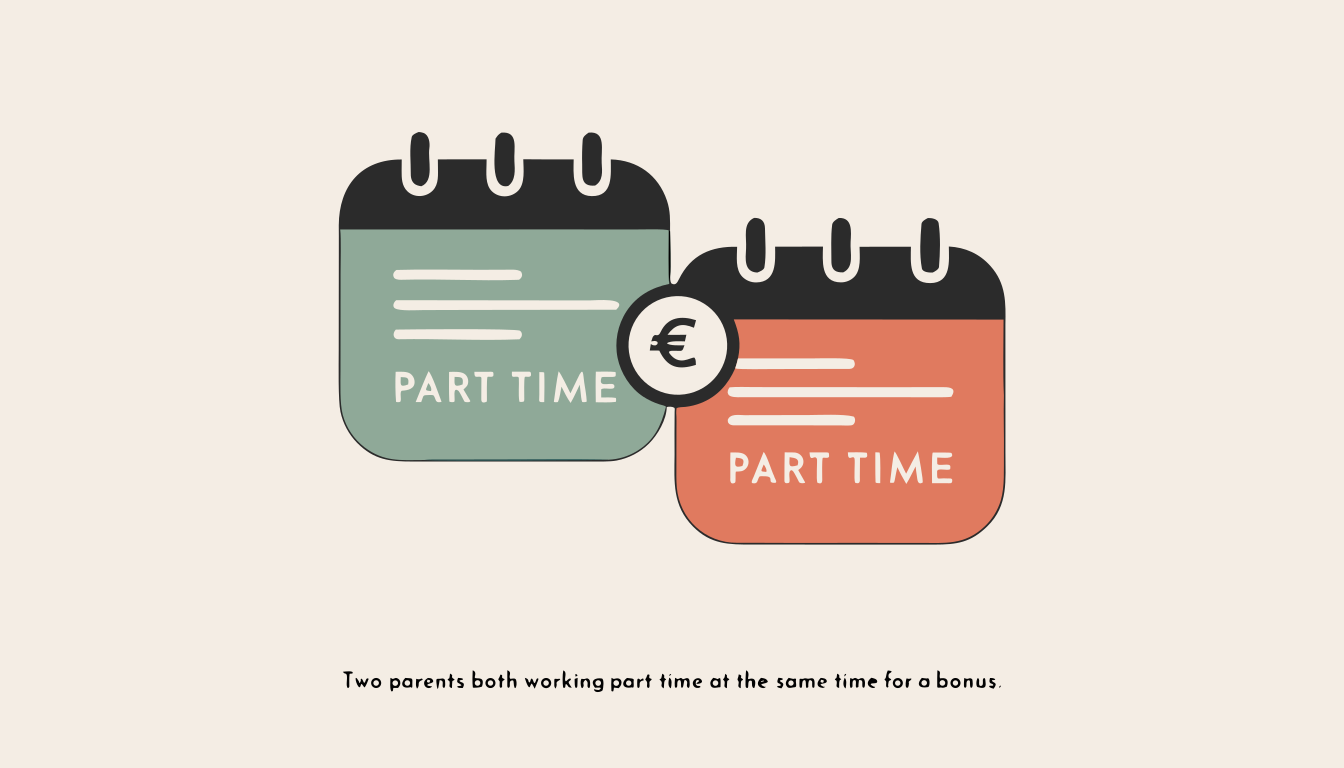
Partnerschaftsbonus: The Third Elterngeld Variant for Dual-Career Parents
The Partnerschaftsbonus is a distinct third variant of Elterngeld, on top of Basiselterngeld and ElterngeldPlus, that pays both parents an extra 2 to 4 months of ElterngeldPlus if they both work between 24 and 32 hours a week at the same time. It's built directly into Section 4b of the Bundeselterngeld- und Elternzeitgesetz (BEEG), and it exists specifically for dual-career families who want to both return to part-time work simultaneously rather than one parent staying home full time. The catch that trips people up: the hours requirement applies per calendar month for each parent individually, and if either parent falls outside the 24 to 32 hour band in a given month, both of you lose the bonus for that specific month and may have to repay it, even if the other parent's hours were fine. Official uptake is genuinely low, only 8.3 percent of parents already using ElterngeldPlus went on to add the Partnerschaftsbonus in 2025 according to Destatis, but for two-career Munich households it's worth understanding on its own terms rather than dismissing it as a minor footnote to standard Elterngeld.
The Official Rule
Elterngeld isn’t a single, one-size benefit, it comes in three genuinely distinct variants, and the Partnerschaftsbonus is the one dual-career families are most likely to overlook entirely. Where Basiselterngeld replaces income at a higher rate for a shorter window and ElterngeldPlus stretches a lower rate over twice as long, the Partnerschaftsbonus is built for a specific, narrower situation: both parents wanting to work part time, at the same time, for a few months.
Section 4b of the BEEG lays out the mechanics directly. Both parents must work between 24 and 32 hours a week during the same life-month, and if they do, each parent receives an additional monthly amount of ElterngeldPlus on top of what they’d otherwise get. You can claim it for 2, 3, or 4 consecutive life-months, and familienportal.de’s official guidance confirms that it doesn’t need to be exactly 24 to 32 hours in every single week, the requirement is checked as an average across each calendar month, giving some real flexibility around an unusually light or heavy week.
| Basiselterngeld | ElterngeldPlus | Partnerschaftsbonus | |
|---|---|---|---|
| Who it's for | Either parent, standard case | Parents easing back into part-time work | Both parents working 24-32 hrs/week simultaneously |
| Typical duration | Up to 12-14 months total | Up to double the Basiselterngeld months, at half the rate | 2 to 4 extra consecutive months |
| Hours condition | Under 32 hrs/week | Under 32 hrs/week | Between 24 and 32 hrs/week, both parents, same month |
| Legal basis | Section 4 BEEG | Section 4 BEEG | Section 4b BEEG |
The real trap in the Partnerschaftsbonus is the shared-risk structure. Because eligibility is checked for both parents in the same life-month, one parent’s hours slipping outside the 24 to 32 hour band, even for reasons entirely outside either parent’s control, like an employer temporarily needing extra coverage, means both parents lose the bonus for that specific month, and repayment can be required for what was already disbursed. It doesn’t retroactively wipe out other months where you both stayed within range, as long as you’ve genuinely claimed the bonus for at least two life-months in total. A single parent raising a child alone can also use the Partnerschaftsbonus solo, needing only their own hours to fall in the 24 to 32 hour window, without a second parent involved at all.

What Real People Say
Specialist Elterngeld guides consistently frame the Partnerschaftsbonus as the option most dual-income Munich households don’t know exists until well into planning their parental leave, since standard Elterngeld guidance tends to focus on the more common Basiselterngeld and ElterngeldPlus split. For couples who already intend to both step back to part-time work around the same point, rather than one parent returning to full time while the other stays fully home, it functions close to extra, close-to-free money for a plan they’d likely follow regardless.
Official Destatis figures for 2025 put usage at just 8.3 percent of parents who were already using ElterngeldPlus, and specialist guides interpret this less as a sign the bonus isn’t worthwhile and more as a reflection that most families simply don’t structure their return to work as a simultaneous part-time arrangement in the first place. For the households that do plan it that way, the recurring practical advice is to line up both employers’ part-time schedules well in advance, since the shared-month risk means a late schedule change on either side can cost both parents the bonus for that month.
Step by Step
- Decide together, early, whether a simultaneous part-time return genuinely fits your family’s plan, rather than adding the Partnerschaftsbonus as an afterthought to an already-set arrangement.
- Confirm both employers can commit to a 24 to 32 hour week for the same months, ideally getting this in writing or at least clearly agreed before you build your Elterngeld claim around it.
- Choose your 2 to 4 consecutive life-months and make sure both parents are claiming the bonus for the same window.
- Build in a buffer around your actual planned hours, since sitting right at 24 or right at 32 leaves no room for a normal fluctuation to accidentally push you outside the band.
- If either parent’s hours shift unexpectedly during a claimed month, tell your Elterngeldstelle promptly rather than waiting for it to surface during a later review.
- If you’re parenting alone, remember you can still claim it solo, you only need your own hours in the 24 to 32 hour range, without needing a second parent to coordinate with.
Compliance Note
This page explains the general legal framework for the Partnerschaftsbonus under Section 4b BEEG, current as of mid-2026. It is not legal or tax advice, and your household’s specific eligibility and the exact amount you’d receive depend on your individual income and work arrangement. Confirm your specific numbers with your Elterngeldstelle before committing both employers to a part-time schedule around it.
FAQ & Common Pitfalls
Does the 24 to 32 hour rule mean I have to work exactly that every single week?
No, it's checked as an average over each calendar life-month, not week by week. A slightly heavier week followed by a lighter one within the same month generally works out fine as long as the monthly average lands in the 24 to 32 hour band. What matters is the month-level outcome, not perfect week-to-week consistency.
If I go over 32 hours one month by accident, does my partner lose their bonus too?
Yes, and this is the detail that catches dual-career couples off guard. Section 4b BEEG ties eligibility to both parents meeting the hours requirement in the same life-month. If either one of you falls outside the 24 to 32 hour window, for example your employer asks you to cover extra hours for one month, both parents lose the bonus for that specific month and may need to repay what was already paid for it. Other months where you both stayed within range aren't affected, as long as you've claimed the bonus in at least two life-months total.
Can a single parent use the Partnerschaftsbonus?
Yes. If you're parenting alone, you can claim the Partnerschaftsbonus by yourself, as long as you work between 24 and 32 hours a week during the months you claim it. You don't need a second parent meeting the same requirement in this situation.
Is the Partnerschaftsbonus worth the coordination hassle if usage is genuinely this low?
That depends entirely on whether both of you already want to return to part-time work at the same time rather than one parent staying home longer. The low uptake, only 8.3 percent of ElterngeldPlus recipients according to 2025 Destatis figures, likely reflects that most families don't structure their return to work that way, not that the bonus itself is a bad deal for families who do. If a simultaneous part-time return is genuinely your plan anyway, the bonus is close to free money for a plan you'd be following regardless.