Can a Business in Germany Really Refuse Cash? The Legal Rule Behind Every 'Card Only' Sign
Euro notes and coins are Germany's legal tender, and the country's own Bundestag research service has confirmed that this creates a genuine cash-acceptance obligation, so a business can't just unilaterally decide to refuse cash on a whim. Public authorities are bound by this most strictly. Private businesses are generally bound by it too, but they have a real way around it: agreeing on a different payment method with the customer in advance, which is exactly what a posted 'card only' sign is legally understood to do, by shopping there anyway, you're treated as accepting that condition. There are limits either way, no business has to accept 50 or more individual coins for one purchase, or a large sum paid entirely in small coins. Cash usage overall is genuinely declining in Germany (slightly over half of transactions now), which is part of why 'card only' signs are becoming more common and why this is a live, actively debated topic rather than settled history.
The Official Rule
Euro banknotes and coins are Germany’s legal tender (gesetzliches Zahlungsmittel), and this status has real legal weight, not just symbolic meaning. Germany’s own Bundestag research service (Wissenschaftlicher Dienst) confirmed in October 2020 that a genuine cash-acceptance obligation can be derived from the Grundgesetz, the constitution, on this basis. A business doesn’t get to unilaterally decide, with no prior notice or agreement, to simply stop taking cash.
Public, government-run bodies are bound by this most strictly. They’re obligated to accept payment in the legal currency, cash included.
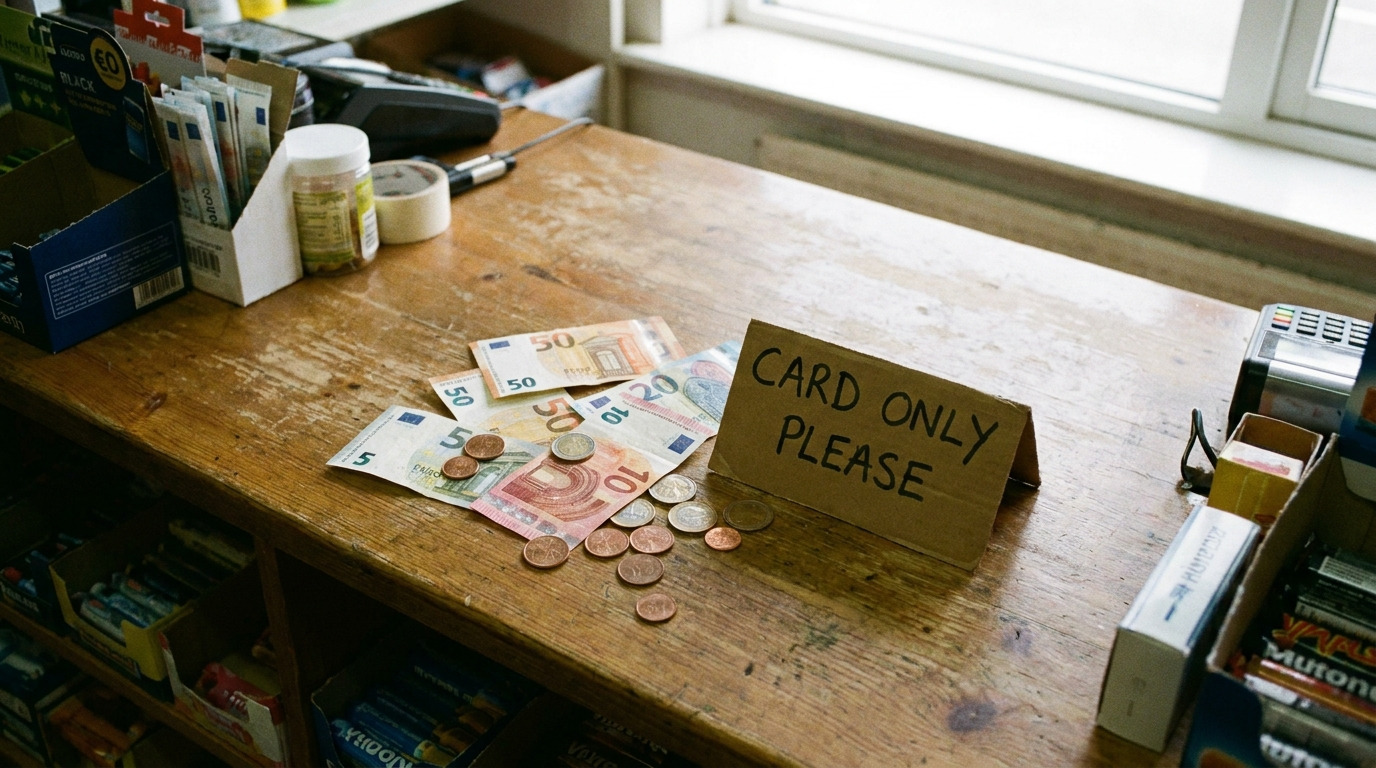
Private businesses are generally bound by the same obligation, but with a real, legally recognized way around it: reaching an agreement with the customer about a different payment method instead. This is exactly what a clearly posted “card only” or “no cash” sign is understood to do under German law, it functions as the business offering that alternative arrangement upfront. If you proceed to shop there anyway, knowing the sign is posted, you’re treated as having accepted those terms rather than the business simply refusing legal tender outright.
| Cash acceptance obligation | |
|---|---|
| Public authorities | Strictly bound |
| Private businesses (no posted alternative agreement) | Generally bound |
| Private businesses (clearly posted "card only" policy) | Can opt out via customer agreement |
Even where cash has to be accepted, there are recognized practical limits. A business isn’t required to accept payment made up of an excessive number of small coins, the commonly cited examples are trying to pay a roughly 200 euro amount entirely in coins, or a single payment involving 50 or more individual coins. This exception exists for genuinely impractical coin payments specifically, not as a general escape hatch businesses can lean on to refuse ordinary cash.
This whole topic is genuinely live rather than settled history. Cash usage in Germany has been declining, transactions conducted in cash now sit just over half of all payments, down meaningfully from cash’s historically dominant role, and the number of physical ATMs has been shrinking as well. This decline is part of why “card only” policies are becoming more visible, and it’s also fed into active political debate, including discussion in places like Berlin about whether card payment acceptance should become mandatory in certain business contexts, a genuinely unresolved, ongoing conversation rather than settled law.
What Real People Say
The detail that surprises people most in discussions of this topic is how conditional the private-business cash obligation actually is once you understand the “prior agreement” mechanism, it isn’t that businesses can freely refuse cash, it’s that a clearly posted sign functions as a specific, legally recognized way of setting up that alternative agreement in advance, which is different from simply turning someone away at the register with no warning.
The broader decline-of-cash conversation shows up constantly in German media and everyday discussion, framed less as a settled fact and more as an ongoing shift people are actively watching and debating, which tracks with the coin-usage statistics showing cash still holding a meaningful, if shrinking, share of transactions.
Step by Step
- Understand that cash is legal tender with a real, not just symbolic, acceptance obligation behind it in Germany.
- Expect public authorities to accept cash without exception.
- For private businesses, check for a posted card-only or no-cash sign before assuming you can pay in cash, that sign is a legally recognized way for the business to set different terms.
- Don’t expect a business to accept payment in an excessive number of small coins, this is a recognized, narrow exception rather than a loophole.
- Keep in mind this is an evolving topic, cash usage is genuinely declining, and policies around required payment methods are still being actively debated in Germany.
Compliance Note
This page explains the general legal framework around cash payment obligations in Germany, but it is not legal advice, and the details of specific disputes can depend on individual circumstances. For a specific situation or disagreement, confirm current rules with the Deutsche Bundesbank’s official guidance or consult a legal professional.
FAQ & Common Pitfalls
If cash acceptance is legally required, how can a shop legally put up a 'card only' sign?
Because the acceptance obligation for private businesses isn't absolute, it can be set aside by an agreement between the business and the customer about which payment method to use instead. A clearly posted sign stating card-only payment is legally treated as that agreement being offered upfront, and if you go ahead and shop there anyway, you're treated as having accepted those terms. This is different from a public authority simply deciding on its own not to take cash, which isn't allowed in the same way.
Can a business refuse a large cash payment made entirely in small coins?
Yes, this is one of the recognized limits on the acceptance obligation. A business isn't required to accept payment made with an excessive number of individual coins, for example, someone trying to pay a 200 euro bill entirely in coins, or a payment involving 50 or more separate coins. This exception exists specifically for impractical, excessive coin payments, not as a general loophole for refusing normal cash.
Is cash actually disappearing in Germany, or is this overblown?
It's a genuine, ongoing shift rather than an overblown claim, though it's also not as dramatic as "cash is gone." Slightly over half of transactions in Germany are now conducted in cash, a real decline from cash's historically dominant position, and the number of ATMs has been shrinking too. This is precisely why the debate around "card only" businesses, and even political discussion in places like Berlin about whether card payment should become mandatory in certain contexts, is a live, current topic rather than a settled question.