
Gluten-Free and Lactose-Free Shopping in Cologne, Store by Store
If your child has celiac disease or a genuine gluten sensitivity, glutenfrei still carries a real, EU-wide binding threshold behind it: products can only use that specific term if they contain no more than 20 milligrams of gluten per kilogram, and some also carry the crossed-grain-ear symbol licensed by the Deutsche Zöliakie-Gesellschaft (DZG), which applies that same 20mg limit. Glutenarm (low-gluten) is a meaningfully looser category, up to 100mg per kilogram, worth not confusing with the stricter standard your child likely needs. Laktosefrei doesn't carry that same single EU-wide number, and laktosearm has no binding threshold at all, so lactose labels genuinely need closer reading. What's actually useful in Cologne: REWE, headquartered right in the city, sells its own frei von private-label range of gluten-free and lactose-free groceries, and EDEKA runs a parallel Minus L lactose-free line plus its own gluten-free own-brand products, though what's actually on any given shelf depends on the size of that specific store. For a deeper selection, Cologne has four denn's Biomarkt branches (Ehrenfeld, Deutz, Sülz, and near Holweide) and several Alnatura Bio-Märkte spread across neighborhoods including Ehrenfeld, the Belgisches Viertel, Sülz, and Nippes, plus Reformhaus Bacher, whose branch inside Cologne Hauptbahnhof keeps a dedicated, fresh-baked gluten-free bakery corner. The Deutsche Zöliakie-Gesellschaft also runs its own regional Zöliakiegruppe Köln/Düsseldorf for families managing celiac disease locally.
The Official Rule
Shopping for a child with celiac disease or a lactose intolerance in Cologne starts with understanding which German food labels carry a genuine legal threshold behind them, and which ones don’t.
Glutenfrei is a real, EU-wide binding legal term, not a loosely used marketing phrase. Verbraucherzentrale.de’s official consumer guidance confirms products can only carry that label if they contain no more than 20 milligrams of gluten per kilogram, a threshold that applies across the entire EU, not just in Germany. Some products additionally carry the crossed-grain-ear symbol, a license granted specifically by the Deutsche Zöliakie-Gesellschaft (DZG), the German Celiac Society, applying that same 20mg limit as a recognizable visual marker beyond the ingredients list.
Glutenarm, low-gluten, sits in a genuinely looser category worth not confusing with the stricter standard. Products with up to 100 milligrams of gluten per kilogram can call themselves glutenarm, a real step up from the 20mg glutenfrei ceiling. If your child has celiac disease specifically, a glutenarm product doesn’t meet the threshold they likely need, no matter how similar the two words look on a shelf.
Lactose labeling runs on a genuinely different, less regulated basis. zeichencheck.de’s guidance on reliable lactose and gluten labeling confirms there’s no binding EU-wide threshold for laktosearm at all, manufacturers use the term inconsistently. Laktosefrei is tied to stricter limits than laktosearm, but still isn’t governed by one single legal number the way glutenfrei is, so specific product labels deserve a closer look rather than an assumption that the two dietary categories work the same way.
| Term | Threshold |
|---|---|
| Glutenfrei (gluten-free) | Max 20mg gluten/kg, EU-wide binding |
| Glutenarm (low-gluten) | Up to 100mg gluten/kg, looser standard |
| Laktosefrei (lactose-free) | Stricter limits than laktosearm, but no single EU-wide number |
| Laktosearm (low-lactose) | No binding EU-wide threshold at all, used inconsistently |
Cologne sits in North Rhine-Westphalia, and Verbraucherzentrale NRW’s own guidance on allergen and additive labeling confirms the same federal rule locally: gluten-containing cereals and milk, including lactose, sit among the 14 major allergens that German food businesses must disclose clearly, whether on packaged products or at a bakery counter.
Where Cologne Actually Stocks It
The genuinely useful part isn’t the legal threshold itself, it’s knowing which shelf in which store actually carries what your family needs.
REWE, one of Germany’s largest supermarket groups, is headquartered right in Cologne, and its own frei von private-label range covers dairy, bread, pasta, and sweets split roughly between gluten-free and lactose-free products. REWE’s own brand page is direct about one limitation worth knowing before a special trip: not every product sits on every store’s shelf, availability depends on that specific market’s size, so a smaller neighborhood REWE may carry a thinner selection than a larger one. EDEKA runs a parallel own-brand strategy: its Minus L lactose-free line, marked with an L-FREI symbol, covers milk, cheese, cream, and yogurt, while a separate EDEKA gluten-free range adds bread rolls, spaghetti, and baked goods, both again subject to the same store-by-store availability caveat.
| Store | Where in Cologne | What it offers |
|---|---|---|
| REWE (frei von) | Citywide, dozens of branches | Own-brand gluten-free and lactose-free dairy, bread, pasta, sweets |
| EDEKA (Minus L / gluten-free) | Citywide, dozens of branches | Minus L lactose-free dairy plus a separate gluten-free own-brand line |
| denn's Biomarkt | Ehrenfeld, Deutz, Sülz, near Holweide | Full organic assortment with a dedicated free-from shelf |
| Alnatura | Ehrenfeld, Belgisches Viertel, Sülz, Nippes, Weiden, Bayenthal, Altstadt-Süd, Neumarkt | 6,000+ organic products per store, own-brand gluten-free lines |
| Reformhaus Bacher | Cologne Hauptbahnhof and other branches | Fresh-baked gluten-free bakery corner, specialist staff advice |
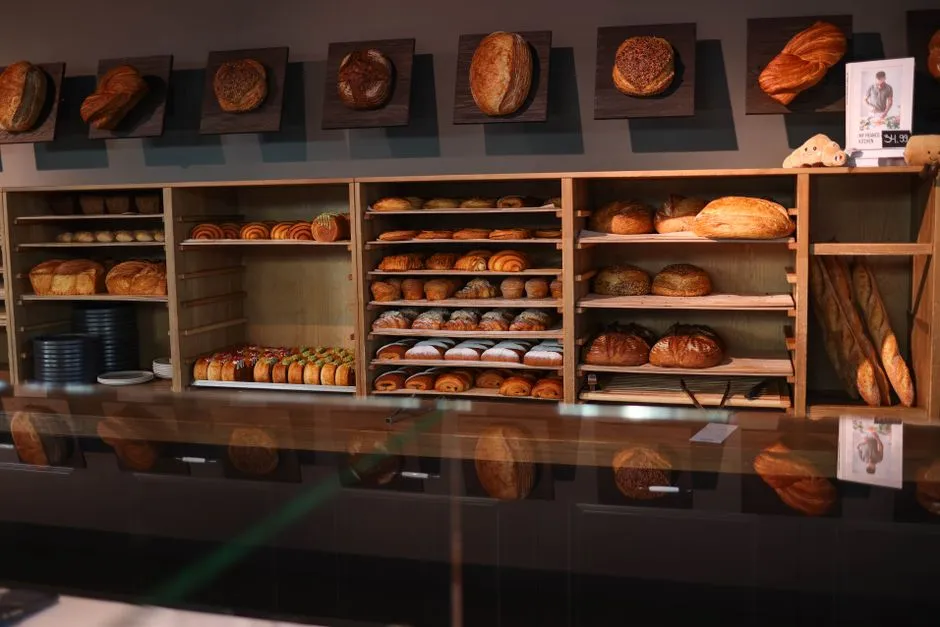
Photo by Valeria Boltneva on Pexels
For a genuinely wider selection than a standard supermarket, denn’s Biomarkt has four branches spread across the city, including one on Venloer Straße in Ehrenfeld, alongside locations in Deutz, Sülz, and near Holweide. Alnatura runs its own network of Bio-Märkte across Cologne, including branches in Ehrenfeld, the Belgisches Viertel, Sülz, Nippes, Weiden, Bayenthal, Altstadt-Süd, and near Neumarkt, each stocking more than 6,000 organic products alongside its own gluten-free lines. Families who know Bio Company from Berlin should note it doesn’t have a Cologne presence, denn’s Biomarkt and Alnatura are the city’s equivalent organic chains to check instead.
Reformhaus Bacher, one of Germany’s two largest Reformhaus chains with roughly 80 branches nationwide, keeps a location inside Cologne’s Hauptbahnhof that’s become genuinely well known among the celiac community. Customer reviews on findmeglutenfree.com describe a dedicated section at the bakery counter set aside solely for gluten-free goods, with fresh rolls, cinnamon buns, and packaged staples restocked regularly, useful for travelers passing through the station as much as residents doing a weekly shop.
For families managing celiac disease specifically, the Deutsche Zöliakie-Gesellschaft runs its own regional Zöliakiegruppe Köln / Düsseldorf, led by volunteer contact people who organize activities including gluten-free baking courses. It’s a genuinely local resource beyond the legal labeling information, connecting families to others navigating the same daily shopping questions.
Cologne’s Turkish and international grocery scene, concentrated in Ehrenfeld’s Venloer Straße and Keupstraße in Mülheim, is worth a look too, and not only for produce and spices. GAZİ, a widely stocked Turkish dairy brand, makes its own dedicated laktosefrei line, including yogurt, Hirtenkäse (beyaz peynir), and Kashkaval (kaşar), the kind of product that shows up on the shelves of the same Turkish markets covered in SettledIn’s separate guide to Cologne’s international grocery scene.
Step by Step
- Check your regular supermarket’s REWE frei von or EDEKA Minus L/gluten-free shelf first, both are standing private-label ranges, not seasonal specials.
- If the selection looks thin, ask staff before assuming it isn’t stocked, availability genuinely depends on that specific store’s size.
- For a fuller organic and free-from range, head to the nearest denn’s Biomarkt or Alnatura branch, Ehrenfeld has both within a short walk of each other.
- For fresh-baked gluten-free bread on the go, Reformhaus Bacher’s Hauptbahnhof branch keeps a dedicated bakery corner.
- If you’re managing a child’s celiac disease long-term, the DZG’s Köln/Düsseldorf regional group is worth joining for local activities and contacts, not just the general labeling rules.
- For lactose-free dairy from Turkish and Middle Eastern brands, Ehrenfeld and Keupstraße’s international markets are worth checking, GAZİ’s laktosefrei line is a genuine option there.
Compliance Note
This page explains general German and EU food labeling standards for gluten-free and lactose-free products, along with specific Cologne stores current as of mid-2026. It is not medical or dietary advice, and store locations, stock, and product formulations can all change. Confirm your child’s specific dietary needs directly with their doctor, and check current details with each store before making a special trip.
FAQ & Common Pitfalls
Is glutenfrei a strictly regulated term in Germany, or can any product just claim it?
It's genuinely regulated, EU-wide, not just a marketing word. Products can only be labeled glutenfrei if they contain no more than 20 milligrams of gluten per kilogram, and some carry the crossed-grain-ear symbol licensed by the Deutsche Zöliakie-Gesellschaft on top of that, applying the same threshold. Glutenarm allows up to 100mg per kilogram instead, a meaningfully looser standard that doesn't meet celiac-level dietary needs.
Does REWE's own frei von range actually stock what my family needs, or is it more of a marketing label?
REWE frei von is a real, standing private-label range, roughly split between gluten-free and lactose-free groceries, covering dairy, bread, pasta, and sweets. REWE's own brand page is upfront that not every product is stocked in every store, availability depends on the size and location of that specific market, so it's worth checking your regular branch's shelf before assuming a product isn't carried anywhere.
Where in Cologne can I find a wider gluten-free and lactose-free selection than a standard supermarket?
Denn's Biomarkt has four branches in Cologne (Ehrenfeld, Deutz, Sülz, and near Holweide), and Alnatura runs several Bio-Märkte across neighborhoods including Ehrenfeld, the Belgisches Viertel, Sülz, and Nippes, all with a full organic assortment and their own free-from lines. Reformhaus Bacher, Germany's largest Reformhaus chain, also has a Cologne branch inside the Hauptbahnhof with a dedicated, freshly baked gluten-free bakery corner.
Is there a local support group in Cologne for families managing a child's celiac disease?
Yes, the Deutsche Zöliakie-Gesellschaft runs its own regional Zöliakiegruppe Köln/Düsseldorf, led by volunteer contact people who organize meetups and activities such as gluten-free baking courses. Membership isn't required to benefit from general DZG guidance, but joining the regional group gives access to its specific local program and contact persons.
Do Turkish and international grocery stores in Cologne carry lactose-free products too?
Some do, worth checking rather than assuming a Turkish grocery store only serves families without dietary restrictions. GAZİ, a widely stocked Turkish dairy brand, produces its own dedicated laktosefrei line, including yogurt, Hirtenkäse (beyaz peynir), and Kashkaval (kaşar), which shows up in the same Ehrenfeld and Keupstraße markets known for Cologne's Turkish grocery scene.
What's the actual difference between laktosefrei and laktosearm on a label?
A meaningfully looser relationship than gluten-free's clear threshold. Laktosefrei is tied to stricter limits than laktosearm, but neither is governed by one single, binding EU-wide legal number the way glutenfrei is. That means it's worth checking a specific product's own claims rather than assuming laktosearm means the same thing across every brand.