
There's No Legal Age for Walking to School Alone in Frankfurt, and Hesse's Own Numbers Show the Stakes Rising
There's no fixed legal age in Germany, or specifically in Hesse, for when a child can walk to school alone. Unfallkasse Hessen (UKH), the statutory body that insures every Hessian schoolchild against accidents, doesn't name a specific age threshold the way some other German states' insurers do, its own guidance frames readiness around training and repetition instead: practice the actual route thoroughly with your child before school starts, and choose the safest route over the shortest one, safety always comes before speed. One concrete legal fact lowers the stakes of the walk-alone decision itself: Germany's statutory school accident insurance, administered in Hesse by UKH, covers a child on the way to and from school regardless of whether they travel alone, accompanied, on foot, by bike, bus, train, or as a passenger in a car, and parents pay no contribution for it. What's worth taking seriously is the trend in Hesse's own numbers. In 2024, Hesse recorded 5,880 school-commute accidents, running at 3.4 per 1,000 insured people, below the federal average that year. More recent figures point the other way: by 31 May 2026, 2,447 Hessian students had already been in a school-commute accident, up 13.4 percent from 2,157 in the same period the year before, with six to nine-year-olds most often hurt as pedestrians and children 10 and older most often hurt cycling. UKH itself hasn't identified a single cause for the increase, and its own materials note that the awareness that parent-taxi drop-offs create their own congestion and risk right at the school gate has become increasingly well known.
The Official Rule
Unlike the specific age thresholds that govern, say, when a child can cycle on a sidewalk versus the road, there’s genuinely no fixed legal age in Germany, or specifically in Hesse, for when a child can walk to school alone. This surprises a lot of newly arrived parents expecting a clean number to plan around.
Unfallkasse Hessen (UKH), the public body that insures every schoolchild in Hesse against accidents, doesn’t name a specific age the way some other German states’ own insurers do. Its guidance instead frames the decision around preparation: practice the actual route your child will use thoroughly, ideally well before the first day of school, and choose the safest route rather than simply the shortest one. That’s a deliberate emphasis on route-specific readiness over a birthday-based rule.
| Factor UKH emphasizes | What it means in practice |
|---|---|
| Route-specific training | Practicing the exact path your child will use, not general traffic rules |
| Safest route over shortest | UKH is explicit that safety always outranks speed when choosing a path |
| Reducing parent-taxi drop-offs | Fewer cars circling the school gate genuinely improves safety for children walking |
One concrete legal fact worth knowing regardless of how you decide this: Germany’s statutory school accident insurance genuinely doesn’t care whether your child walks alone or accompanied. UKH’s own guidance confirms coverage applies “on all paths connected to school attendance, however they are completed, on foot, by train and bus, by bike and scooter, or as a passenger in a car.” Whether your child walks that stretch solo, with a friend, or with you personally has no bearing on whether an accident is covered, and parents pay no separate contribution for this insurance.
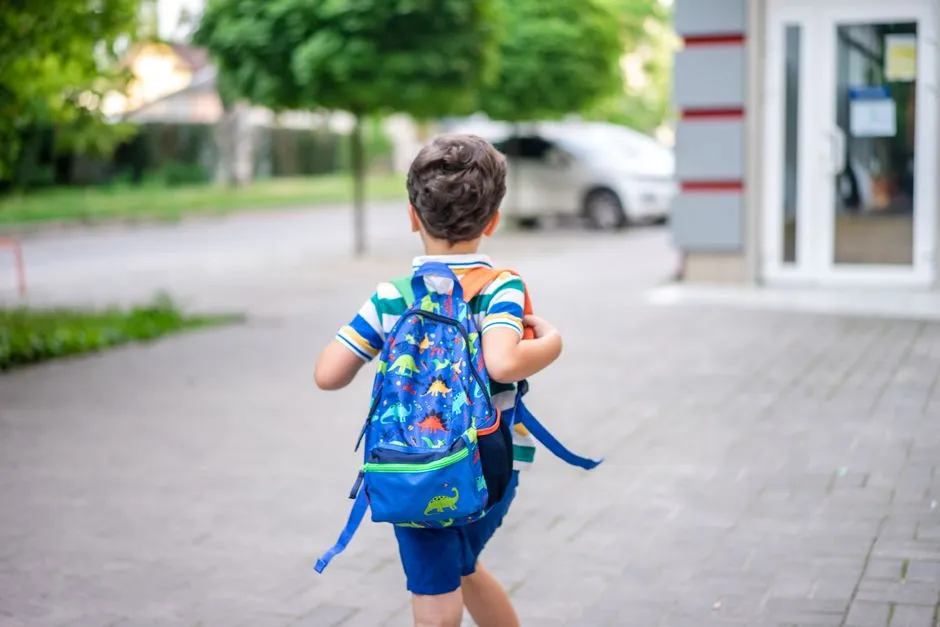
Photo by Atlantic Ambience on Pexels
The Numbers Behind the Decision
The stakes of getting the timing right aren’t abstract, Hesse’s own accident data gives a real picture. Reporting by hessenschau, the regional service of public broadcaster Hessischer Rundfunk, based on Unfallkasse Hessen’s own figures, shows two pictures worth knowing side by side. In 2024, Hesse recorded 5,880 school-commute accidents, a rate of 3.4 per 1,000 insured people, actually below the national average that year. But the more recent trend runs the other way: by 31 May 2026, 2,447 Hessian students had already had an accident on the way to or from school, up 13.4 percent from 2,157 in the same period the year before.
| Period | Figure |
|---|---|
| 2024 (full year) | 5,880 accidents, 3.4 per 1,000 insured, below the federal average |
| Through 31 May 2025 | 2,157 accidents |
| Through 31 May 2026 | 2,447 accidents, up 13.4% year over year |
The breakdown by age and transport mode is worth knowing too: six to nine-year-olds were most often hurt as pedestrians, while children 10 and older were most often hurt while cycling, a pattern that broadly tracks how independence and transport mode shift as children get older. UKH itself hasn’t pinned a single cause on the recent increase, a spokesperson quoted in the same reporting was direct that attributing it to weather, stricter enforcement against parent-taxis in various cities, or other factors would be pure speculation. What UKH’s own materials do note is that the awareness that parent-taxi drop-offs tend to cause their own congestion and risk near the school gate, rather than protecting children, has become increasingly well known.
Step by Step
- Walk the actual route together, repeatedly, well before the first school dayUnfallkasse Hessen's own guidance calls for this specifically, not a generic safety talk.
- Choose the safest route, not the shortest oneUKH's own materials are explicit that safety takes priority over speed when a route decision has to be made.
- Watch how your child actually handles the route, not just how they describe itobserve real behavior at crossings and junctions before deciding they're ready to go it alone.
- Think twice before defaulting to driving your child to schoolUKH's own materials note that parent-taxi drop-offs tend to add congestion and risk right where children are walking, not reduce it.
- Confirm the insurance point isn't a factor either wayGermany's statutory school accident coverage, run in Hesse by UKH, applies to the direct route regardless of whether your child walks it alone or accompanied, by foot, bike, bus, train, or car.
- Keep Hesse's own rising accident figures in mind as a genuine, not merely rhetorical, planning factorespecially if your child is younger and more likely to be hurt as a pedestrian than as a cyclist.
Compliance Note
This page explains the general guidance and legal framework around independent school travel in Hesse, current as of mid-2026, drawing on Unfallkasse Hessen’s own published materials. There’s no fixed legal age, and the right moment for your specific child depends on their individual development and your own direct observation of how they handle real traffic. This isn’t a substitute for your own judgment about your child’s readiness, and for questions about statutory accident insurance coverage in a specific situation, confirm directly with Unfallkasse Hessen or your child’s school.
FAQ & Common Pitfalls
Is there really no age at which Hessian law says my child can walk to school alone?
Correct, there's no statutory age threshold for this specific decision. Unfallkasse Hessen's own guidance frames the question around training and repetition rather than a birthday, practice the actual route thoroughly before school starts, and prioritize the safest path over the shortest one. What Germany does regulate concretely is a related but separate question, the age at which a child may legally cycle on a sidewalk versus the road, which follows specific thresholds under the StVO. Walking alone is left to parental judgment about readiness, not a fixed rule.
What does Unfallkasse Hessen actually recommend for building up independence?
A route-specific, practiced approach rather than a single decision point. UKH's own guidance calls for training the actual route your child will use, ideally well before the first day of school, and for choosing the safest route rather than simply the shortest one, its materials are explicit that safety always comes before speed. UKH also recommends avoiding driving your child to school where it can reasonably be avoided, partly because fewer cars circling near the school gate genuinely makes conditions safer for every child walking there.
How risky is this in practice? Hesse's own numbers surprised me.
They're worth taking seriously without becoming alarmist. In 2024, Hesse recorded 5,880 school-commute accidents, a rate of 3.4 per 1,000 insured people, actually below the national average that year. More recent figures point in a less reassuring direction: by 31 May 2026, 2,447 Hessian students had already had a school-commute accident, up 13.4 percent from 2,157 in the same period the year before, per hessenschau's reporting on Unfallkasse Hessen's own data. Six to nine-year-olds were hurt mostly as pedestrians, while children 10 and older were hurt mostly on bicycles. UKH itself hasn't pinned down a single cause for the increase, whether weather, stricter enforcement against parent-taxis in various cities, or something else, calling further explanation genuinely speculative at this point.
Does the accident insurance still cover my child if they take a slightly different path one day, like avoiding a closed sidewalk?
Generally yes. Unfallkasse Hessen's own guidance is explicit that whether a child travels to school alone or accompanied doesn't affect coverage, and the same statutory protection applies across every mode, on foot, by bike, bus, train, or as a car passenger. A reasonable variation still aimed at reaching or leaving school, including something like a missed bus forcing an alternate route, stays covered. What actually voids coverage is a detour genuinely motivated by a personal errand, unrelated to getting to or from school.
My child's school has a walking group. Does that count as walking alone for insurance or readiness purposes?
For insurance purposes, it doesn't change anything either way, statutory coverage applies to the direct school route regardless of whether your child walks it alone, with a walking group, or accompanied by you personally. For the separate readiness question this page is really about, a supervised walking group is generally a genuinely useful intermediate step, since it builds the same route-specific familiarity and traffic judgment in a lower-stakes, adult-supervised setting before a child transitions to walking that stretch fully alone.